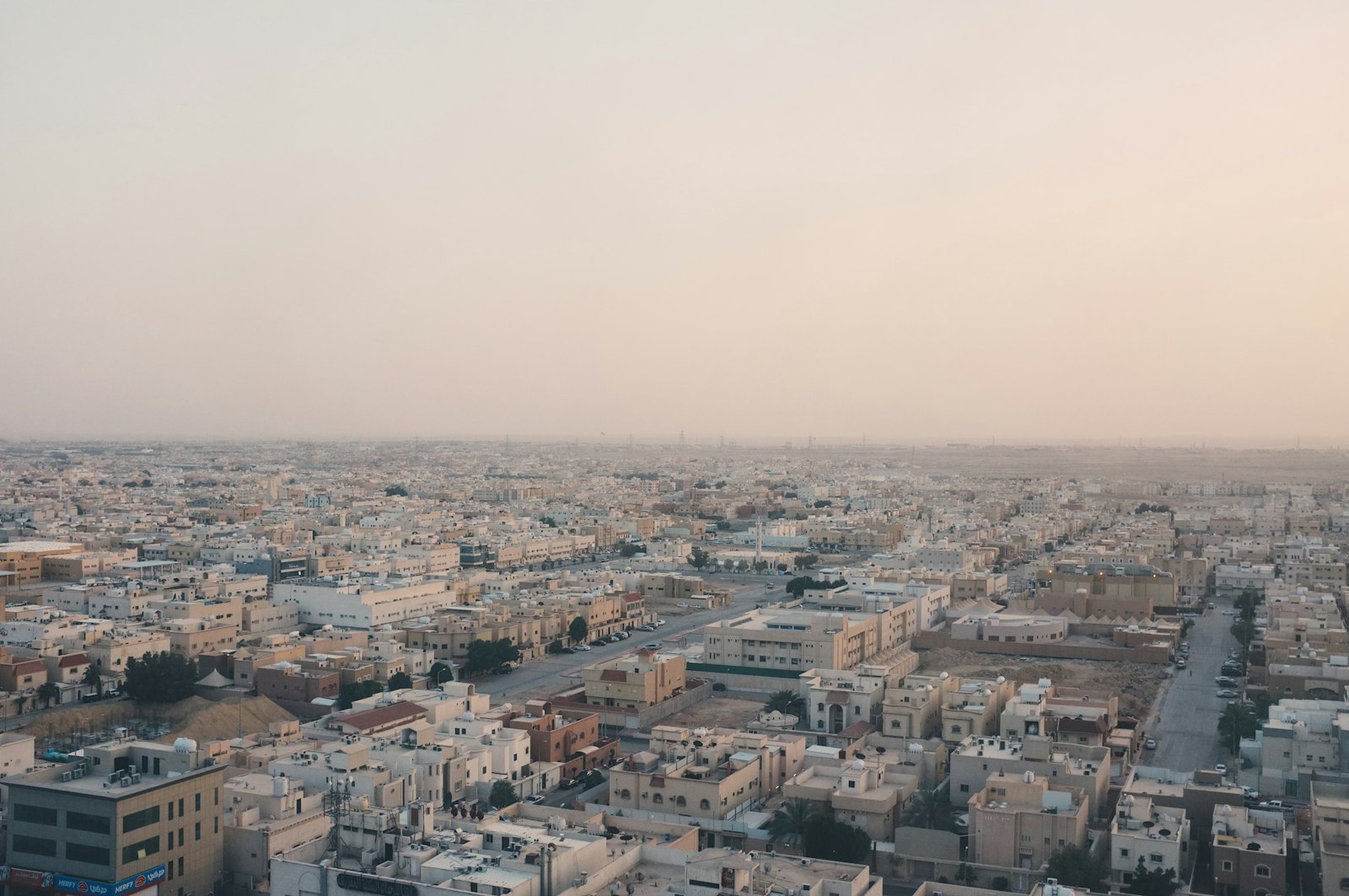
Moving to Saudi Arabia the complete guide
Tax free salaries, fast growth and giant projects under Vision 2030 draw professionals from around the world to Saudi Arabia. The move is almost always employer led and the rules are strict, so preparation matters. Here is the honest brief.
Costs are indicative 2026 ranges. Verify customs, visa and tax rules before you move.
High pay, fast growth, and a strict rulebook
Saudi Arabia is in the middle of a rapid transformation under its Vision 2030 plan, and the demand for skilled foreign workers across construction, energy, technology, finance, healthcare and entertainment is high. The headline draw is money: salaries are typically free of personal income tax, and packages for senior roles often include housing, schooling and flights. Riyadh, Jeddah and the Eastern Province around Dammam and Al Khobar are the main expatriate centres.
It is important to be realistic about the framework. Almost every move is employer led, your residence is tied to a sponsor, and Saudi Arabia applies strict rules on what you can bring, read and do. The country has opened considerably in recent years on tourism, entertainment and the day to day freedoms of residents, but it remains conservative, and customs enforcement on prohibited goods is firm. Plan the move around the rules rather than testing them.
Saudi Arabia has long coastlines on the Red Sea and the Arabian Gulf, so shipping is well served. Household containers arrive at Jeddah Islamic Port for the western region or King Abdulaziz Port in Dammam for the east and Riyadh, with the final leg by road. Air freight runs into Riyadh, Jeddah and Dammam for smaller, faster shipments.
Professionals on a package
Engineering, energy, healthcare, finance, technology and project roles drive most moves, frequently with housing and schooling included in the contract.
Savers with a plan
Tax free income and employer benefits let many residents save aggressively over a defined contract period before moving on or home.
Families on a sponsored visa
Senior employees can sponsor dependents. International schools are plentiful in the main cities, though families should research the practicalities carefully before committing.
Residence and sponsorship, in plain language
There is no free movement route to Saudi Arabia. Living there means holding a residence permit, the iqama, which is almost always arranged by an employer who acts as your sponsor.
Your employer secures a work visa, you enter, undergo medical checks and your residence permit, the iqama, is issued. The iqama is your identity document, ties your legal status to your sponsor, and must be kept valid and on you.
A qualifying employee can sponsor a spouse and children, who receive dependent iqamas linked to the employee. Eligibility depends on salary and job category.
A paid residency programme that lets qualifying individuals live and work without a local employer sponsor, available as a one off or renewable option for those who meet the criteria.
Tourist and business visit visas allow short stays but not residence or local employment. They are not a route to living and working in the kingdom.
Used household goods, customs and prohibited items
Residents transferring to Saudi Arabia can import used personal effects and household goods, generally free of duty for reasonable quantities of genuinely used belongings, once your residence is being established. You will need a detailed inventory, your passport, your visa or iqama details, and often the help of a customs broker, since clearance at Jeddah or Dammam is document heavy and inspections are routine.
Prohibited items are the single most important thing to understand before you pack. Alcohol, pork and pork products, narcotics, weapons and items deemed contrary to public morals or to Islam are strictly forbidden, and penalties are serious. Religious materials of non Islamic faiths, certain books, films and images may be restricted or censored, and shipments are screened. Anything questionable should simply stay behind. Many electrical and consumer goods must also meet Saudi conformity requirements under the SABER and SASO system.
Vehicles can be imported but face strict standards, duty and registration, and many movers find it simpler to buy locally, where cars are inexpensive. Because customs treatment depends so much on correct documentation and on knowing what cannot travel, a mover with real experience clearing household goods into Saudi ports is worth far more here than a low headline price.
What life costs and how to get set up
Day to day costs are moderate, helped by cheap fuel and no personal income tax, though Western style housing, international schooling and imported goods can be expensive. A value added tax applies to most purchases. Many packages include or subsidise housing, which removes the largest variable. Compounds remain popular with expatriate families for their amenities and community.
Setting up follows your iqama. After arrival you complete medical checks, your employer processes the iqama, and your identity and most services flow from it. Government services run largely through the Absher digital platform and your National Address must be registered. With an iqama you can open a bank account, obtain a local mobile number and a driving licence, and sponsor dependents if eligible.
Health cover is mandatory and provided through private insurance, usually arranged by your employer, giving access to private hospitals and clinics that form the backbone of expatriate healthcare. Confirm exactly what your policy covers for you and any dependents, including maternity and pre existing conditions, before you rely on it.
Your first month checklist
- Complete arrival medical checks and let your employer process your iqama
- Register your National Address and set up the Absher government services account
- Confirm your mandatory private health insurance and what it covers
- Open a Saudi bank account once your iqama is issued
- Obtain a local mobile number and convert or apply for a driving licence
- Arrange housing, whether a compound or a city apartment, and utilities
- If eligible, begin dependent visa sponsorship for family
How to choose a mover for Saudi Arabia
No mover is named or ranked anywhere on this site. Here is how to judge any company quoting a move to Saudi Arabia, then request quotes from vetted firms that genuinely clear household goods into Saudi ports.
Check FIDI or IAM affiliation
Membership of FIDI (through the FAIM quality standard) or IAM signals audited financial and operational standards. It is the single fastest filter for an international move.
Insist on a binding pre move survey
A mover who quotes your volume from a video or home survey, in writing, is quoting the real job. A price given without seeing your goods is a guess that tends to climb later.
Confirm genuine experience on this lane
Ask how many moves they run on this exact corridor each year, which port and customs broker they use, and who clears the goods at the other end.
Read the insurance terms, not the headline
Compare marine all risk cover, the valuation basis, the excess, and what counts as an exclusion. The cheapest cover is rarely the one that pays out cleanly.
Weigh reviews and complaint history
Look for recent, specific reviews that mention customs delays, damage handling and final invoices. Pattern matters more than a single rating.
Then request quotes through one form
We never name, rank or recommend a single company. Send one brief and vetted movers who run this route reply to you. You choose.
Get moving quotes for your route to Saudi Arabia
One short brief goes to vetted international movers who run your origin to Saudi Arabia and know the customs rules at Jeddah and Dammam. Compare on scope and service, not just price.
Subscribe to The Relocation Brief
One useful email when a new corridor goes live, plus the cost and customs changes worth knowing before you move. No noise.
Moving to Saudi Arabia, answered
How much does it cost to move to Saudi Arabia?
As an indicative 2026 range, a two bedroom household by shared container costs roughly $4,000 to $14,000 depending on origin, volume, season and final delivery to Riyadh, Jeddah or the Eastern Province. These are planning ranges, not quotes, and many employer packages contribute to or cover the shipping cost.
How long does shipping to Saudi Arabia take?
Door to door transit runs from about 12 days for a container from nearby Gulf or Red Sea origins to 45 days or more from the Americas, Europe, Asia or Oceania, including the sailing to Jeddah or Dammam, customs clearance and the road leg to your city.
What items are prohibited when moving to Saudi Arabia?
Alcohol, pork and pork products, narcotics, weapons, and material deemed contrary to public morals or to Islam are strictly forbidden, with serious penalties. Non Islamic religious items and some books, films and images may be restricted or censored. When in doubt, leave it behind. Verify the current list before you pack.
Do I need a sponsor to move to Saudi Arabia?
Almost always, yes. Residence is built on the iqama, which is normally arranged by an employer acting as your sponsor. The Premium Residency programme is the main self sponsored alternative for those who qualify and pay for it.
Do I pay duty on my household goods in Saudi Arabia?
Reasonable quantities of genuinely used personal effects and household goods generally enter free of duty when you are establishing residence, with a detailed inventory and your visa or iqama. Clearance is document heavy and inspected, so use a broker or an experienced mover. Verify the current rules before shipping.
What is the first thing to do when I arrive in Saudi Arabia?
Complete your medical checks so your employer can issue your iqama, then register your National Address and Absher account. Your iqama unlocks banking, a mobile number, a driving licence and dependent sponsorship.
Corridors arriving in Saudi Arabia
Pick your origin country for the full corridor guide with costs, customs and a timeline for that exact pair. 20 routes into Saudi Arabia.