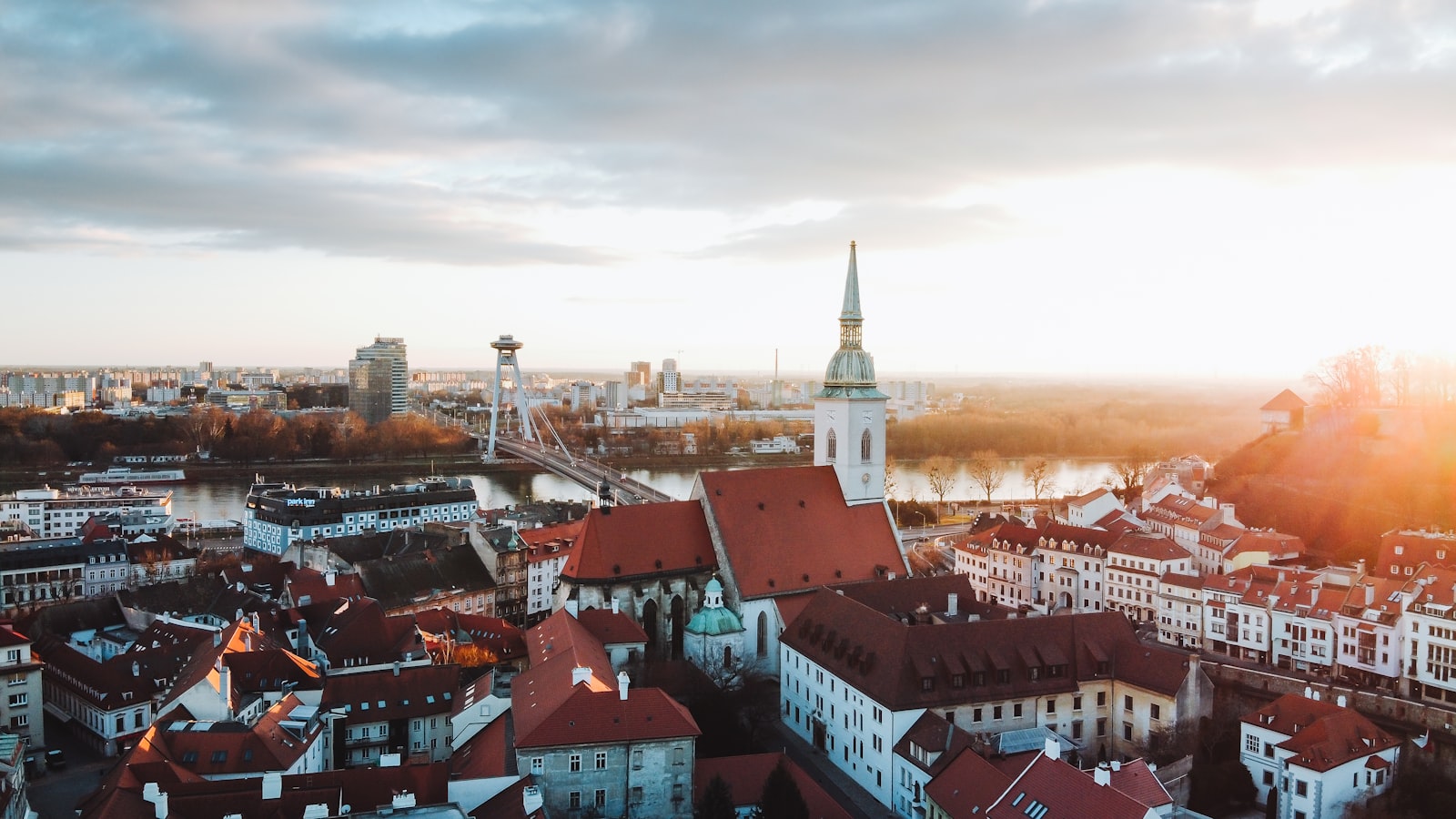
Moving to Slovakia: the complete guide
A calm, affordable country in the heart of Europe, inside the euro and the Schengen area, with mountains on the doorstep and a low cost of living. Here is the honest brief on what it costs to ship your life to Slovakia, the residence steps that come first, and how customs treats your furniture.
Costs are indicative ranges for 2026.
Central Europe at a gentle pace and a low cost of living.
People move to Slovakia for affordable city living, a central location an hour or two from Vienna, Budapest, and Prague, real mountains within reach, and the simplicity of being inside the euro and the Schengen zone. It is a move about quality of life and value rather than high salaries.
The pull is value and position. Bratislava sits right on the Austrian border, so you can live in a cheaper country and work or travel across the region with ease, and the euro means no currency friction when you arrive. Salaries are lower than in western Europe, but so are rents, groceries, and eating out, and the automotive and technology sectors offer steady skilled work.
Daily life is unhurried and green. Beyond Bratislava and Kosice the country is small towns, vineyards, and the High and Low Tatras, which are a genuine draw for anyone who likes hiking and skiing. Public transport is good, the cities are safe, and the historic centres are walkable and pretty.
The honest trade offs are the language and the wages. Slovak is a Slavic language that takes real effort, and outside the capital and larger firms English is less widespread, so day to day admin can be slow. Pay is modest by western European standards, so the move makes most sense if you earn remotely, work for an international employer, or value low costs over a high salary.
Who it suits, honestly
Slovakia suits remote workers, people with EU freedom of movement, professionals in the automotive and technology clusters, and anyone who wants an affordable, central European base with mountains nearby. It is harder for people who need a large English speaking job market or high local salaries, and for those who underestimate how much Slovak they will need for everyday bureaucracy.
The realistic routes into Slovakia, in plain language.
Your route depends on your nationality. Citizens of the European Union simply register their stay, while citizens of other countries apply for a temporary residence permit tied to a specific purpose. These are the routes people on this site use most.
Citizens of the EU, the EEA, and Switzerland have freedom of movement. You report your stay to the Foreign Police within a short window of arriving and, if staying beyond three months, register your residence, which is free and largely a formality.
Non EU nationals usually arrive on a temporary residence permit tied to a job, often with the support of an employer. The EU Blue Card is available for higher paid, qualified roles and brings added mobility within the EU.
A temporary residence permit for business lets non EU nationals run a company or trade in Slovakia, subject to showing a viable activity and sufficient funds. It is a common route for entrepreneurs and the self employed.
Family members of Slovak citizens, settled residents, or EU nationals exercising free movement can join them through family routes, subject to proof of the relationship and, in some cases, income and housing.
Bringing your household goods into Slovakia.
Slovakia applies European Union customs rules. If you arrive from another EU country your used goods move freely, and if you arrive from outside the EU you can usually claim relief on used personal effects as a person transferring residence.
The Financial Administration of the Slovak Republic, through its customs offices, is the authority. Moving from another EU member state, there is no customs duty and your household goods travel as a normal intra EU move. Moving from outside the EU, used personal property you owned and used before the move can generally be imported free of duty and import VAT under transfer of residence relief.
To claim that relief you normally need to have had your residence outside the EU for a continuous period, to have owned and used the goods for at least six months, and to import them within a set window of establishing residence in Slovakia. Prepare a detailed valued inventory, your passport, proof of your prior residence abroad, and evidence that you are settling in Slovakia.
Some categories sit outside the relief. Alcohol and tobacco beyond personal limits, anything new or bought for the move, and restricted goods such as certain plants, foods, and weapons follow their own rules. Pets need EU compliant vaccination and documentation, and importing a vehicle from outside the EU means meeting type approval and registration requirements, so price that separately.
Verify before you move. Transfer of residence relief conditions, the qualifying periods, and vehicle and pet rules change and depend on where you are arriving from. Confirm the current requirements with the Financial Administration of the Slovak Republic and your mover's destination agent before your goods ship.What your money buys once you are there.
Slovakia is one of the more affordable countries in the eurozone, with Bratislava noticeably pricier than the rest of the country but still well below western European capitals. Typical monthly figures below are in US dollars and are indicative.
Indicative monthly figures for 2026 in US dollars. Bratislava sits above the national average, while Kosice, Zilina, and smaller towns are noticeably cheaper.
Healthcare
Slovakia has a public health insurance system, and once you are employed or resident you register with one of the public health insurers and contributions are deducted from pay. EU citizens can use a European Health Insurance Card for short stays, but for residence you join the Slovak system. Many residents add private cover to skip queues for specialists.
Banking and money
Opening an account is straightforward once you have residence and an address. Banks usually ask for your passport, proof of residence, and a Slovak address, and several offer English speaking service in Bratislava. Slovakia uses the euro, so there is no currency conversion to manage once your money is in a local account.
Your first month checklist
Report your stay to the Foreign Police and, if staying beyond three months, register your residence, then sort public health insurance, open a bank account, and get a local mobile number. Register your address with the local municipal office, exchange or register your driving licence within the deadline, and if you have children, contact the local school to enrol them.
What shipping your home to Slovakia costs.
The single biggest factor is where you ship from. A road move from elsewhere in Europe sits at the low end, while a sea container from the Americas, Asia, or Oceania sits higher because the goods clear a North Sea or Adriatic port and then travel overland to Slovakia. Ranges below cover that spread for 2026.
Indicative ranges for 2026 in US dollars. Volume, season, the origin country, and the overland leg from Hamburg, Bremerhaven, or Koper to Bratislava move the final number. A binding pre move survey is the only way to get a real figure.
How to choose a mover for Slovakia
We never name, rank, or recommend a moving company. Instead, here is the neutral checklist we would use ourselves. Apply it to any quote you receive, then request comparable quotes through the form below.
FIDI or IAM affiliation
Membership of the FIDI Global Alliance or the International Association of Movers signals audited financial stability and a complaints process you can lean on if something goes wrong.
Real corridor experience
Ask how many households the company has shipped on your exact route in the past year. A mover that runs the lane weekly knows the ports, the customs broker, and the paperwork by heart.
A binding pre move survey
Insist on a video or in home survey and a binding or not to exceed quote. A price built from a real volume estimate is the only quote you can compare like for like.
Clear insurance terms
Read how marine transit cover is calculated, what the deductible is, and whether valuation is by replacement value. Vague cover is the most common regret on an international move.
Verifiable reviews
Look for recent, specific reviews that name the destination, not just star ratings. Patterns in how a company handles claims tell you more than any single glowing note.
Written scope and timeline
Everything that matters belongs in writing: packing, customs clearance, delivery, unpacking, and debris removal, with who pays destination charges spelled out.
Get moving quotes for your move to Slovakia.
One short form, shared with vetted international movers who run your route into Slovakia. No call centre roulette and no obligation.
One useful email a month for people moving countries.
Real cost movements, customs rule changes, and corridor notes. No spam, and you can leave whenever you like.
Questions people ask about this move.
How much does it cost to move to Slovakia in 2026?
A road move from elsewhere in Europe can be a few thousand euros, while a sea container for a 2 to 3 bedroom home from the Americas, Asia, or Oceania typically runs about 4,000 to 12,000 US dollars door to door, plus the overland leg from the arrival port to Bratislava. Volume and mode drive the figure. These are indicative 2026 ranges, not quotes.
How long does shipping to Slovakia take?
Because Slovakia is landlocked, overseas goods clear a North Sea port such as Hamburg or Bremerhaven, or Koper on the Adriatic, then travel by road or rail to Bratislava. Door to door this is usually three to seven weeks from Europe and longer from further afield, including packing, sea transit, customs, and final delivery.
Do I pay duty to bring my furniture into Slovakia?
Moving from another EU country, used household goods move freely with no duty. Moving from outside the EU, used personal effects you owned and used can usually enter free of duty and import VAT under transfer of residence relief, subject to the qualifying periods. Verify the current rules with the Financial Administration before you ship.
Do I need a visa to move to Slovakia?
Citizens of the EU, the EEA, and Switzerland do not need a visa and simply register their stay with the Foreign Police. Citizens of other countries usually need a temporary residence permit tied to work, business, study, or family before they settle. This is general information, not immigration advice.
What is the first thing to do on arrival in Slovakia?
Report your stay to the Foreign Police within the required window, then register your residence if staying beyond three months, join the public health insurance system, and open a euro bank account. Getting these in place early unlocks the rest of the local admin.
Moving to Slovakia from your country.
Pick your origin for a corridor guide built specifically for that pair, with the costs, customs notes, and timeline for that exact route into Slovakia.