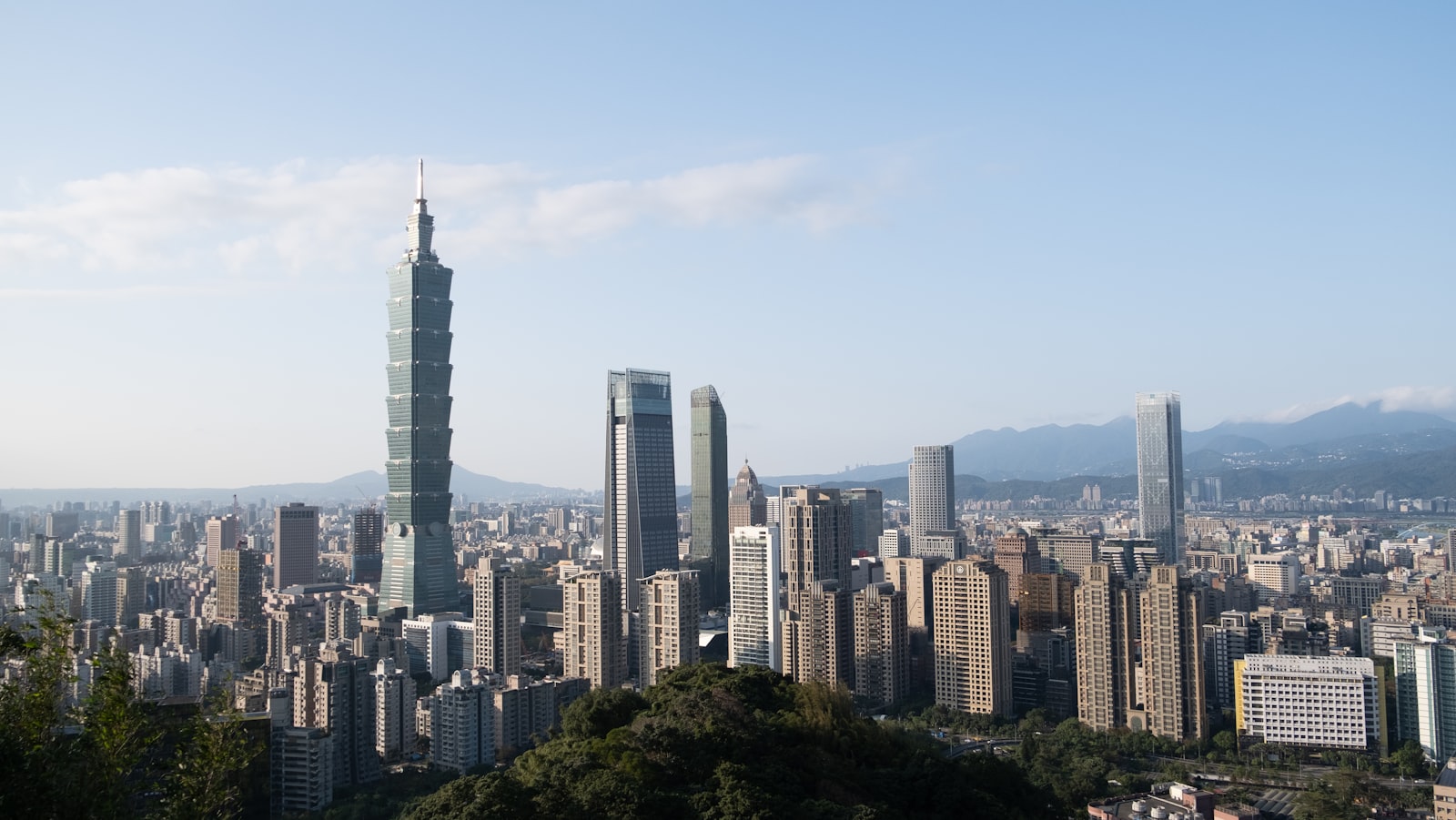
Moving to Taiwan the complete guide
A dynamic island at the heart of East Asia, with a world leading technology sector, superb food, fast trains, excellent healthcare and mountains a short ride from the city. Here is the honest brief on shipping, residence and life on the ground.
Costs are indicative 2026 ranges. Verify customs, visa and tax rules before you move.
Technology, safety and an outstanding quality of life
Taiwan combines a world leading technology and manufacturing economy with one of the safest, most convenient daily lives in Asia. Taipei in the north is the capital and business centre, Taichung and Tainan anchor the centre and south, and Kaohsiung is the major southern port city. Fast trains link the west coast, the mountains and hot springs are close to every city, and the food culture, from night markets to fine dining, is a genuine draw.
Healthcare is excellent and famously affordable once you join the national system, public transport is clean and cheap, and the cost of living is reasonable for a developed Asian economy, with Taipei the priciest place to rent. Mandarin is the working language, written in traditional characters, and while English is common in the technology sector and among younger people, daily bureaucracy runs in Mandarin, so help or some language study pays off.
International household shipments arrive by sea at Kaohsiung, the largest port, or at Keelung near Taipei, with Taichung as another option, then move by road to your city. Air freight into Taoyuan handles smaller, time sensitive loads. Taiwan uses the New Taiwan dollar, so budget for currency on arrival.
Technology professionals and engineers
Taiwan's semiconductor and hardware sector recruits worldwide. A work permit and resident visa, often arranged by the employer, lead to your ARC.
Skilled professionals and freelancers
The Employment Gold Card bundles a resident visa, open work permit and ARC for qualifying professionals across many fields, with no single employer needed.
Families and returning Taiwanese
Strong schools, low crime, the national health system and family ties make Taiwan a steady base for families and the diaspora.
Residence routes, in plain language
Foreigners staying beyond 180 days need an Alien Resident Certificate, the ARC, issued by the National Immigration Agency. Most movers first obtain a resident visa or a work permit, then convert it to an ARC after arrival.
The standard professional path. An employer secures a work permit through the Ministry of Labor, you obtain a resident visa, then apply for your ARC at the National Immigration Agency after arrival.
A four in one card combining a resident visa, an open work permit, an ARC and a re entry permit for qualifying professionals, valid for one to three years and not tied to a single employer.
Spouses and children of citizens, residents and Gold Card holders can apply for a resident visa and ARC, allowing the family to settle together.
Students at Taiwanese institutions and people in other approved categories can obtain a resident visa and ARC, each with its own conditions.
Used household goods and Taiwan customs
Taiwan allows incoming residents to import used household goods and personal effects free of duty when the goods are clearly for personal or household use rather than commercial sale, and when you meet the residency and timing conditions. In practice the goods should be used and owned before the move, and your shipment should arrive within six months of the date you enter to take up residence. The privilege does not apply to goods that look commercial or to frequent travellers who move goods repeatedly.
When you arrive to settle, you complete a customs declaration noting that unaccompanied household baggage is following, with the approximate number of boxes and a personal use value. Your shipping agent then uses that record, together with your passport and resident visa or ARC, to clear the sea shipment at Kaohsiung or Keelung. A detailed valued inventory, listing higher value electronics honestly, keeps clearance smooth, because customs reviews items that appear new or for resale.
Vehicles can in principle be imported but must meet Taiwan standards and pass inspection and taxation, which is rarely worthwhile, so most movers sell before leaving and buy locally. Firearms, certain medicines, some foods and counterfeit goods are restricted or prohibited, so check the current lists before you pack.
What life costs and how to get set up
Taiwan offers strong value for a developed economy. Outside central Taipei, rent is reasonable, eating out is cheap and excellent, and public transport is inexpensive and reliable. Taipei rents are the highest in the country but still below comparable Asian capitals. Utilities and groceries are moderate, and the famous national health insurance keeps medical costs low once you are enrolled.
Settling in centres on your ARC. The Alien Resident Certificate is your core identity document, carrying your residence details and the number that daily life runs on. Note that household registration in the local sense applies to nationals, so as a foreign resident the ARC is your equivalent record. With it you can open a bank account, sign a lease, get a local phone number and enrol in the national health system.
Healthcare runs through National Health Insurance, which residents join, usually after a short qualifying period or immediately through an employer, paying modest monthly contributions. Once enrolled you receive an NHI card and pay small fees at clinics and hospitals. The system is widely regarded as one of the best value in the world, and care in the cities is excellent.
Your first month checklist
- Convert your resident visa or work permit to an ARC at the National Immigration Agency
- Enrol in National Health Insurance and collect your NHI card
- Open a Taiwanese bank account once you have your ARC
- Get a local mobile number registered to your ARC
- Set up utilities and home internet
- Convert or validate your foreign driving licence as required
- Enrol children at a local or international school
How to choose a mover for Taiwan
No mover is named or ranked anywhere on this site. Here is how to judge any company quoting a move to Taiwan, then request quotes from vetted firms that genuinely run your origin to Taiwan.
Check FIDI or IAM affiliation
Membership of FIDI through the FAIM quality standard, or of IAM, signals audited financial and operational standards. It is the single fastest filter for an international move.
Insist on a binding pre move survey
A mover who quotes your volume from a video or home survey, in writing, is quoting the real job. A price given without seeing your goods is a guess that tends to climb later.
Confirm genuine experience on this lane
Ask how many moves they run on your exact corridor each year, which port and customs broker they use in Taiwan, and who clears the goods at the other end.
Read the insurance terms, not the headline
Compare marine all risk cover, the valuation basis, the excess, and what counts as an exclusion. The cheapest cover is rarely the one that pays out cleanly.
Weigh reviews and complaint history
Look for recent, specific reviews that mention customs delays, damage handling and final invoices. Pattern matters more than a single rating.
Then request quotes through one form
We never name, rank or recommend a single company. Send one brief and vetted movers who run this route reply to you. You choose.
Get moving quotes for your route to Taiwan
One short brief goes to vetted international movers who run your origin to Taiwan, including the customs leg. Compare on scope and service, not just price.
Subscribe to The Relocation Brief
One useful email when a new corridor goes live, plus the cost and customs changes worth knowing before you move. No noise.
Moving to Taiwan, answered
How much does it cost to move to Taiwan?
As an indicative 2026 range, a two bedroom household by shared container costs roughly $3,500 to $12,000 depending on origin, volume, season and delivery from Kaohsiung or Keelung to your city. The Asia Pacific sea haul keeps the floor higher than for a regional move. These are planning ranges, not quotes.
How long does shipping to Taiwan take?
Door to door transit is usually about 25 to 45 days by sea, including the sailing to Kaohsiung or Keelung, customs clearance and delivery to your home. Air freight cuts it to one to two weeks for a small shipment.
Do I pay duty on my furniture moving to Taiwan?
Incoming residents can usually import used household goods free of duty when the goods are for personal use, owned before the move, and arriving within six months of your entry, supported by your resident visa or ARC and a valued inventory. Verify the current rules with Taiwan Customs before shipping.
Do I need a visa to move to Taiwan?
Yes. Anyone staying beyond 180 days needs an Alien Resident Certificate, the ARC. Most movers first obtain a work permit and resident visa, or an Employment Gold Card, then convert to an ARC after arrival. Confirm your route before you move.
What is the first thing to do when I arrive in Taiwan?
Convert your resident visa or work permit into your ARC at the National Immigration Agency, then enrol in National Health Insurance. The ARC is the key to a bank account, a lease and daily life.
Can I bring my car to Taiwan?
It is possible but rarely worthwhile, because the vehicle must meet Taiwan standards and pass inspection and taxation. Most movers sell before leaving and buy locally. Confirm your situation before assuming you can import a car.
Plan your move to Taiwan by origin
Corridor guides into Taiwan, each with costs, customs and a timeline for that exact pair, are publishing progressively. Start from your origin country hub below, or browse the full corridor index.