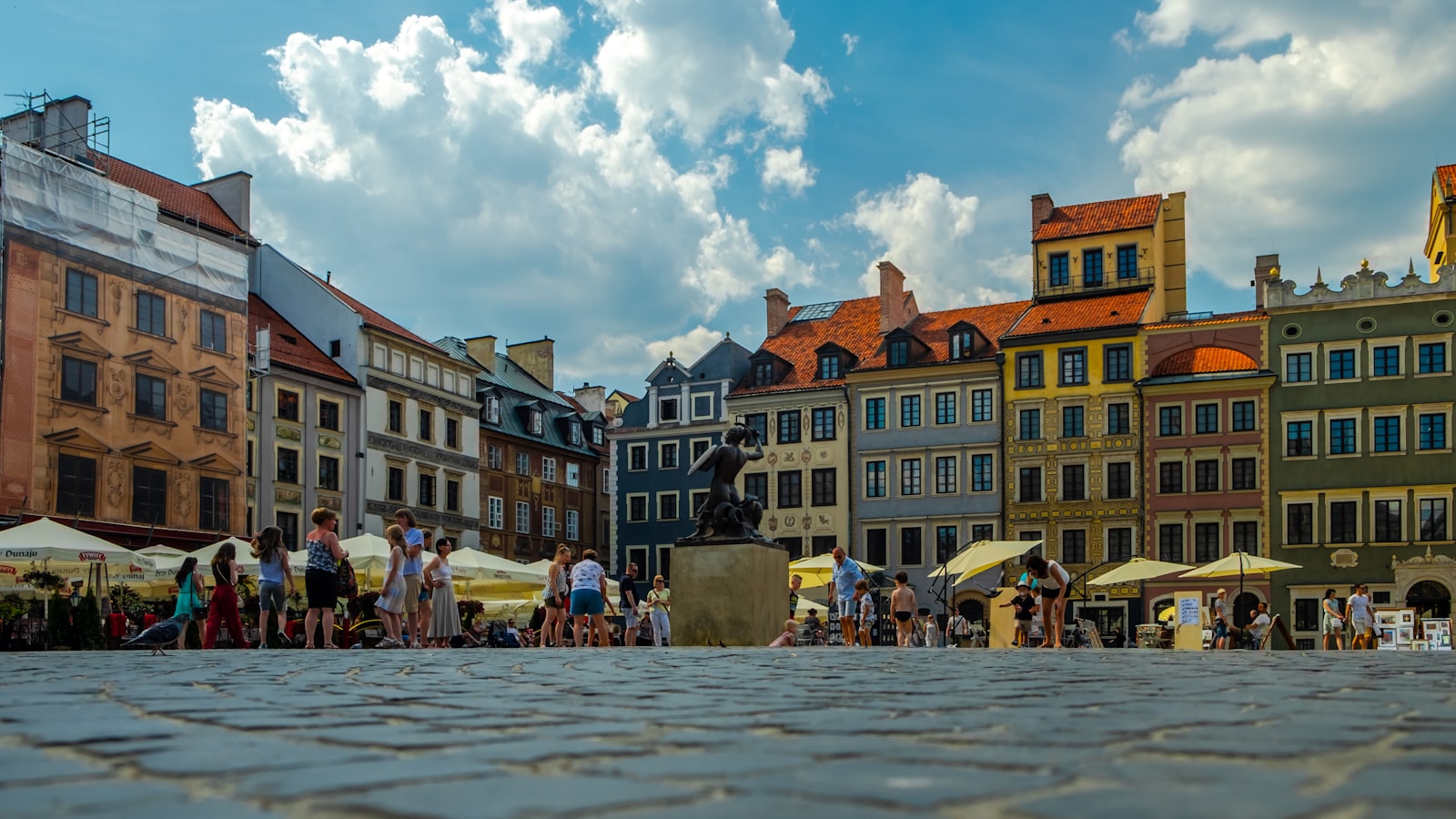
Moving from Austria to Poland
A move between two members of the single market, so there is no customs barrier and no container at sea. It is a road removal, and the real admin waits for you at the other end in the form of address registration and a PESEL number. Here is the honest brief on cost, timing, and paperwork.
This is a move inside the European single market, which changes everything about how it works. Austria and Poland are both in the European Union and the customs union, so your used household goods cross the border with no duty, no clearance, and no customs inventory. There is no container and no sailing. Your belongings are collected in Vienna, Graz, Linz, or your town, loaded onto a truck, and driven across to Warsaw, Krakow, Wroclaw, Gdansk, or wherever you are headed. Price is driven by volume in cubic metres, the distance to your exact Polish address, and whether you take a shared load or a dedicated truck.
Because the move itself is simple, the part that catches people out is the Polish administration after you arrive. As an Austrian citizen you have full freedom of movement, so there is no visa to apply for, but if you stay longer than three months you register your residence, and when you register your address, a process called zameldowanie, you are issued a PESEL number that unlocks healthcare, banking, and almost every official interaction. Get the truck booked sensibly and the registration done early, and this is one of the easiest international moves there is.
What it costs to move from Austria to Poland.
The numbers below are indicative ranges for Austria to Poland in 2026, quoted in euros because that is what movers price on this lane from Austria. With no sea freight, the cost is mostly the truck, the labour, and the kilometres to your Polish address.
Indicative ranges for 2026 in euros, the currency movers quote on this corridor. The drivers are volume in cubic metres, the road distance from Austria to your exact Polish city, packing scope, and access at both ends. These are not binding figures.
- + Best value for a 2 to 3 bedroom home
- + You pay only for the space you use on the truck
- × Waits for a shared load and a routed run, so timing is looser
- + Your goods only, direct from door to door
- + Fixed collection and delivery dates
- × Costs more than sharing a load
- + Good for a studio, a partial move, or boxes only
- + Often the cheapest way to send a small volume
- × Not suited to a full family home
Four levers move the number. Volume in cubic metres is the biggest, so a declutter before the survey pays for itself. Distance to your exact Polish address matters, as a run to Warsaw or Krakow is shorter than one to Gdansk on the Baltic. Access at both ends counts, since stairs, a long carry, or a narrow street with no parking add labour. And shared versus dedicated is the sharp trade between a cheaper groupage load that flexes on dates and a sole use truck that runs to a fixed schedule.
A realistic schedule for this move.
Without a sailing to plan around, this timeline is short. The work is booking the right kind of move and lining up your Polish address so you can register quickly once you land.
Declutter and get surveyed
Have movers run a video or in home survey for an accurate volume, then compare a shared load against a dedicated truck like for like. Less volume means a smaller bill, so sell or give away what you will not carry.
Book and confirm dates
Book your preferred mode and confirm collection and delivery windows. A dedicated truck gives fixed dates, while a shared load delivers within a routed window of a few days.
Pack and load
The crew packs and loads the truck in Austria. Keep an inventory for your own insurance, since there is no customs inventory to file inside the single market.
Drive across the border
The truck drives from Austria to Poland with no customs stop. A dedicated run takes two to four days, while a shared load follows a routed schedule that can take up to about two weeks.
Unload and register
Your goods are delivered and unpacked. Then register your Polish address through zameldowanie at the municipal office, which issues your PESEL number, and register for healthcare and banking.
Moving goods inside the single market.
This is the easy part of the corridor. Austria and Poland are both in the European Union customs union and single market, so personal household goods that move from one to the other are in free circulation. There is no import duty, no customs clearance, and no customs inventory to lodge. Your mover simply drives the load across the border. This is the single biggest reason a move within the EU is cheaper and faster than one to a country outside it.
A few sensible caveats still apply. Keep your own detailed inventory for insurance, because transit cover depends on it even though customs does not ask for it. Certain categories are still controlled across borders, including firearms, large quantities of alcohol or tobacco, and some plants, so flag anything unusual to your mover in advance. If you are bringing a car, you keep it but you will reregister it in Poland and meet local roadworthiness and tax rules within the deadline that applies after you take up residence.
The practical effect is that you can focus on the move itself and the Polish paperwork rather than on customs. Pack well, insure properly, and keep the documents you will need for address registration close to hand rather than buried in a box.
How Austrians actually settle in Poland.
As an Austrian citizen you have freedom of movement, so there is no visa to apply for. The work on this corridor is registration, and on arrival the address registration and PESEL number are what make daily life function.
Austrians may live and work in Poland without a visa or work permit. You can arrive, take a job, or start a business straight away under your EU rights.
- For
- EU citizens
- Need
- No visa
- Work
- Allowed at once
- Stay
- Unlimited
For a stay longer than three months, EU citizens register their residence with the voivodeship office, the urzad wojewodzki, within the set deadline and receive a registration certificate.
- For
- Long stays
- Office
- Urzad wojewodzki
- When
- Over 3 months
- Gives
- Registration certificate
Registering your address, the zameldowanie, at the municipal office issues your PESEL number, the national identifier used for healthcare, banking, taxes, and contracts.
- Process
- Zameldowanie
- Office
- Urzad gminy
- Gives
- PESEL number
- Used for
- Daily life
Your PESEL serves as your tax identifier for most individuals, and you register with the public health fund, the NFZ, to access state healthcare once you are working or insured.
- Tax id
- PESEL
- Health
- NFZ
- When
- After arrival
- Then
- Settled
How to choose a mover for this route, with no names attached.
This site never names, ranks, or recommends a moving company. Instead, here is the neutral checklist that separates a safe international mover from a risky one. Apply it to every quote you receive.
Get Moving Quotes for Austria to Poland.
One short form reaches vetted international movers who run this exact route. No obligation, and no moving company is shown or ranked on this page. You receive quotes to compare on your own terms.
Plan the move with a clear head.
Subscribe to The Relocation Brief for practical, country specific relocation guidance, sent when it is genuinely useful. No spam, and you can leave any time.
Questions people ask about this move.
How much does it cost to move from Austria to Poland?
As indicative ranges for 2026, a 2 to 3 bedroom move runs roughly 2,600 to 5,500 euros as a shared road load and 4,000 to 7,500 euros for a dedicated truck, before packing extras and insurance. With no sea freight, the cost is mostly the truck, the labour, and the kilometres to your exact Polish address. Get a binding quote from a survey.
How long does moving from Austria to Poland take?
A dedicated truck takes two to four days door to door, since it drives straight across the border with no customs stop. A shared load follows a routed schedule and can take up to about two weeks because it waits for other consignments. There is no port and no sailing on this corridor.
Do I pay customs duty moving from Austria to Poland?
No. Austria and Poland are both in the European Union customs union and single market, so your used household goods move in free circulation with no import duty and no customs clearance. Keep your own inventory for insurance, since transit cover still depends on it.
Do Austrians need a visa to move to Poland?
No. As an Austrian citizen you have freedom of movement and may live and work in Poland without a visa or work permit. For a stay over three months you register your residence, and you register your address to receive a PESEL number. This is not immigration advice, so confirm the current rules with official Polish sources.
What is the PESEL number and zameldowanie?
Zameldowanie is the registration of your address at the Polish municipal office, and completing it issues your PESEL, the national identification number. The PESEL is used for healthcare, banking, taxes, and contracts, so registering your address early after arrival is the single most useful thing you can do.
Can I bring my car from Austria to Poland?
Yes. You keep your car and there is no import duty within the single market, but you reregister it in Poland and meet the local roadworthiness and tax requirements within the deadline that applies once you take up residence. Confirm the current vehicle rules with the Polish authorities before you move.
Related pages
Last reviewed: 23 January 2026. We refresh this guide as costs, customs, and visa rules change.