Moving to Poland: the complete guide
Poland has quietly become one of Europe's most dynamic economies, pairing fast growth with low costs and deep history. Here is what it takes to bring your home, the PESEL and residence card that come first, and how customs treats your goods.
Costs are indicative ranges for 2026.
Fast growth, low costs, and a real quality of life.
People move to Poland for a rare combination: a booming economy and job market with a cost of living well below Western Europe. Cities like Warsaw, Krakow, and Wroclaw have become hubs for technology, finance, and shared services, and the lifestyle is comfortable on a moderate income.
The economy is the engine. Poland has grown steadily for decades and hosts a large and expanding base of international companies, business services centres, and a strong tech scene. For skilled professionals, salaries stretch much further here than in London, Frankfurt, or Amsterdam.
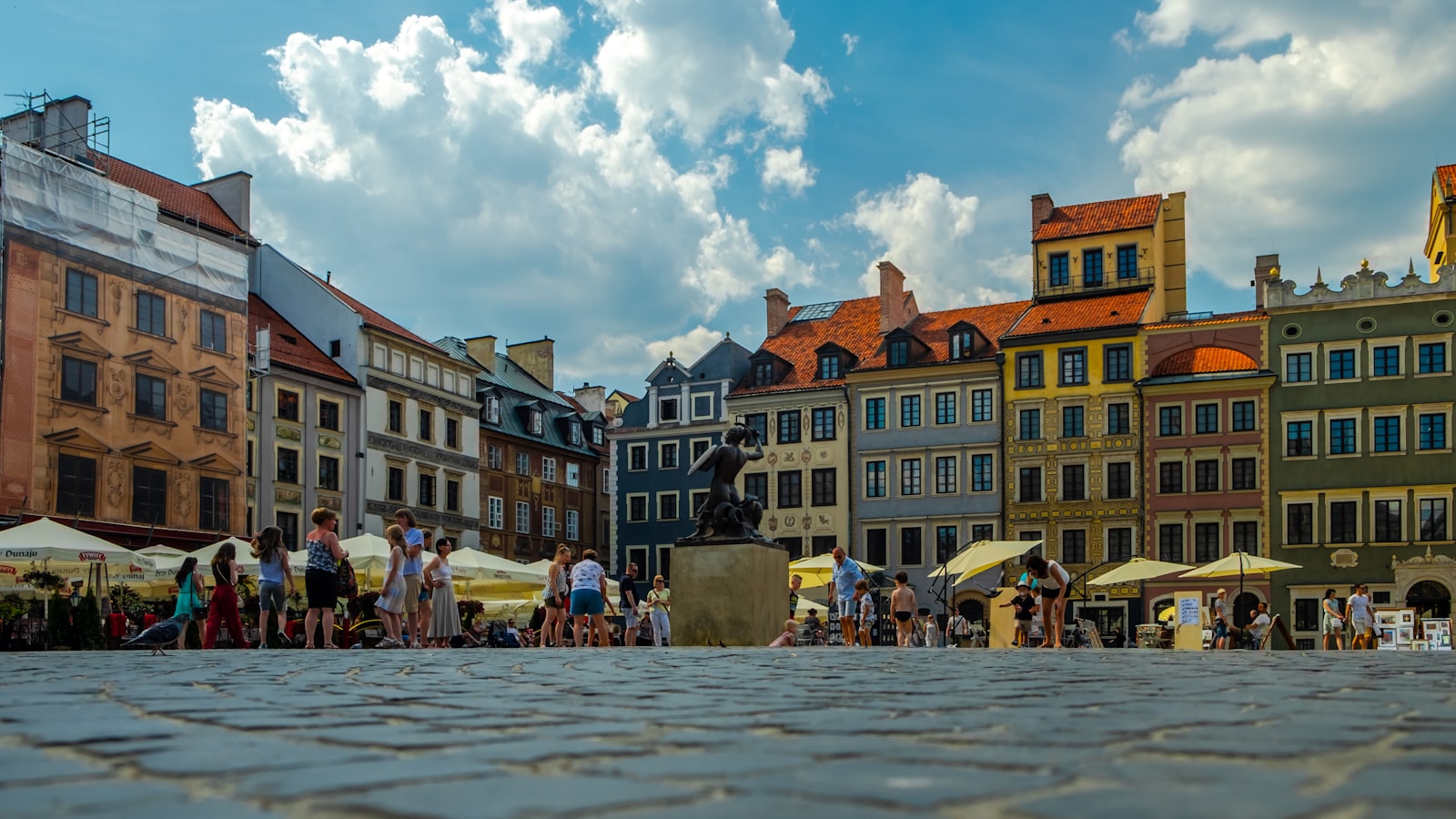
Daily life is easy to like. Cities are safe and walkable, public transport is cheap and efficient, the food scene has modernised fast, and the country is rich in history and within easy reach of the rest of Europe. Restored old towns and a strong cafe culture make even the colder months pleasant.
The honest trade offs are a language that takes real effort, winters that are properly cold, and administrative processes that can be slow, with residence paperwork at provincial offices a common source of waiting. English is widely spoken among younger people and in business, but officialdom still leans heavily on Polish.
Who it suits, honestly
Poland suits skilled professionals in tech, finance, and services who want their money to go further, as well as movers with Polish heritage and those drawn to Central European life. It is less suited to people who need year round warmth, or who are unwilling to navigate Polish language paperwork during the settling in period.
How people get residence in Poland.
European Union and European Economic Area citizens move freely. Others generally arrive through a job offer or family ties and then hold a temporary residence card. These are the routes most movers use.
Citizens of the European Union and the European Economic Area can live and work in Poland freely, registering their stay and obtaining a PESEL once settled.
For people with a Polish job offer, usually starting with a work permit obtained by the employer, followed by a national visa or residence permit. Demand for skilled workers is high.
The karta pobytu covers stays beyond a national visa for work, study, family, or business, applied for at the provincial office (urzad wojewodzki) where you live.
Streamlined routes have existed for tech workers and founders from selected countries. Check whether a current programme fits your profile before relying on it.
Bringing your household goods into Poland.
As a member of the European Union, Poland lets goods from elsewhere in the bloc move freely, while goods arriving from outside can enter with relief when you are transferring your residence here.
If you are moving your normal home to Poland from outside the European Union, used household effects you have owned and used for at least six months are generally admitted free of customs duty and import VAT as transfer of residence goods, provided you keep them for a period after arrival and declare them with a valued inventory. Polish customs, part of the National Revenue Administration, handles the entry.
Goods shipped from another European Union country do not need a customs entry at all, which makes intra European moves into Poland simple. This is one reason road freight from Germany, the Netherlands, or the Nordics is both cheap and quick into Polish cities.
Restricted categories include weapons, certain foods and plants, and protected species products. Pets from outside the European Union need a microchip, rabies vaccination, and the right health paperwork. Bringing a car involves registration and a technical inspection, and EU origin cars are far simpler than those arriving from outside the bloc.
Verify before you move. Transfer of residence conditions and holding periods change. Confirm the current rules with Polish customs and your mover's destination agent before shipping from outside the European Union, and check vehicle import steps separately if you plan to bring a car.What your money buys once you are there.
Poland is one of the better value destinations in the European Union. Rent, eating out, and transport are cheap by Western European standards, while quality is high in the major cities. Figures below are indicative and in US dollars.
Indicative monthly figures for 2026 in US dollars. Warsaw runs above the national average, while cities like Wroclaw, Poznan, and Lodz offer similar quality for less.
Healthcare
Poland has a public health system funded through the National Health Fund (NFZ). If you work and pay contributions, you and your dependants are covered, registering with a chosen clinic. Waiting times in the public system push many movers to add affordable private insurance, which is widely available and gives quick access to private clinics in the cities.
Banking and money
Opening a Polish bank account is usually straightforward once you have a PESEL and proof of address, and Poland is a leader in mobile and contactless payment, with the BLIK system used widely for transfers and online purchases. Many movers open an account in the first weeks to handle rent, utilities, and salary.
Your first month checklist
Apply for your PESEL number, which is needed for almost everything official, and register your residence (zameldowanie) if your situation requires it. Start or continue your residence card (karta pobytu) application at the provincial office, open a bank account, register with a clinic, and set up a Polish mobile number and internet.
What shipping your home to Poland costs.
Poland is unusually cheap to move to from within Europe because road freight is short and there is no customs entry from other European Union countries. Moves from North America, Asia, or Oceania arrive by sea and cost more. Ranges below cover 2026.
Indicative ranges for 2026 in US dollars. Volume, season, port access, and destination delivery distance move the final number. A binding pre move survey is the only way to get a real figure.
How to choose a mover for Poland
We never name, rank, or recommend a moving company. Instead, here is the neutral checklist we would use ourselves. Apply it to any quote you receive, then request comparable quotes through the form below.
FIDI or IAM affiliation
Membership of the FIDI Global Alliance or the International Association of Movers signals audited financial stability and a complaints process you can lean on if something goes wrong.
Real corridor experience
Ask how many households the company has shipped on your exact route in the past year. A mover that runs the lane weekly knows the ports, the customs broker, and the paperwork by heart.
A binding pre move survey
Insist on a video or in home survey and a binding or not to exceed quote. A price built from a real volume estimate is the only quote you can compare like for like.
Clear insurance terms
Read how marine transit cover is calculated, what the deductible is, and whether valuation is by replacement value. Vague cover is the most common regret on an international move.
Verifiable reviews
Look for recent, specific reviews that name the destination, not just star ratings. Patterns in how a company handles claims tell you more than any single glowing note.
Written scope and timeline
Everything that matters belongs in writing: packing, customs clearance, delivery, unpacking, and debris removal, with who pays destination charges spelled out.
Get moving quotes for your move to Poland.
One short form, shared with vetted international movers who run road and sea lanes into Poland. No obligation and no pushy follow up.
One useful email a month for people moving countries.
Real cost movements, customs rule changes, and corridor notes. No spam, and you can leave whenever you like.
Questions people ask about this move.
How much does it cost to move to Poland?
For a 2 to 3 bedroom home, a shared container or road move typically costs from about 2,800 to 8,500 US dollars in 2026. Road moves from within Europe are at the low end with no customs entry, while sea moves from North America, Asia, or Oceania sit higher. Base your budget on a binding survey.
What is a PESEL number?
The PESEL is your Polish national identification number. It is needed for banking, healthcare, contracts, taxes, and most official services, so obtaining it is one of the first steps after you arrive and register your stay.
Do I pay duty on household goods moving to Poland?
Goods shipped from elsewhere in the European Union move freely with no customs entry. From outside the bloc, used belongings owned and used for at least six months are generally admitted free of duty and import VAT as transfer of residence goods, subject to an inventory. Confirm current rules before shipping.
How long does shipping to Poland take?
A road move from within Europe can arrive in one to two weeks, while a sea container from North America, Asia, or Oceania takes about four to six weeks including clearance at Gdansk or Gdynia. Shared services add time while they wait for a full load.
Do I need to speak Polish to move there?
You can start in English, especially in business, tech, and among younger people, but official paperwork and daily errands often run in Polish. Learning the basics smooths the residence process and everyday life, and helps a great deal outside the largest cities.
Moving to Poland from your country.
Pick your origin for a corridor guide built specifically for that pair, with the costs, customs notes, and timeline for that exact route into Poland.