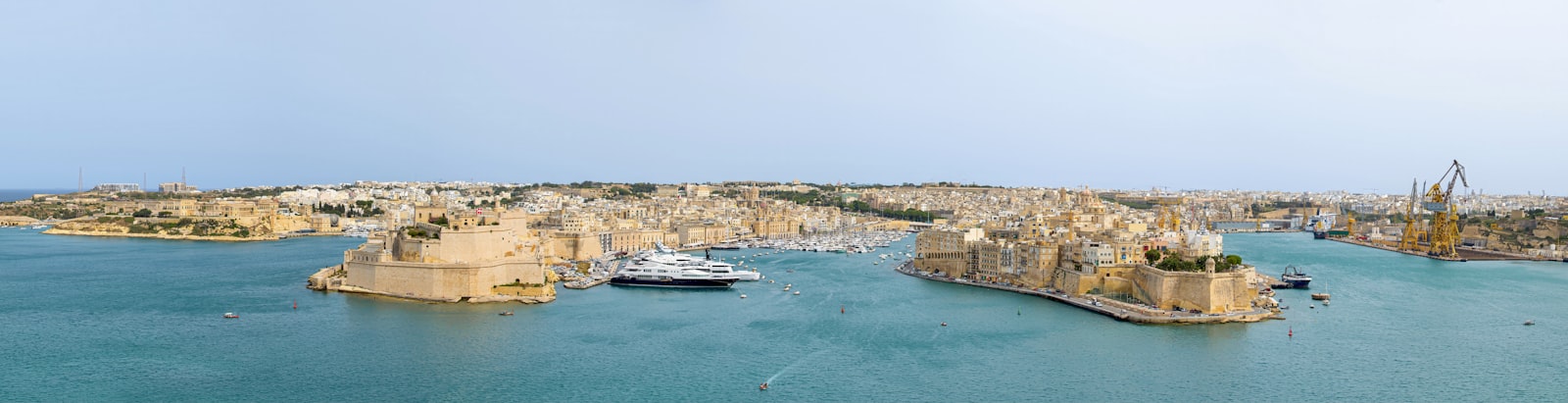
Moving from Germany to Malta
A road and ferry move from central Europe to the Mediterranean, where both countries share the euro and the European Union, so there is no customs barrier. The real task is registering with Identita. Here is the honest brief on cost, transit, free circulation of goods, and your eResidence document.
Costs are indicative ranges for 2026.
The honest summary of this move.
Moving a household from Germany to Malta is an intra European Union move, so the great advantage is that there is no customs barrier and no import taxes on your belongings. For a 2 to 3 bedroom home, a road and ferry move runs roughly 3,000 to 7,000 US dollars in 2026, with delivery in about two to four weeks door to door from Germany to Malta, the goods driving south through Italy and crossing the Mediterranean by ferry to Valletta.
This is a road and ferry move. Your belongings are packed in Germany, loaded onto a van or part load trailer, driven south through Austria or Switzerland and down through Italy to a southern port such as Genoa, Salerno, or Pozzallo in Sicily, and shipped across to Malta, where the main harbours are at Valletta and the Marsaxlokk Freeport. Price is driven by your volume, whether you share space or take a dedicated vehicle, the season, and access at both ends, since Maltese streets are often narrow.
Because both Germany and Malta are in the European Union, your household goods are already in free circulation. There is no transfer of residence relief to claim and no import duty or VAT to pay on used belongings, which removes the single biggest headache that long haul moves carry. You simply need a sensible inventory for the movers and the ferry. This is the defining feature of the corridor and the reason it is faster and cheaper than any move from outside the bloc.
The real administrative task is registration. As a German citizen exercising European Union free movement, if you intend to live in Malta for more than three months you register with Identita, the national identity agency, and receive an eResidence document. A rental lease is a mandatory part of the application. The eResidence document is what lets you access services and is normally issued for five years. Both countries use the euro, so there is no currency change to manage, which is a rare comfort on an international move.
What it costs, by home size and method.
The numbers below are indicative ranges for Germany to Malta in 2026. This is a road and ferry move within the European Union, so your volume, whether you share or take a dedicated vehicle, and access at both ends drive the price.
Indicative ranges for 2026 in US dollars. The main drivers are volume, whether you share or take a dedicated vehicle, packing scope, the season, and access at both ends, since Maltese streets are often narrow and a shuttle vehicle may be needed. Summer is busier, so book ahead.
- + Best value for a 2 to 3 bedroom home
- + You pay only for the space you use
- - Fixed departure days and a shared schedule
- + Your goods only, direct to your door
- + Faster and more flexible on dates
- - More than a small load needs
- + Good for a large home or long storage
- + One sealed unit for the whole load
- - Slower and pricier than road and ferry
A sane timeline for this move.
With no customs barrier to clear, the plan is simpler than most: book the right vehicle, plan around narrow Maltese access, and register with Identita once you arrive.
Get three surveys
Have movers run video or in home surveys in Germany for an accurate volume and a binding quote that names your German collection and your Maltese delivery address.
Book your vehicle
Confirm road and ferry groupage, a dedicated van, or a sea container and agree collection and delivery dates. Book ahead for a summer move.
Plan Maltese access
Tell your mover about narrow streets, stairs, or parking limits at your Maltese address so they can arrange a shuttle vehicle if needed.
Pack and load
The crew packs and inventories your goods and loads the vehicle for the drive south through Italy and the ferry to Malta. No customs declaration is needed within the European Union.
Deliver and unpack
The goods are delivered to your Maltese home and unpacked. Because the move stays inside the European Union, there is no clearance step to wait on.
Deregister and register
Complete your Abmeldung in Germany if you have not already, then register with Identita in Malta for your eResidence document, using your rental lease.
Why this move skips customs.
Because Germany and Malta are both in the European Union, your used household goods move in free circulation, so there is no import duty, no VAT on your belongings, and no transfer of residence declaration to file.
Within the European Union, goods that are already in free circulation can move between member states without a customs entry. A move from Germany to Malta therefore carries none of the import taxes or transfer of residence paperwork that a move from outside the bloc would. You do not need to prove twelve months of prior residence or owned and used periods, and there is no duty or VAT to recover on used furniture and effects. This is the single biggest reason the corridor is cheaper and faster than a long haul move.
What you still want is a clear inventory for the movers and the ferry operator, and an awareness of the few categories that are controlled even within the European Union, such as firearms, certain plants, and protected species items. Keep your identity documents to hand for the ferry crossing. There is no destination agent clearance to schedule, which removes the most common source of delay and storage cost on international moves.
Bringing a car is straightforward to transport but you will register it in Malta and may face a registration tax based on the vehicle, and remember that Malta drives on the left while Germany drives on the right, which makes a left hand drive car less convenient. Pets travel under the European Union pet scheme with a microchip, a valid rabies vaccination, and an EU pet passport. Because there is no customs gate, the smoothest moves here are simply the ones planned well around Malta's narrow access and ferry schedules.
Verify before you move. European Union free circulation rules, Maltese vehicle registration tax, and controlled item lists can change. Confirm the current position with the Maltese authorities and your destination agent before you ship.The realistic routes for this corridor.
As a German citizen you have European Union free movement, so you do not need a visa to live in Malta. The task is registration rather than immigration. These are the steps and routes people on this lane typically use.
German citizens can live and work in Malta freely. For stays over three months you register with Identita and receive an eResidence document, with a rental lease as a mandatory document.
You can take up a job or work independently without a permit. Registration with Identita and the tax and social security authorities follows once you are settled.
Those not working can register on the basis of sufficient resources and health cover, a common route for German retirees moving to Malta.
Non European Union family members of a German citizen can apply for residence on that basis through Identita, with relationship conditions.
How to choose a mover for Germany to Malta.
We never name, rank, or recommend a moving company. Instead, here is the neutral checklist that matters on this exact lane. Apply it to any quote, then request comparable quotes through the form below.
FIDI or IAM affiliation
Membership of the FIDI Global Alliance or the International Association of Movers signals audited financial stability and a complaints process you can lean on if something goes wrong.
Real corridor experience
Ask how many households the company has shipped from Germany to Malta in the past year. A mover that runs the lane often knows the route, the paperwork, and the destination agent by heart.
A binding pre move survey
Insist on a video or in home survey and a binding or not to exceed quote. A price built from a real volume estimate is the only quote you can compare like for like.
Clear insurance terms
Read how transit cover is calculated, what the deductible is, and whether valuation is by replacement value. Vague cover is the most common regret on an international move.
Verifiable reviews
Look for recent, specific reviews that name the destination, not just star ratings. Patterns in how a company handles claims tell you more than any single glowing note.
Written scope and timeline
Everything that matters belongs in writing: packing, any customs clearance, delivery, unpacking, and debris removal, with who pays destination charges spelled out.
Get moving quotes for Germany to Malta.
One short form, shared with vetted international movers who run this exact lane from Germany to Malta. No call centre roulette and no obligation.
One useful email a month for people moving countries.
Real cost movements, customs rule changes, and corridor notes. No spam, and you can leave whenever you like.
Questions people ask about this move.
How much does it cost to move from Germany to Malta?
For a 2 to 3 bedroom home, a road and ferry move typically costs from about 3,000 to 7,000 US dollars in 2026. Because there is no customs barrier within the European Union, this corridor is cheaper than a long haul move. Base your budget on a binding pre move survey.
How long does shipping take from Germany to Malta?
Plan on roughly two to four weeks door to door for a road and ferry move, and a little less for a dedicated van. The goods drive south through Italy and cross to Valletta or the Marsaxlokk Freeport by ferry.
Do I pay duty on my household goods moving to Malta?
No. Because Germany and Malta are both in the European Union, your used household goods move in free circulation, so there is no import duty, no VAT on your belongings, and no transfer of residence declaration.
What is the eResidence document and why does it matter?
The eResidence document is what you receive after registering with Identita, the Maltese identity agency, for a stay over three months. It lets you access services and is normally issued for five years. A rental lease is a mandatory part of the application.
Do I need a visa to move from Germany to Malta?
No. As a German citizen you have European Union free movement, so you can live and work in Malta without a visa. You simply register with Identita for stays over three months.
Can I bring my car from Germany?
Yes, transport is easy, but you register the car in Malta and may face a registration tax. Note that Malta drives on the left while Germany drives on the right, so a left hand drive car is less convenient there.