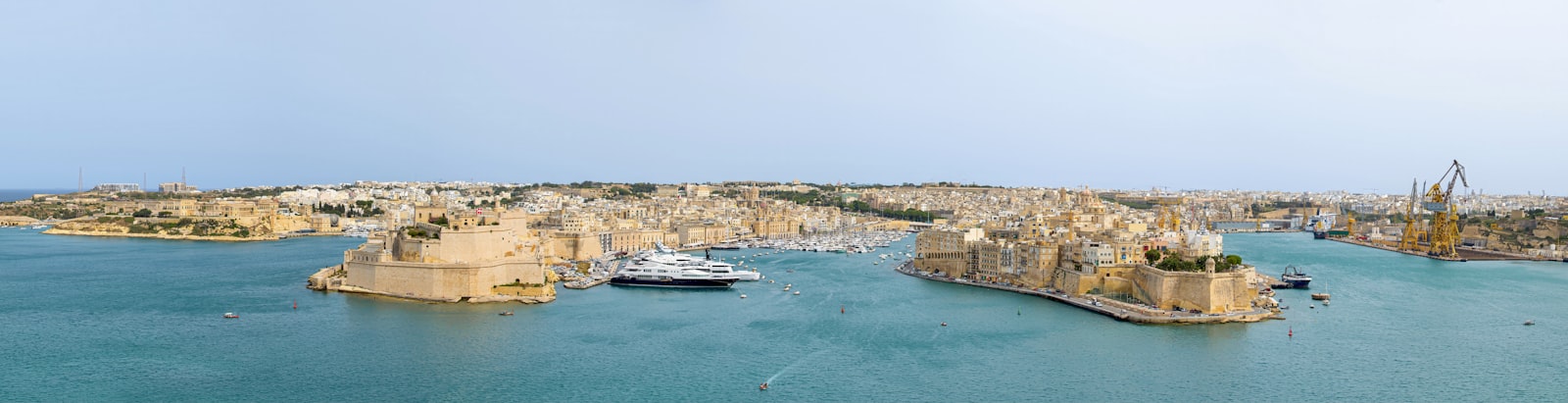
Moving to Malta: the complete, honest guide
An English speaking island in the middle of the Mediterranean, inside the European Union, with sunshine most of the year. Here is the honest brief on residence, customs and the real cost of island life.
Sunshine, English and the EU, on a very small island.
Malta offers a rare combination: a member of the European Union where English is an official language, the climate is Mediterranean, and the pace is gentler than the mainland. For English speakers who want the legal comfort of the EU without learning a new language from scratch, it is uniquely easy to land in. The financial services, gaming and technology sectors have drawn a large international workforce, and the historic towns and clear seas do the rest.
It suits remote workers, retirees with steady income, finance and gaming professionals, and EU citizens who simply want a sunnier base with familiar law. The lifestyle is outdoor, social and walkable in the old centres.
Be realistic about scale. Malta is one of the smallest and most densely populated countries in Europe. That means traffic, summer crowds, limited housing stock and a sense that everyone knows everyone. Construction is constant and water and greenery are scarce. It is a wonderful base for some and claustrophobic for others, so a long visit before committing is wise.
EU citizens register, others use work, nomad or residence routes.
For citizens of the European Union, moving to Malta is a matter of registering ordinary residence. For everyone else, the route depends on whether you work locally, work remotely, or live on independent means.
For people from outside the EU who work remotely for foreign employers or clients. The 2026 requirement is a minimum gross income of around forty two thousand euros a year. It is issued for a year, renewable up to a total of four years, with a first year exemption on qualifying work income.
- Income
- ~42,000 EUR / yr
- Valid
- 1 year, renewable
- Max stay
- 4 years
- Fee
- 300 EUR per person
The combined work and residence permit for non EU nationals taking a job in Malta. From 2026 first time applicants must complete a pre departure course and attach the certificate, or the application is rejected. Your employer is central to the process.
- For
- Non EU workers
- New step
- Pre departure course
- Sponsor
- Employer
- Source
- Identita
Citizens of the EU, plus Iceland, Liechtenstein, Norway and Switzerland, who intend to live in Malta for more than three months register their residence and receive a document. Straightforward, with proof of work, study or means.
- For
- EU and EEA
- Trigger
- Over 183 days
- Proof
- Work or means
- Result
- Residence document
Inside the EU customs union, with a transfer of residence process from outside it.
How Malta treats your household goods depends on where they come from. If you are moving from another European Union country, your goods are already in free circulation within the customs union, so there is no customs duty or import process for personal effects, only the practical matter of shipping them across the water. This is one of the quiet advantages of moving within the EU.
If you are arriving from outside the European Union, your used household goods are imported under the transfer of residence relief, which lets people moving their normal home into the EU bring personal property free of duty and import value added tax, provided you have owned and used the items for the required period and are genuinely relocating. You declare them with a valued inventory and evidence of your move, and the relief is administered by the Maltese customs authority.
Restricted items follow the usual European pattern: weapons, certain foods, protected species and the like. Cars from outside the EU face registration and a vehicle tax through Transport Malta, and even EU cars must be registered locally within a set period, with island roads and tight parking worth weighing before you ship one. Pets travel under the EU pet scheme with microchip and rabies records. Almost all household shipments arrive by sea through the Malta Freeport at Marsaxlokk or the Grand Harbour, since the island has no land border.
Cheaper than northern Europe, but housing has caught up.
Malta used to be a bargain and is now merely reasonable. Rents in the popular coastal and central towns have risen steeply with demand, and a one bedroom flat in a sought after area is no longer cheap, though it still undercuts London, Dublin or the big EU capitals. Away from the hotspots and outside summer, prices ease.
Everyday costs are moderate. Eating out is affordable, groceries are reasonable if you buy local, and you may not need a car if you live near the bus routes, though many residents drive. Summer cooling pushes up the electricity bill, and water is expensive because the island desalinates much of it. Healthcare is good, with a public system for residents who contribute and a private option that is far cheaper than the United States. On balance, a comfortable island life costs less than most of northern Europe.
Indicative 2026 figures in US dollars, drawn from aggregated cost of living panels. Your city and lifestyle will move these a lot. Treat them as direction, not a budget.
Your first month checklist
Your first month centres on your residence document and a tax number. Non EU arrivals collect the eResidence card once their permit is approved through Identita, while EU citizens register their residence and receive their document. Either way you then apply for a Maltese tax number from the Commissioner for Revenue and, if working, register for social security.
Open a local bank account, which can be slower than you expect and usually wants your residence document and proof of address, get a Maltese SIM, and register with a local health centre if you are entitled to public care. Sort your rental contract and utilities, and if you brought a car, start the registration with Transport Malta within the permitted window so you are not caught driving on foreign plates too long.
How to choose a mover for Malta, without the guesswork.
We never rank or recommend individual companies. Instead, here is the neutral checklist a careful mover uses to judge any firm bidding on this route.
Industry affiliation
Look for membership of FIDI or IAM. Both vet members on financial stability and handling standards, which matters when your goods cross a border.
Real corridor experience
Ask how many moves the firm has run into Malta in the past year, which port or airport they clear through, and who their agent on the ground is.
A binding pre move survey
Insist on a video or in home survey and a written, binding volume. A quote built from a guessed cubic metre figure is the most common cause of a surprise final bill.
Insurance terms in writing
Read what the cover actually pays. Confirm whether it is full replacement value, what the excess is, and whether owner packed cartons are covered.
Reviews that name the route
Weight reviews that mention this destination and customs clearance, not just a tidy van on collection day. The hard part happens after the goods leave.
Like for like quotes
Compare three quotes with the same scope: same volume, same insurance, same delivery address and the same view on stairs, parking and customs fees.
Get moving quotes for Malta.
Tell us your origin, home size and timing. Vetted international movers who run the lane into the Malta Freeport come back to you with real numbers. No obligation.
The things people ask before they commit.
How much does it cost to move to Malta?
Do I pay duty on my belongings when moving to Malta?
How long does shipping to Malta take?
What visa do I need to move to Malta?
Is English really enough to live in Malta?
Can I bring my car to Malta?
Moving to Malta from your country.
Choose your origin country for a corridor guide built for that route into Malta, with the shipping lane, the customs treatment and the cost range.
Britain, Ireland and the Low Countries
German speaking and Central Europe
The Nordics
Southern Europe
The Gulf and Middle East
Last reviewed: 10 April 2026. We refresh this guide as costs, customs, and visa rules change.