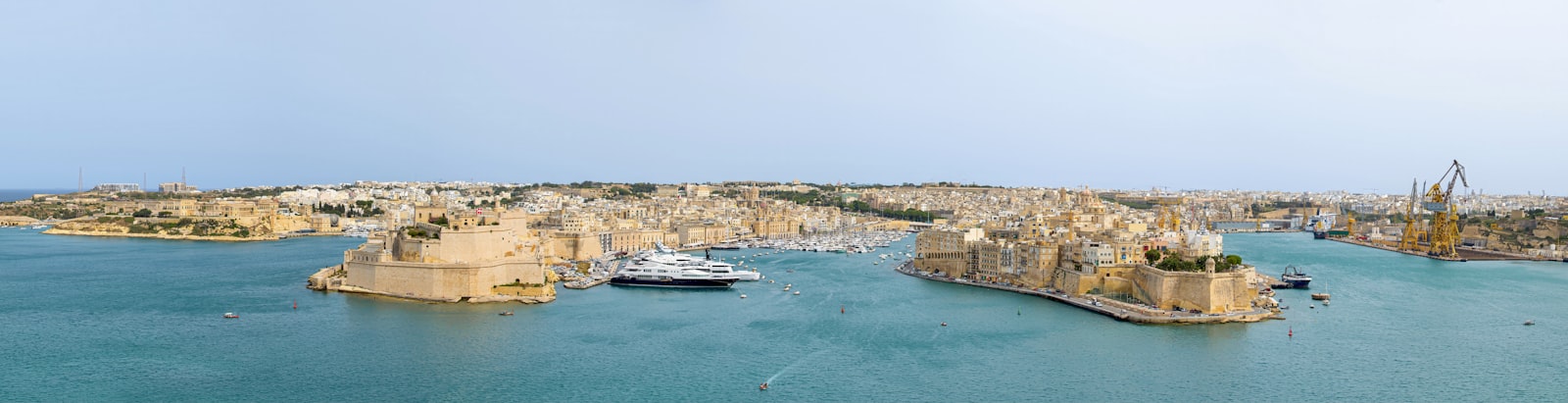
Moving from Italy to Malta
A short hop between two close Mediterranean neighbours, both inside the European Union and both using the euro. The journey runs by road down through Italy to a southern port, often in Sicily, then a short sea crossing to the Malta Freeport. There is no customs to clear and no currency change, which makes this one of the simpler international moves. The main early task is the eResidence card. Here is the honest brief for this corridor.
This is a short combined road and sea move, because Malta is an island close to the south of Italy. Your goods are loaded in Italy and driven south, often to a Sicilian port such as Pozzallo, Catania, or Salerno on the mainland, then shipped the short distance to the Malta Freeport at Marsaxlokk, with a brief road haul to your address. Some movers run a full groupage service that handles the road and sea legs as one. Door to door this usually runs one to two weeks, with a shared load tied to a sailing schedule and a sole use container moving on your own date.
The reassuring part is that this is one of the simpler international moves. Italy and Malta are both in the European Union and its customs union and single market, so your household goods move as a free internal transfer with no duty, no import value added tax on the move, and no relief to claim, because there is no import to clear. Both countries use the euro, so there is no currency change either. What surprises Italian movers is the road, not the paperwork, because Malta drives on the left while Italy drives on the right, so a car brought over is left hand drive in a left hand traffic country. The other early task is the eResidence card and tax number that island life runs on.
What it costs to move from Italy to Malta.
What it really costs to move a household from Italy to Malta in 2026, shown as indicative ranges by home size and shipping method. This is a short road and sea move with no customs, so volume and your choice of shared versus sole use freight drive the number most.
Indicative ranges for 2026 in euros, before full packing, premium insurance, and any storage. A shared load splits the space and the cost with other shipments, while a sole use twenty or forty foot container carries only your goods. These are not binding figures, so get a survey.
Four levers move the number. Volume dominates, because a shared load is priced by the space you fill, so a real declutter before the survey pays off most. Shared versus sole use trades cost against timing, with a shared load cheaper but tied to a sailing schedule and a dedicated container pricier but on your own date. The road leg down through Italy to the loading port and the short sea leg to Malta both feed the price. And access at both ends matters, from an Italian building with a fixed moving slot to a Maltese town with narrow streets and tight stairwells a large truck cannot enter, which can mean a smaller shuttle vehicle and an extra fee.
A realistic schedule, working back from the sailing.
Work back from the sailing. The road and sea legs are short and predictable, so the real effort is the Maltese admin, the eResidence card and tax number, plus a decision about your car.
Book the move and plan the route
Have movers survey your home and quote shared and sole use options, then confirm the routing south through Italy to a Sicilian or mainland port and across to the Malta Freeport. Decide early whether to ship a car, given that Malta drives on the left.
Sort the Italian exit
Register your move abroad with AIRE, the register of Italians resident abroad, settle matters with the tax authorities, and cancel or transfer utilities, insurance, and your tenancy. A clean exit on the Italian side prevents loose ends later.
Prepare your Maltese arrival
Because this is an internal European Union move there is no customs paperwork for your used goods, so read up on the eResidence registration, the tax number, and social security, and line up the documents and a home so you can act quickly on arrival.
Load and ship
The crew packs and loads in Italy, the truck heads south to the port, and your goods sail the short crossing to Malta. Keep your own documents and an essentials bag with you, since you and your goods may arrive a few days apart on this combined route.
Register and settle
As a European Union citizen, apply for your eResidence card through Identita, get a tax number from the Commissioner for Revenue, and register for social security and healthcare. Then open a bank account, all of which lean on these steps.
Clearing your goods into Malta.
This corridor has no customs step for your used household goods. Italy and Malta are both members of the European Union and its customs union and single market, so moving your home between them is an internal transfer of goods that already have Union status. There is no import duty, no value added tax charged on the move itself, and no transfer of residence relief to claim, because there is no import to clear. Both countries use the euro, so there is no currency change either.
A few categories still carry rules wherever you move inside the Union. Large quantities of alcohol and tobacco beyond personal use can attract questions, certain weapons, plants, and protected species items remain controlled, and bringing a car means re registering it in Malta, where it is worth remembering the island uses left hand traffic. Pets travel under European Union animal health rules with a pet passport and up to date vaccinations.
So the practical task on this route is registration and a decision about your car, not customs. Keep an inventory for your own insurance and claims, keep proof of your move for the residence registration, and budget time for the Maltese formalities rather than for a border. The freight is the predictable part of an Italy to Malta move, and the admin in your first weeks is where the effort really goes.
How people leaving Italy actually move to Malta.
Italy and Malta are both in the European Union, so Italian citizens move to Malta under free movement, registering rather than applying for a visa. These notes cover the common situations.
As an Italian citizen you have the right to live and work in Malta under European Union free movement. You move freely and then register your residence after arrival, with no visa required.
- Type
- Free movement
- Basis
- EU citizen
- Permit
- None needed
- Then
- eResidence
European Union citizens staying beyond three months register and apply for the eResidence card through Identita, showing they are working, studying, or self sufficient in Malta.
- Type
- Registration
- When
- Over three months
- Where
- Identita
- Result
- eResidence card
A non European Union spouse or family member moving with you applies for a residence card as the family member of a Union citizen exercising free movement, a smoother route than a standard visa.
- Type
- Family route
- Basis
- Family member
- Result
- Residence card
- Note
- Document checks
Malta is popular with retirees and remote workers, and Italian citizens in these situations move under free movement, registering and showing means rather than applying for a special visa.
- Type
- Self sufficient
- For Italians
- Just register
- Proof
- Means
- Note
- Tax advice helps
How to choose a mover for this route, with no names attached.
This site never names, ranks, or recommends a moving company. Instead, here is the neutral checklist that separates a safe international mover from a risky one. Apply it to every quote you receive.
Get Moving Quotes for Italy to Malta.
One short form reaches vetted international movers who run this exact route. No obligation, and no moving company is shown or ranked on this page. You receive quotes to compare on your own terms.
Plan the move with a clear head.
Subscribe to The Relocation Brief for practical, country specific relocation guidance, sent when it is genuinely useful. No spam, and you can leave any time.
Questions people ask about this move.
How much does it cost to move from Italy to Malta?
As indicative ranges for 2026, a 2 to 3 bedroom move runs roughly 3,800 to 6,000 euros as a shared load and up to 8,000 euros for a sole use container, before packing, insurance, and any storage. This is a short road and sea move with no customs, so volume and whether you share the space drive the figure. Get a binding quote from a survey.
How long does it take to move from Italy to Malta?
Expect one to two weeks door to door. Goods are driven south through Italy to a Sicilian or mainland port such as Pozzallo or Salerno, shipped the short crossing to the Malta Freeport, then delivered by road. A shared load tied to a sailing schedule takes longer than a sole use container on your own date.
Do I pay customs duty moving from Italy to Malta?
No. Italy and Malta are both in the European Union customs union and single market, so moving your used household goods between them is an internal transfer with no duty, no value added tax on the move, and no import declaration. Both countries also use the euro, so there is no currency change to plan for.
Should I bring my car from Italy to Malta?
Think carefully, because Malta uses left hand traffic while Italy drives on the right, so an Italian car is left hand drive on Maltese roads. You can re register a car as part of an internal European Union move, but many people sell up and buy a right hand drive vehicle locally. Weigh the shipping and registration cost against buying on the island.
What is the eResidence card and how do I get one?
The eResidence card is the residence document European Union citizens in Malta apply for when staying beyond three months. You get it through Identita, showing you are working, studying, or self sufficient. It is a key document for settling in, alongside your tax number and social security registration.
What should I sort out first when I arrive in Malta?
Apply for your eResidence card through Identita, get a tax number from the Commissioner for Revenue, and register for social security and healthcare, then open a bank account. These steps unlock work, housing, and daily life on the island, so prioritise them in your first weeks.