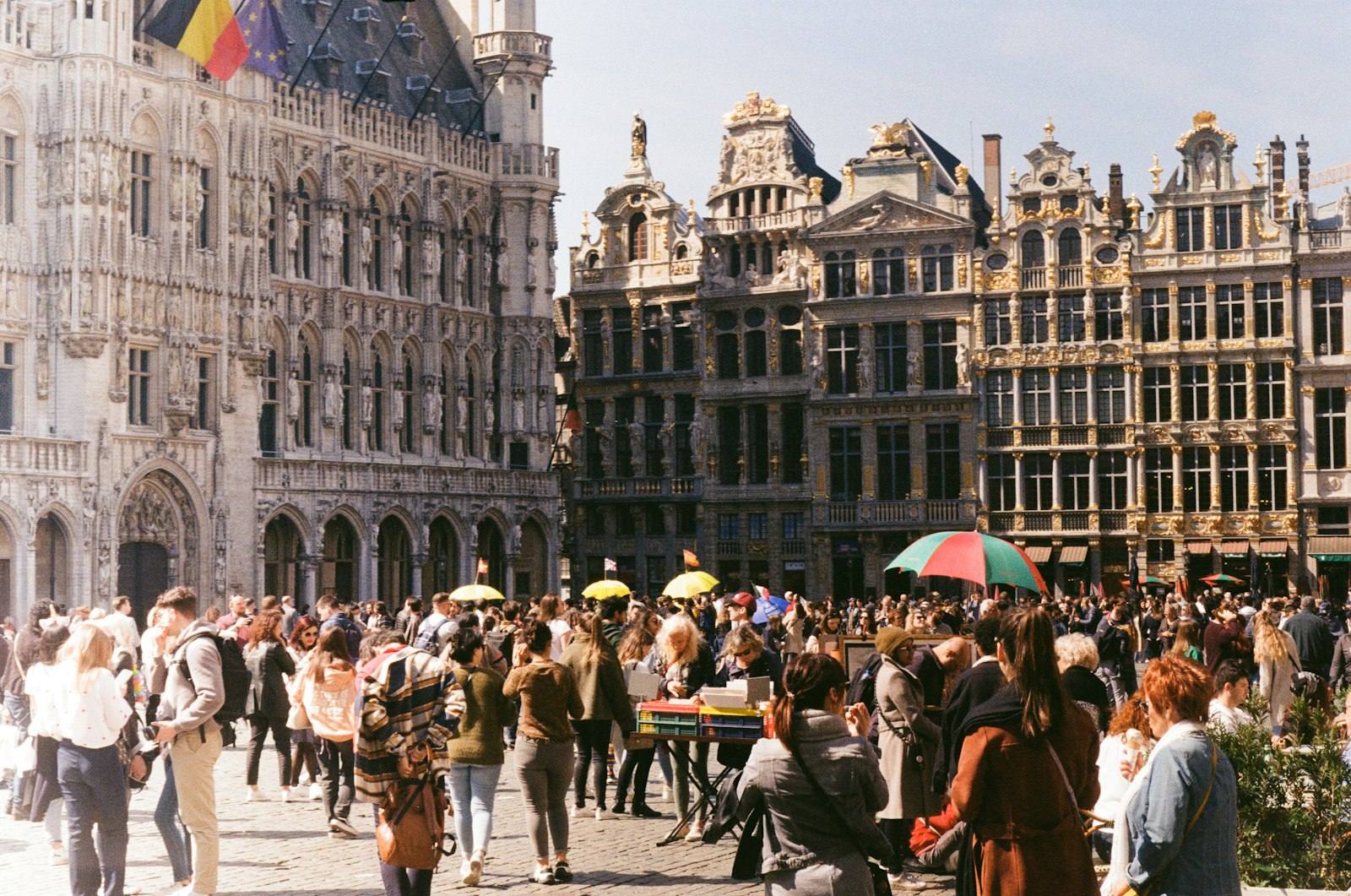
Moving from Netherlands to Belgium
A short road move between neighbours that share a currency and a single market. Here is the honest brief on what a van or truck costs, why your goods cross with no customs, the deregistration and registration you still have to do, and a timeline you can plan around.
No customs and the same currency, but you still deregister and register.
A move from the Netherlands to Belgium is one of the shortest international moves there is. The two countries border each other, share the euro, and sit inside the European single market, so your belongings travel by road, usually reaching your new Belgian address in one to three days. There is no sea leg and no container. A van or a part load on a truck does the job.
Because both countries are in the European Union customs union, the move is not an import. Your household goods move freely with no customs declaration and no duty or value added tax to pay at the border. The thing that surprises people is that the paperwork is not about customs at all, it is about residence. You deregister from your Dutch municipality, then register at your new Belgian commune or gemeente, where you receive a National Register number and a residence card.
Prices below are in euros and indicative for 2026. Your real number turns on volume, the distance between your old and new homes, access and parking at both ends, and whether you take a part load or a dedicated van.
What it costs in 2026, by home size and service.
This is a short road move, so the bill is driven by volume, the distance between addresses, and access at both ends rather than by ocean freight. The figures below are indicative ranges for 2026 in euros, door to door.
Indicative 2026 ranges in euros, door to door by road from the Netherlands to Belgium. Volume, the distance between your old and new homes, stairs, lift access and parking permits at both ends move the figure. Friday and end of month slots cost more.
- +Best value for a studio or a partial home
- +You pay only for the space you use on the truck
- −Your delivery day depends on the shared route, so it is less precise
- +Your goods only, loaded and delivered on your dates
- +The sensible choice for a full home or a tight timeline
- −You pay for the whole vehicle even if you do not fill it
- +Cheapest for a small or partial move
- +Full control of timing on a short hop
- −You do the lifting, the driving and the insurance yourself
Get moving quotes for Netherlands to Belgium.
Tell us your size and timing. We pass your request to vetted movers who run the short road route between the Netherlands and Belgium every week, and you compare them on your own terms.
A realistic schedule for this route.
A short move still rewards planning, mostly for the registration steps. Here is a realistic schedule for a road move from the Netherlands to Belgium.
Sort housing and the language region
Line up your Belgian address and note which region you are entering, because Flanders works in Dutch, Wallonia in French, and Brussels is bilingual, which shapes your commune paperwork.
Get surveys and quotes
Have movers survey your volume, by video or in person, and confirm whether a part load or a dedicated van suits you and what parking each address needs.
Book the date and parking
Confirm your moving date and arrange any parking permit or loading bay at both ends, which matters most in dense city centres.
Deregister in the Netherlands
Tell your Dutch municipality you are emigrating so you are removed from the Basisregistratie Personen, the population records, which avoids tax and benefit confusion later.
Register at the commune
Report to your local Belgian commune or gemeente, which enters you in the population or foreigners register and issues your National Register number and residence card.
No customs, but real residence paperwork.
Both the Netherlands and Belgium are in the European Union customs union and the Schengen area, so your move is not an import. Your used household goods cross the border with no customs declaration and no duty or value added tax. There is no transfer of residence claim to make, because there is no customs frontier between the two countries for your belongings. This is the single biggest difference between this corridor and a move into Europe from outside the EU.
The work that remains is about residence, not goods. You deregister from your Dutch municipality, which removes you from the Basisregistratie Personen, the Dutch population records, and you register at your new Belgian commune or gemeente within about eight days of arriving. The commune enters you in the population or foreigners register and issues your National Register number and a residence card, the documents that make your stay official and connect you to healthcare, banking and tax.
If you are a Dutch or other EU citizen, this registration is a formality of free movement. If you were living in the Netherlands on a residence permit as a national from outside the EU, moving to Belgium means establishing a fresh right to reside there, so check your position before you move. A vehicle registered in the Netherlands is re registered in Belgium once you become resident.
The routes in for this corridor.
Most people moving from the Netherlands to Belgium are Dutch or other EU citizens exercising free movement, so the focus is registration rather than a visa. Nationals from outside the EU need to establish a right to reside in Belgium.
Dutch and other EU citizens may live and work in Belgium and simply register at the commune, which issues a registration document and in time a residence card.
For nationals from outside the EU coming to a Belgian job, the combined work and residence permit applied for by the employer through the relevant region.
The permit for those setting up as self employed or running a business in Belgium, granted on the strength of the activity and its viability.
For joining a spouse, partner or relative who is a Belgian or EU citizen or a settled resident, subject to income and housing conditions.
How to pick a mover for this route, without the guesswork.
We do not rank or recommend individual companies. We teach you the criteria that separate a safe international move from an expensive mistake, then put your request in front of vetted movers who run this lane.
Check the trade affiliation. Membership of FIDI or IAM signals a mover is financially screened and bound to industry standards, and even on a short cross border hop it is a useful filter. Ask whether the mover runs the Netherlands to Belgium route regularly.
Insist on a survey before the quote. A real video or in home survey of your volume is the only honest basis for a price, even for a one day move, and it tells the mover what vehicle and crew you need.
Compare like for like. Read what each quote includes: packing, materials, the road transport, any parking permits, stair or long carry charges, and insurance. The cheapest headline number is rarely the cheapest move once access is priced in.
Ask about access at both ends. Narrow streets and canal houses in the Netherlands and dense Belgian city centres often need a parking permit or a lift, which is where short move costs really vary.
Understand the insurance terms. Ask whether cover is full replacement value or depreciated, what the excess is, and how claims are handled. Even a short move can damage a piano or a glass cabinet, so read the valuation clause.
Questions people ask about this move.
How much does it cost to move from the Netherlands to Belgium?
For a two to three bedroom home by road, plan on roughly 1,500 to 6,500 euros door to door in 2026, depending on volume, the distance between addresses, access and whether you take a part load or a dedicated van. A studio is less and a four bedroom home more. These are indicative ranges, not a quote.
How long does it take to move from the Netherlands to Belgium?
Usually one to three days door to door. The two countries border each other, so a dedicated van can load and deliver within a day or two, while a part load may take a few days to fit the shared route.
Do I pay customs duty moving from the Netherlands to Belgium?
No. Both countries are in the European Union customs union, so your household goods cross with no customs declaration and no duty or value added tax. The paperwork is about residence registration, not customs.
Do I need a visa to move from the Netherlands to Belgium?
If you are a Dutch or other EU citizen, no. You exercise free movement and register at your Belgian commune. If you were living in the Netherlands as a national from outside the EU, you must establish a right to reside in Belgium first.
How do I register when I arrive in Belgium?
You report to your local commune or gemeente within about eight days of arriving. It enters you in the population or foreigners register and issues your National Register number and a residence card, and you should deregister from your Dutch municipality as you leave.
Does the language region in Belgium matter for my move?
For the move itself, no, but for your paperwork, yes. Flanders works in Dutch, Wallonia in French, and Brussels is bilingual, so the commune you register with handles your documents in that language.
Last reviewed: 5 June 2026. We refresh this guide as costs, customs, and visa rules change.