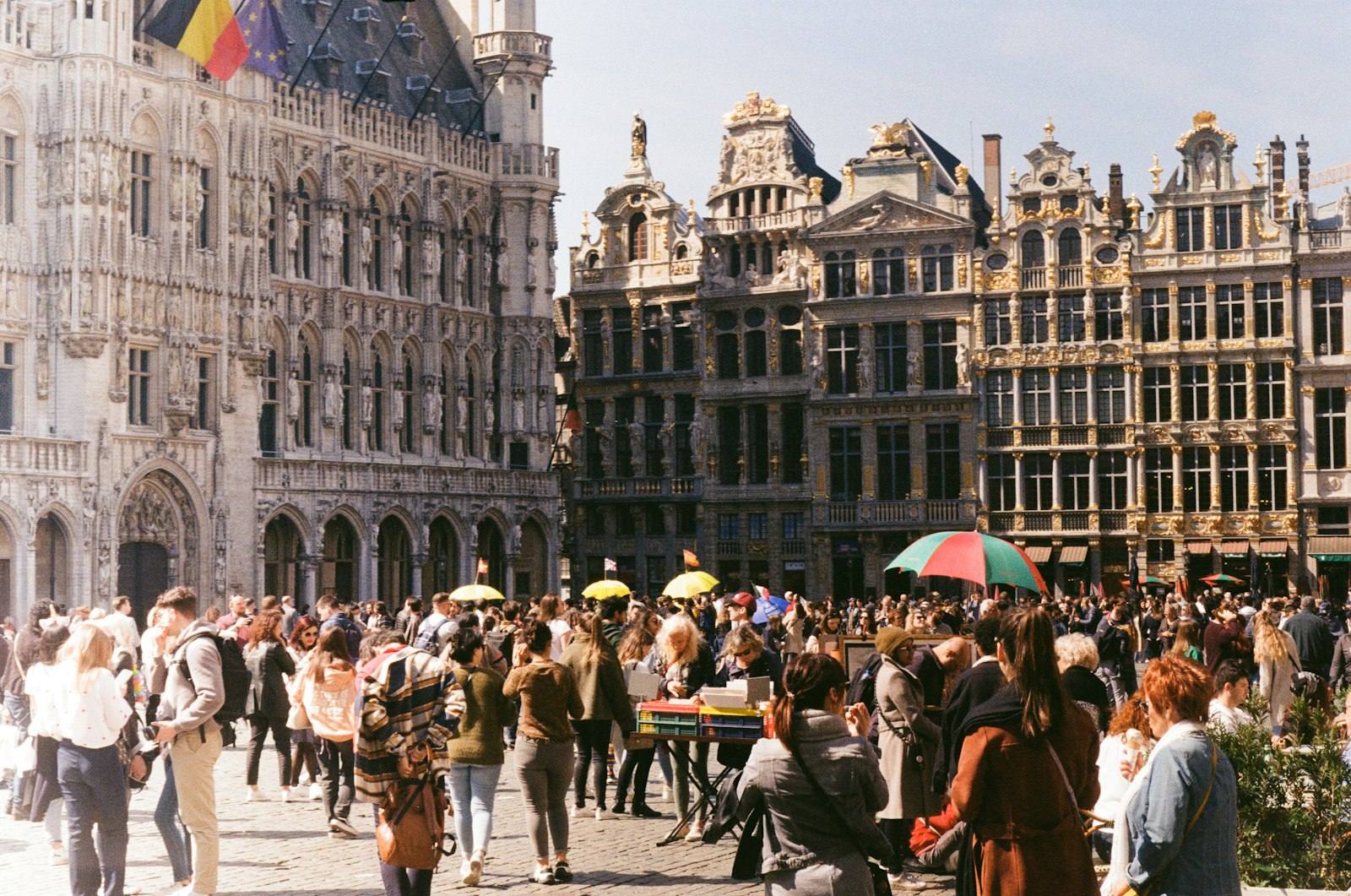
Moving to Belgium
Belgium sits at the heart of Europe with Brussels as a capital of European institutions and a magnet for international careers. Here is what it costs to move there, how town hall registration works, and the routes in.
Who Belgium suits, honestly.
People move to Belgium for work with the European institutions, with NATO, and with the many companies and law firms that cluster around Brussels, plus strong logistics, chemicals and technology sectors in Antwerp, Ghent and beyond. The country is small, central and superbly connected, with high speed rail to Paris, London, Amsterdam and Cologne in a couple of hours.
It suits you if you want a genuinely international base in the middle of Europe and you can navigate a country that runs in Dutch, French and German depending on the region. Brussels is officially bilingual in French and Dutch, Flanders speaks Dutch and Wallonia French. Housing is reasonable by Western European standards and space is better than in London or Paris.
The routes in, in plain language.
The realistic routes for people moving to Belgium. Two sentences each, so you can see which fits before you dig into the detail.
Citizens of the European Union, the European Economic Area and Switzerland can live and work in Belgium and simply register with their local commune after arrival.
For workers from outside the EU, the single permit combines the work authorisation and residence permit and is usually driven by an employer and the regional authorities.
People setting up as self employed or running a business from outside the EU generally need a professional card in addition to their residence status.
For partners and dependants of residents and citizens, subject to income and housing conditions.
Bringing your household goods into Belgium.
If you are moving from another European Union country there are no customs formalities for your household goods, since you are moving within the single market. The customs question only arises when you bring goods in from outside the EU.
For movers arriving from outside the European Union, used household goods are commonly admitted free of duty and value added tax under transfer of residence relief, provided you have lived outside the EU for at least twelve months, have owned and used the goods for at least six months, and bring them within a set period of establishing your new home. Belgian customs will want a detailed inventory, proof of your move and your registration details.
Restricted items follow common EU rules, covering things such as certain food and plant products from outside the bloc, weapons and protected species. Pets travel under EU animal health rules with the right vaccinations and documentation. A vehicle from outside the EU must be cleared and registered locally, so budget for that separately.
Belgium is served by the Port of Antwerp, one of the largest in Europe, with Zeebrugge handling roll on roll off and additional container traffic. For moves from elsewhere in the European Union a road service is usually faster and cheaper than sea freight, while overseas containers clear at Antwerp before final delivery. The surprise on this corridor is language rather than logistics, since the region you live in decides whether your paperwork and daily life run in Dutch, French or German.
Documents you will usually need
- +Detailed inventory and valuation
- +Transfer of residence proof if arriving from outside the EU
- +Passport, visa or single permit
- +Proof of new address in Belgium
- +Bill of lading or transport document
- +Pet and vehicle paperwork if relevant
Life in Belgium once the boxes are unpacked.
Belgium runs at typical Western European cost levels and often a little below its neighbours. Rents in Brussels are reasonable for the size and quality you get, and Antwerp, Ghent and the smaller cities offer good value. Groceries, dining and transport are middle of the road for the region, and the dense rail network means a car is optional in the cities. Income taxes and social charges are on the higher side.
Healthcare is high quality and built on compulsory health insurance. You join a health insurance fund, known as a mutuelle in French or ziekenfonds in Dutch, which reimburses a large share of your medical costs. Most residents also see the same family doctor over time, and the system is widely regarded as accessible and good.
Your first official step is registration at your local commune or gemeente, the town hall, usually within eight days of arrival. This gives you your entry in the National Register and your national register number, the numero de registre national, and triggers a local police check of your address before your residence card is issued. With that in hand you open a Belgian bank account and join a health fund.
Brussels is the international hub and officially bilingual in French and Dutch, Antwerp and Ghent are vibrant Dutch speaking cities with strong value, and Wallonia to the south runs in French. Commutes are short by big country standards and the train network ties everything together, so many residents skip a car entirely. Renting is straightforward, though you should budget for registration costs and the deposit, and confirm which official language your commune uses before you arrive.
Your first month checklist
- 01Register at your commune or gemeente within about eight days
- 02Obtain your National Register number
- 03Complete the local police address check
- 04Join a health insurance fund, the mutuelle or ziekenfonds
- 05Open a Belgian bank account
- 06Exchange your driving licence where required
How to choose a mover for Belgium.
We never rank or recommend named companies. Instead, here are the neutral criteria that separate a safe international mover from a risky one. Use them on every quote.
FIDI or IAM affiliation
Membership of the FIDI Global Alliance or the International Association of Movers signals audited quality standards and financial vetting. Ask for the membership number and check it.
Real corridor experience
A firm that runs this exact route every month knows the ports, the customs broker and the seasonal sailings. Ask how many moves they handled on it last year.
A binding pre move survey
Insist on a video or in home survey and a written volume in cubic metres. A quote without a survey is a guess that grows on moving day.
Clear insurance terms
Read what marine transit cover actually pays, the excess, and whether it is new for old or depreciated. Get the policy wording, not a sentence.
Independent reviews
Look for consistent recent reviews that mention claims handling, not just friendly crews. How a company behaves when something breaks is the real test.
Written scope, like for like
Compare quotes on identical scope: packing, materials, insurance, storage and destination delivery. Cheapest on paper is rarely cheapest in the end.
Get moving quotes for Belgium.
One short form goes to vetted international movers who run routes into Belgium. No obligation, and you choose who to talk to.
The Relocation Brief
One useful email on moving abroad: corridor costs, customs changes and timing tips. No noise.
Moving to Belgium, answered.
How much does it cost to move to Belgium?
As an indicative range for 2026, a household move to Belgium typically runs from about $2,500 for a small load from a neighbouring European country to $13,000 or more for a full home from North America or further afield. Distance, volume and season drive the figure. A binding survey gives a real price.
Do I pay duty on household goods when moving to Belgium?
If you move from another EU country, there are no customs formalities. From outside the EU, used household goods are commonly admitted free of duty and VAT under transfer of residence relief when you meet the ownership and residence conditions. Verify the current rules before you move.
How long does shipping to Belgium take?
Plan on roughly two to seven weeks door to door. A road move from within Europe can be just days, while a sea container from North America, Asia or Oceania sits at the longer end once you add port handling and clearance.
What visa do I need to live in Belgium?
Citizens of the EU, EEA and Switzerland simply register with their commune. Movers from outside the EU usually need a single permit for work, a professional card for self employment, or a family reunification route. This is a summary and not immigration advice, so confirm with the Belgian Immigration Office.
Where do I register when I arrive in Belgium?
At your local commune or gemeente, the town hall for your address, usually within eight days. That registration places you in the National Register, gives you your national register number and triggers a police check before your residence card is issued.
Moving to Belgium from your country.
Pick your origin for a corridor guide with the exact costs, customs steps and timeline for that pair. Grouped by region of origin.
Western Europe
Northern Europe
- Moving from Sweden to Belgium
- Moving from Norway to Belgium
- Moving from Denmark to Belgium
- Moving from Finland to Belgium
Southern Europe
Middle East
Asia Pacific
More corridors into Belgium
Costs are indicative for 2026 and not a quote.
Last reviewed: 14 May 2026. We refresh this guide as costs, customs, and visa rules change.