Moving to Latvia the complete guide
A green, affordable Baltic member of the European Union, with a handsome capital in Riga, a long quiet coastline, and an easy path for fellow Europeans. Here is the honest brief on shipping, residence and life on the ground.
Costs are indicative 2026 ranges. Verify customs, visa and tax rules before you move.
Affordable, green and squarely inside the European Union
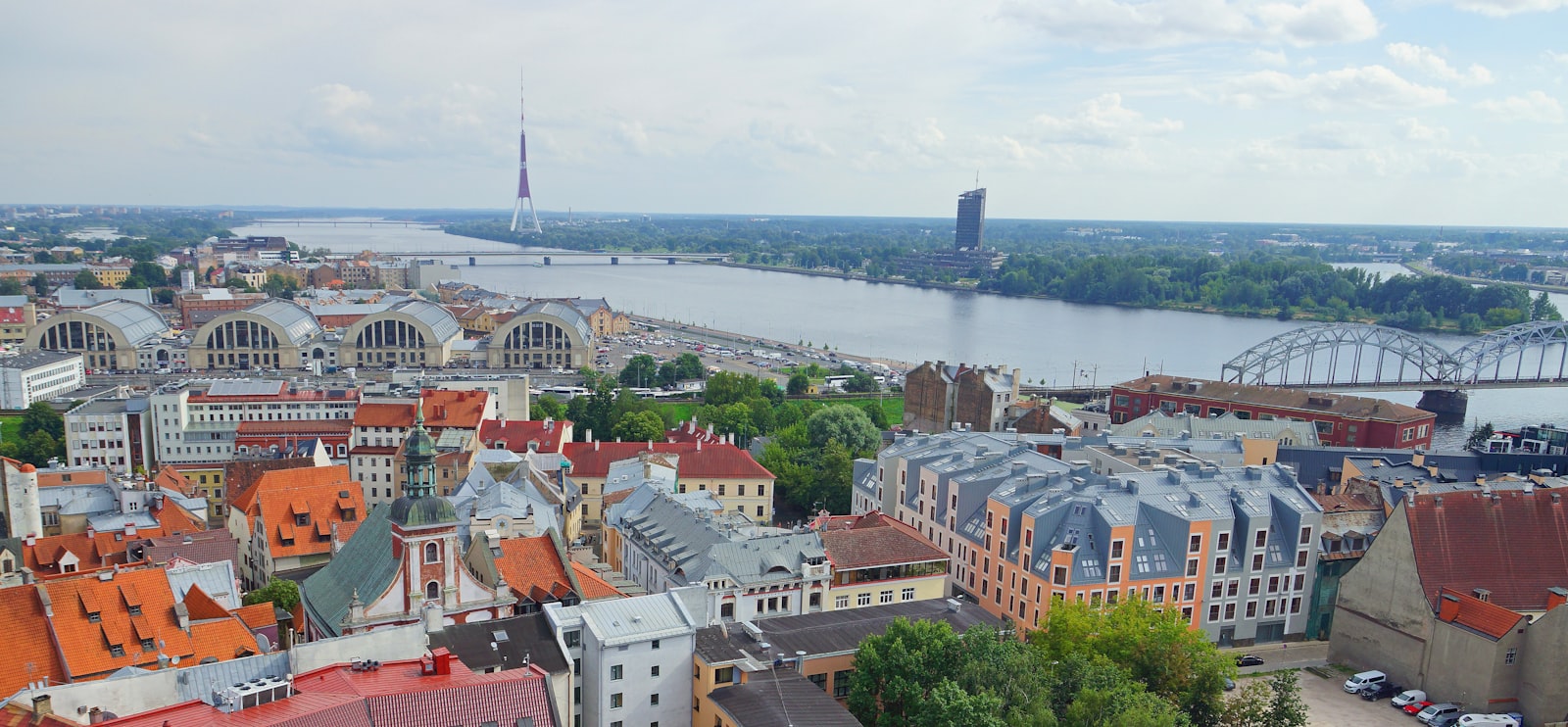
Latvia offers a low cost base by European standards, a capital famous for its art nouveau architecture and compact old town, and fast access to the rest of the Baltic and Nordic region. Riga is the economic centre and home to most international jobs, while the coast around Jurmala and the forests and lakes of the interior give an easy escape from the city. The country uses the euro, which removes currency friction for movers coming from the eurozone.
As a member of the European Union and the Schengen area, Latvia is an internal move for fellow Europeans, who relocate freely and simply register. For movers from outside the bloc the route runs through residence permits, with employment, the European Union Blue Card, study and family the common categories. English is widely spoken among younger people and in international workplaces, while Russian remains common alongside Latvian, the state language.
International household shipments arrive by sea at the Freeport of Riga, the largest port in the country, with Ventspils and Liepaja as alternatives on the western coast. From there goods move a short distance by road to Riga and beyond. Air freight runs into Riga international airport for smaller, time sensitive loads.
Skilled workers and the tech sector
Riga has a growing technology and shared services scene, and employment based permits and the European Union Blue Card target qualified professionals with a job offer.
European Union and EEA citizens
Free movement makes the move simple: register your address, obtain a registration certificate and your personal code, and you are set.
Families and value seekers
Low rents, safe streets, good state schools and quick flights across Europe make Latvia a steady, affordable base for families and remote workers.
Residence routes, in plain language
Citizens of the European Union and the European Economic Area move freely and register. Non European movers need a residence permit, issued by the Office of Citizenship and Migration Affairs, known by its Latvian initials PMLP.
For people with a job offer from a Latvian employer. The employer usually confirms the vacancy and salary, and the permit ties your residence to the role.
For university educated workers with a qualifying salary and a job offer. It offers mobility within the European Union and a route to longer term residence.
Residence permits for students at Latvian universities and for founders under the startup visa, each with its own income and activity conditions.
No permit needed. Register your residence with the PMLP, declare your address, and receive your personal code, the personas kods, that identifies you for everything else.
Used household goods and Latvian customs
For movers arriving from inside the European Union there is no customs formality, because it is an internal move within the single market. You can simply ship your belongings. For movers from outside the European Union, used household goods enter Latvia under the transfer of residence relief, free of import duty and value added tax when you are moving your normal residence to the country.
The relief from outside the European Union generally requires that you have lived outside the bloc for a continuous period before the move, usually at least twelve months, that the goods were owned and used for at least six months, and that they arrive within a set period around the date you settle. You provide a detailed valued inventory, your passport, proof of the new Latvian address, and evidence that you are transferring residence. Your mover lodges the declaration with Latvian customs at the Freeport of Riga.
Vehicles are a separate process with their own registration and roadworthiness steps. Alcohol and tobacco beyond personal allowances attract duty, and weapons, certain foods and protected species are restricted or prohibited. Because most goods clear at Riga, choosing a mover who knows the port and the Latvian paperwork keeps clearance smooth.
What life costs and how to get set up
Latvia is inexpensive for the European Union. Riga rents sit well below western European capitals, groceries and dining are affordable, and public transport in the city is cheap and reliable. The wider country is cheaper still, though salaries are lower too, so people earning abroad enjoy the strongest position. Heating through the long Baltic winter is a real cost worth budgeting for.
Settling in starts with your personal code. The personas kods is an eleven digit number issued by the PMLP that doubles as your tax identification number, and it is the document almost every other process asks to see. You declare your place of residence with the authorities, then use the code to open a bank account, sign a lease and register for services. European Union citizens collect a registration certificate, while non European residents receive a residence permit card.
Healthcare runs through a mix of state funded services and the National Health Service of Latvia, with some treatments requiring patient contributions. Residents register with a family doctor, the general practitioner who is the first point of contact for the system. Many international residents add private insurance for faster specialist access, and Riga has good private clinics.
Your first month checklist
- Declare your place of residence and obtain your personal code, the personas kods, from the PMLP
- Collect your registration certificate (European Union) or residence permit card
- Register with a family doctor and sort your health cover
- Open a Latvian bank account once you have your personal code and address
- Set up utilities, home insurance and a local mobile number
- Exchange your foreign driving licence within the allowed period
- Enrol children at a local or international school
How to choose a mover for Latvia
No mover is named or ranked anywhere on this site. Here is how to judge any company quoting a move to Latvia, then request quotes from vetted firms that genuinely run your origin to Latvia.
Check FIDI or IAM affiliation
Membership of FIDI through the FAIM quality standard, or of IAM, signals audited financial and operational standards. It is the single fastest filter for an international move.
Insist on a binding pre move survey
A mover who quotes your volume from a video or home survey, in writing, is quoting the real job. A price given without seeing your goods is a guess that tends to climb later.
Confirm genuine experience on this lane
Ask how many moves they run on your exact corridor each year, which port and customs broker they use in Latvia, and who clears the goods at the other end.
Read the insurance terms, not the headline
Compare marine all risk cover, the valuation basis, the excess, and what counts as an exclusion. The cheapest cover is rarely the one that pays out cleanly.
Weigh reviews and complaint history
Look for recent, specific reviews that mention customs delays, damage handling and final invoices. Pattern matters more than a single rating.
Then request quotes through one form
We never name, rank or recommend a single company. Send one brief and vetted movers who run this route reply to you. You choose.
Get moving quotes for your route to Latvia
One short brief goes to vetted international movers who run your origin to Latvia, including the customs leg. Compare on scope and service, not just price.
Subscribe to The Relocation Brief
One useful email when a new corridor goes live, plus the cost and customs changes worth knowing before you move. No noise.
Moving to Latvia, answered
How much does it cost to move to Latvia?
As an indicative 2026 range, a two bedroom household by shared container costs roughly $2,000 to $8,500 depending on origin, volume, season and the short leg from the Freeport of Riga. A road move from elsewhere in Europe sits at the low end, while a container from North America or Asia sits higher. These are planning ranges, not quotes.
How long does shipping to Latvia take?
Door to door transit runs from about 5 days for a road move within the Baltic and Nordic region to 35 days or more for a shared container from the Americas or Asia, including the sailing to the Freeport of Riga and customs clearance. Air freight into Riga is far quicker for small loads.
Do I pay duty on my furniture moving to Latvia?
Moves from inside the European Union have no customs formality. From outside the bloc, used household goods owned and used for at least six months normally enter free of duty and value added tax under the transfer of residence relief, with a valued inventory and proof of residence. Verify the current rules before shipping.
Do I need a permit to move to Latvia?
Citizens of the European Union and the European Economic Area do not; they register and receive a personal code. Non European movers need a residence permit from the PMLP, most often through employment, the European Union Blue Card, study or family.
What is the first thing to do when I arrive in Latvia?
Declare your place of residence and obtain your personal code, the personas kods, from the PMLP. That number doubles as your tax identification number and is the key to a bank account, a lease and access to services.
Can I bring my car to Latvia?
Yes, but the vehicle is a separate process with Latvian registration and a roadworthiness check, and from outside the European Union it may face duty and tax. Many movers weigh the cost and choose to sell before leaving and buy locally.
Plan your move to Latvia by origin
Corridor guides into Latvia, each with costs, customs and a timeline for that exact pair, are publishing progressively. Start from your origin country hub below, or browse the full corridor index.