Moving to South Africa the complete guide
A country of huge variety, from Cape Town beneath Table Mountain to the business engine of Johannesburg and the wildlife of the bushveld, with a warm climate, a low cost base for foreign earners and deep expertise in shortage skills. Here is the honest brief.
Costs are indicative 2026 ranges. Verify customs, visa and tax rules before you move.
Variety, climate and a strong cost advantage for foreign earners
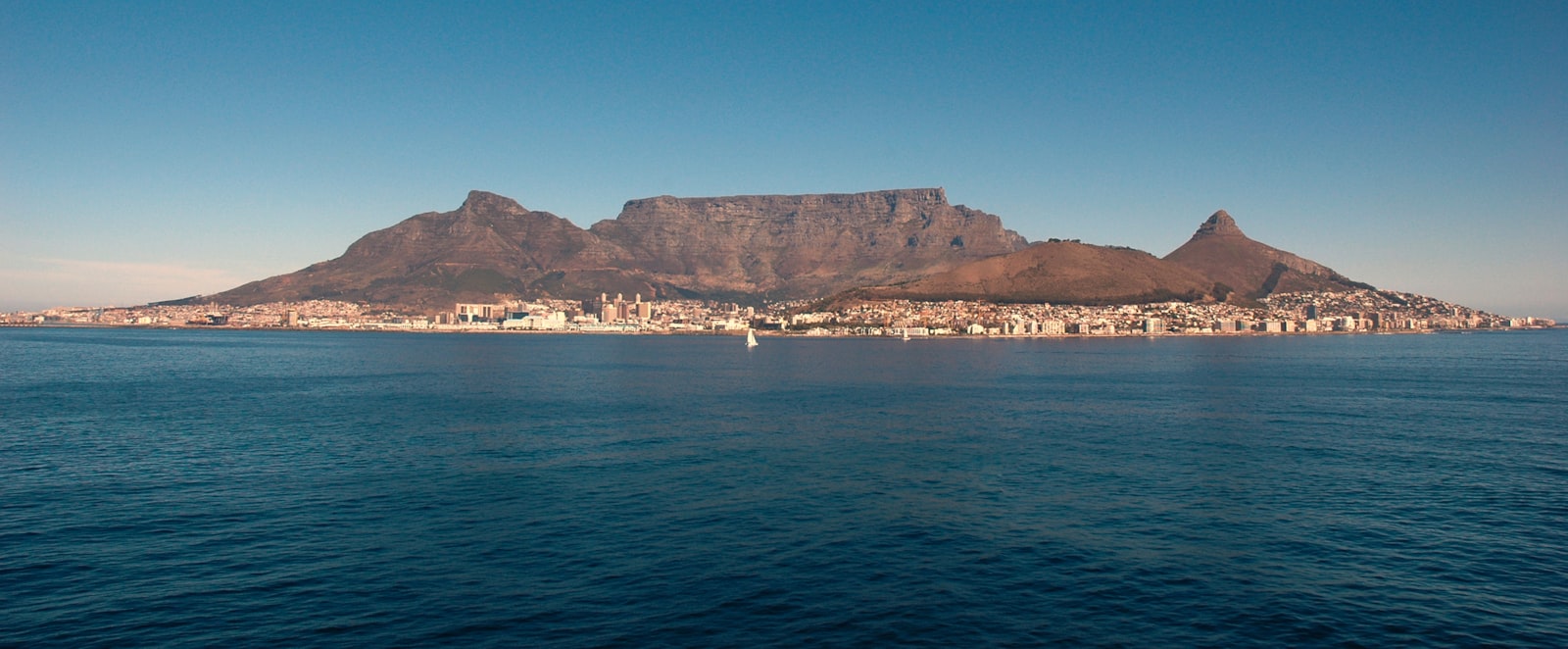
South Africa packs extraordinary range into one country: Cape Town with its mountain and beaches, Johannesburg and Pretoria as the economic and administrative core, Durban on the warm Indian Ocean, the winelands, and the game reserves that draw the world. The climate is mild and sunny across much of the year, outdoor life is excellent, and for people earning in dollars, euros or pounds the cost of living is low.
English is one of the official languages and the working language of business, government and most international life, which makes the move far easier than the bureaucracy alone would suggest. The trade offs are real and worth naming: load shedding has improved but power reliability still varies, personal security needs sensible planning especially in the big cities, and the rand is volatile. Most movers come for work in shortage occupations, to join family, to invest, or to retire.
International household shipments arrive by sea at Durban, the busiest port in the country and on the continent, or at Cape Town for the Western Cape, with Gqeberha, formerly Port Elizabeth, serving the Eastern Cape. From the port goods move by road to the major cities. Air freight into Johannesburg or Cape Town handles smaller, time sensitive loads.
Skilled workers in shortage fields
The Critical Skills Work Visa targets occupations on the official list, from engineering and ICT to health and the trades, scored under a points system.
Investors and entrepreneurs
The Business Visa suits people investing in and running a qualifying South African business that creates local jobs.
Retirees and people with income
The Retired Person Visa is open to applicants who can show a qualifying pension or income, with no minimum age, a flexible route for many.
Residence routes, in plain language
South Africa runs an employer and points based system through the Department of Home Affairs. Most professional movers come on the Critical Skills Work Visa or the General Work Visa, while family, business and retirement routes serve other movers.
For people whose occupation appears on the official critical skills list. Applicants score points for qualifications, experience and a job offer, and the visa can run up to five years.
For a specific job where the employer shows the role could not readily be filled locally. It is tied to the employer and the position, also scored under the points criteria.
For people investing a qualifying amount in a South African business they will run, with conditions on local employment and the sector.
Routes for spouses and immediate family of citizens and residents, and for retirees who can show a qualifying pension or income. Each has its own financial conditions.
Used household goods and South African customs, the DA304
South Africa allows immigrants taking up residence and returning residents to import used household and personal effects free of customs duty and value added tax under a rebate provision, provided the conditions are met. The central document is the form DA304, a declaration for household effects on a permanent change of residence, lodged with the South African Revenue Service, known as SARS, through your clearing agent. The goods must be your own used personal and household effects, not new or commercial items.
You provide a detailed valued inventory, your passport, your visa or permanent residence permit, and the completed DA304. For returning South African residents the rebate generally requires that you were abroad for at least six months and set up a home there. For new immigrants the duty free treatment is normally tied to holding a permanent residence permit, while those entering on a temporary visa may face duty or a provisional payment, so confirm your exact status before shipping.
Vehicles are a separate and demanding import requiring an import permit and a letter of authority, and many movers find it simpler to sell before leaving and buy locally. Firearms, certain foods, plants and animal products are restricted or prohibited, so declare everything and check the current lists.
What life costs and how to get set up
South Africa is affordable for people earning abroad. Rent, dining, domestic help and groceries cost a fraction of North American or western European prices, though imported goods and electronics carry a premium and fuel is not cheap. Many households budget for a backup power supply and for private security, both normal parts of life in the cities. Private healthcare and schooling are widely used and good value by international standards.
Settling in starts with your tax number. New residents register with SARS to obtain a tax reference number, which is needed to be paid, to open many bank accounts and to transact. There is no single national identity card for foreign residents, so your passport and visa or permanent residence permit are your core documents, and many processes ask for proof of address. Opening a bank account as a newcomer can take patience and paperwork, so start early.
Healthcare is a two tier system. The public sector is stretched, so most international residents and the local middle class use private medical schemes that give access to excellent private hospitals in the main cities. You join a medical scheme directly and pay monthly contributions. Arrange cover to start from your arrival date so there is no gap.
Your first month checklist
- Register with SARS for a tax reference number
- Confirm your visa or permanent residence permit conditions and any reporting steps
- Join a private medical scheme so your health cover starts on arrival
- Open a South African bank account, allowing time for the paperwork
- Arrange a backup power supply and home security as needed
- Convert your foreign driving licence within the allowed period
- Enrol children at a local or international school
How to choose a mover for South Africa
No mover is named or ranked anywhere on this site. Here is how to judge any company quoting a move to South Africa, then request quotes from vetted firms that genuinely run your origin to South Africa.
Check FIDI or IAM affiliation
Membership of FIDI through the FAIM quality standard, or of IAM, signals audited financial and operational standards. It is the single fastest filter for an international move.
Insist on a binding pre move survey
A mover who quotes your volume from a video or home survey, in writing, is quoting the real job. A price given without seeing your goods is a guess that tends to climb later.
Confirm genuine experience on this lane
Ask how many moves they run on your exact corridor each year, which port and customs broker they use in South Africa, and who clears the goods at the other end.
Read the insurance terms, not the headline
Compare marine all risk cover, the valuation basis, the excess, and what counts as an exclusion. The cheapest cover is rarely the one that pays out cleanly.
Weigh reviews and complaint history
Look for recent, specific reviews that mention customs delays, damage handling and final invoices. Pattern matters more than a single rating.
Then request quotes through one form
We never name, rank or recommend a single company. Send one brief and vetted movers who run this route reply to you. You choose.
Get moving quotes for your route to South Africa
One short brief goes to vetted international movers who run your origin to South Africa, including the customs leg. Compare on scope and service, not just price.
Subscribe to The Relocation Brief
One useful email when a new corridor goes live, plus the cost and customs changes worth knowing before you move. No noise.
Moving to South Africa, answered
How much does it cost to move to South Africa?
As an indicative 2026 range, a two bedroom household by shared container costs roughly $2,500 to $9,500 depending on origin, volume, season and delivery from Durban or Cape Town to the city. A container from Europe sits lower than one from the Americas or Asia Pacific. These are planning ranges, not quotes.
How long does shipping to South Africa take?
Door to door transit is usually about 30 to 50 days by sea, including the sailing to Durban or Cape Town, customs clearance and delivery inland to Johannesburg or Pretoria. Air freight cuts it to one to two weeks for a small shipment.
Do I pay duty on my furniture moving to South Africa?
Immigrants with a permanent residence permit and returning residents can usually import used household effects free of duty and value added tax under a rebate, using the DA304 form lodged with SARS. Those on a temporary visa may face duty or a provisional payment. Verify your status and the current rules before shipping.
What is the DA304 form?
The DA304 is the South African customs declaration for household effects on a permanent change of residence. Your clearing agent lodges it with SARS along with your valued inventory and immigration documents so qualifying used goods clear under the rebate.
Do I need a visa to move to South Africa?
Yes. Common routes are the Critical Skills Work Visa, the General Work Visa, the Business Visa and the Retired Person Visa, all through the Department of Home Affairs. Confirm your route and the current rules before you move.
Can I bring my car to South Africa?
It is possible but demanding, requiring an import permit and a letter of authority, and it is often restricted. Many movers sell before leaving and buy locally. Confirm your situation before assuming you can import a car.
Plan your move to South Africa by origin
Corridor guides into South Africa, each with costs, customs and a timeline for that exact pair, are publishing progressively. Start from your origin country hub below, or browse the full corridor index.