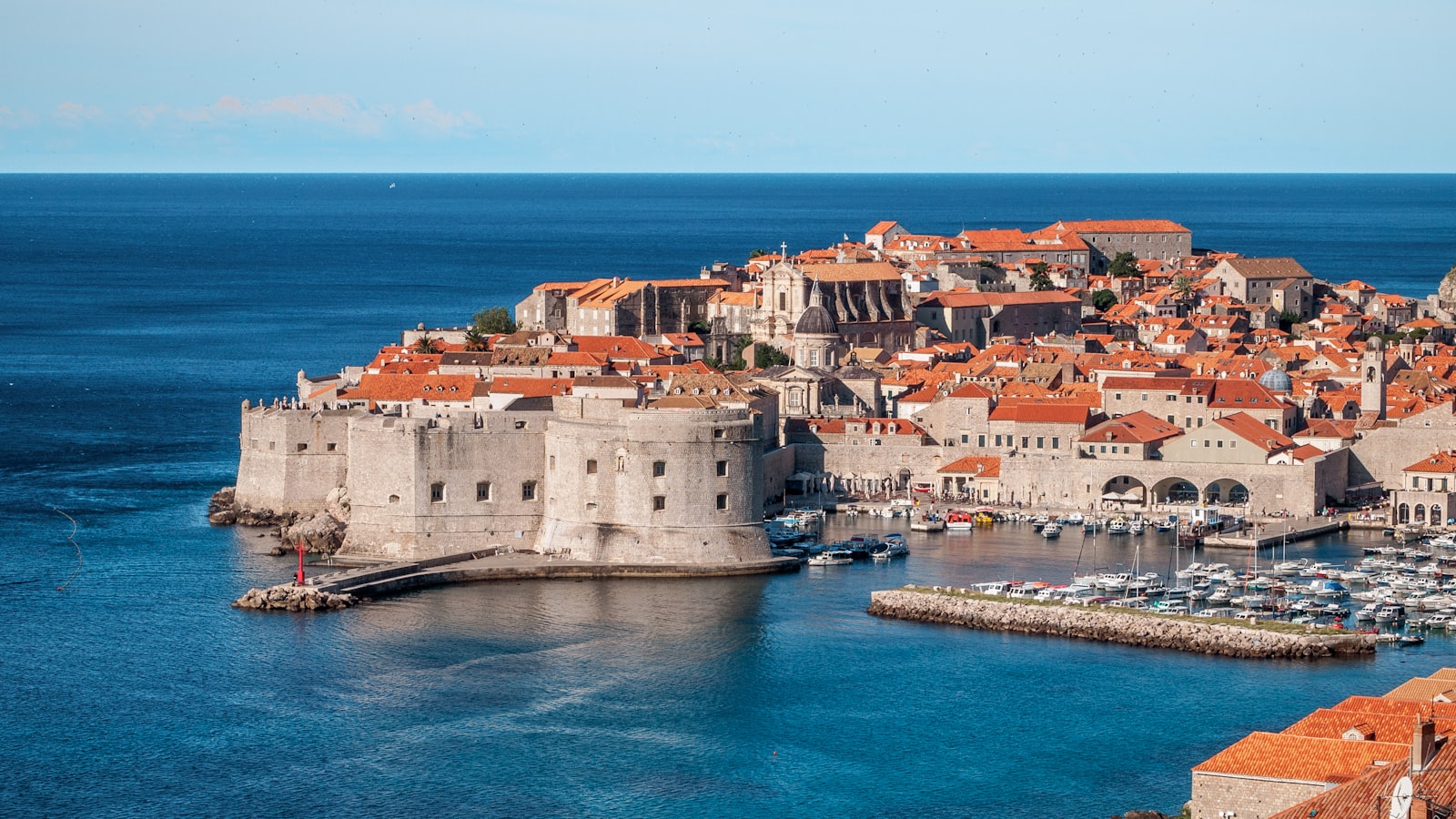
Moving from Germany to Croatia
A short inside the EU road move into a now euro using neighbour. No customs wall, just a drive south and one number, the OIB.
A short single market move where the only number that matters is the OIB.
Germany to Croatia is one of the easier international moves in this index. Both countries are in the European Union, and since 2023 Croatia uses the euro and sits inside the Schengen area, so there is no customs wall and no internal border check on the way down. A truck collects in Germany and drives south through Austria and Slovenia into Croatia, reaching Zagreb, the Istrian coast, or Dalmatia. Door to door, four to nine days is realistic, with the distance and your access at both ends being the main variables.
Because the goods side is simple, the work that matters is settling you in Croatia, and it starts with one number. The OIB, the personal identification number, is the key to a lease, a bank account, utilities, and almost any contract. You register your residence with the police, the OIB follows through the Tax Administration, and ordinary life becomes possible. As a German national you are an EU citizen with free movement, so you register your stay rather than applying for a visa. Sort the OIB first and the rest of the move falls into place.
What a Germany to Croatia move really costs in 2026.
Road freight is priced by volume and by whether you share a truck or take a dedicated one. These are indicative ranges in euros for 2026, not quotes.
Ranges are indicative for 2026 and exclude insurance, coastal or island delivery, and any difficult access charges such as stairs or a long carry. Summer is the busy season and costs more.
- +Best value for a studio or a partial home, you pay only for the space you use
- +Consolidated trucks run the Germany to Croatia lane regularly
- −Your delivery date depends on the truck filling on the way south
- +Best for a full home or a firm delivery date, the truck is yours alone
- +Fewer handling points, so lower damage risk
- −You pay for the whole vehicle even if you do not fill it
- +For a small box of essentials you need before the road shipment arrives
- −Priced by weight, so it is not for a whole household
Get moving quotes for Germany to Croatia.
Tell us your home size and your timing and we put your move in front of vetted movers who run the Germany to Croatia lane. Free, no obligation.
A realistic schedule for this route.
A short EU move, but the drive, coastal delivery, and the OIB still need planning. A realistic schedule for 2026.
Survey and book
Have movers run a video or in home survey of your volume, then book. Confirm whether you share a truck or take a dedicated one and your delivery window, especially for a coastal address.
Sort and downsize
Decide what travels. Inside the EU there is no customs reason to cut volume, but every cubic metre you drop lowers the price, so this is purely a cost decision.
Pack and load
Movers wrap and inventory your goods and load the truck. You keep a copy of the inventory for your own record, since there is no customs filing to sign.
Drive south
The truck drives through Austria and Slovenia into Croatia. With Schengen there are no internal border checks, so distance and traffic set the pace.
Arrival and delivery
Your goods reach the Croatian address and are delivered and unpacked. Coastal or island delivery can add a short leg.
Settle the admin
Register your residence with the police, get your OIB through the Tax Administration, and open Croatian banking and utilities. This is about registering you, not your furniture.
Moving household goods inside the EU.
Because Germany and Croatia are both in the European Union and its customs union, your household goods move under the free movement of goods. There is no import duty, no VAT on the move itself, and no customs clearance for used personal effects travelling between the two countries. Your mover does not file an import entry, and you do not need a transfer of residence concession, which is the document that dominates moves into countries outside the EU. Croatia is also in Schengen, so the drive south has no internal border stop.
That makes the move administratively light on the goods side and centred instead on settling you in Croatia. The decisive step is the OIB, the personal identification number, which you obtain by registering your residence with the local police, the Ministry of the Interior, after which the Tax Administration assigns the number. The OIB is required for a lease, a bank account, utilities, and most contracts, so it is the first job on arrival. As an EU national you register your stay rather than applying for a residence permit. Keep proof of your move and your German departure in case any service asks.
The routes in for this corridor.
As a German national you are an EU citizen, so you enjoy free movement and do not need a visa or residence permit for Croatia. The routine is registration, not application. These are the practical steps for this corridor.
As an EU citizen you can live and work in Croatia without a visa or permit. After settling you complete a residence registration rather than seeking permission to stay.
If you remain beyond three months, you register your temporary stay with the police, which confirms your right to live in Croatia and supports access to services.
Day to day life runs on the OIB rather than a visa. You obtain it when you register your residence, and you need it for leases, banking, utilities, and most contracts.
Non EU family members of an EU citizen have their own route to join you in Croatia, with documentation that proves the family relationship and your residence.
How to pick a mover for this route, without the guesswork.
We do not rank or recommend individual companies. We teach you the criteria that separate a safe international move from an expensive mistake, then put your request in front of vetted movers who run this lane.
Check the trade affiliation. Membership of FIDI or IAM is the clearest signal a mover is financially screened and bound to industry standards for international household goods. Even without customs, FIDI or IAM membership signals a mover equipped for an international road route, with a German origin team and a Croatian destination partner who can handle inland and coastal delivery.
Insist on a binding pre move survey. A real video or in home survey of your volume is the only honest basis for a price. A quote given without one is a guess that tends to grow on moving day.
Compare like for like. Read what each quote includes: packing, materials, customs clearance, destination delivery, stair or long carry charges, and insurance. The cheapest headline number is rarely the cheapest move.
Understand the insurance terms. Ask whether cover is full replacement value or depreciated, what the excess is, and how claims are handled. Read the valuation clause before you sign.
Read recent reviews for this corridor. A mover can be excellent locally and weak on international shipments. Look for verified reviews that mention the actual route and customs experience.
Questions people ask about this move.
How much does it cost to move from Germany to Croatia?
For a two to three bedroom household by road, plan on roughly 2,500 to 6,000 euros door to door in 2026, depending on volume, whether you share a truck or take a dedicated one, the distance, and any coastal delivery. A studio on a shared load sits below that, and a large home above it. These are indicative ranges, not quotes.
How long does shipping take from Germany to Croatia?
Two to five days by road is typical for the transit, and four to nine days door to door once booking, packing, the drive, and delivery are included. Coastal and island deliveries add a short leg, and summer runs busier.
Do I pay duty moving from Germany to Croatia?
No. Both countries are in the European Union and its customs union, so used household goods move under the free movement of goods with no import duty, no VAT on the move, and no customs clearance. You do not need a transfer of residence concession.
What is the OIB and why do I need it first?
The OIB is the Croatian personal identification number, assigned through the Tax Administration when you register your residence with the police. It is required for a lease, a bank account, and utilities, so it is the first task on arrival.
Do I need a visa to move from Germany to Croatia?
No. As a German national you are an EU citizen with free movement, so you do not need a visa or residence permit. For stays beyond three months you register your temporary stay with the police rather than applying for permission.
Last reviewed: 29 April 2026. We refresh this guide as costs, customs, and visa rules change.