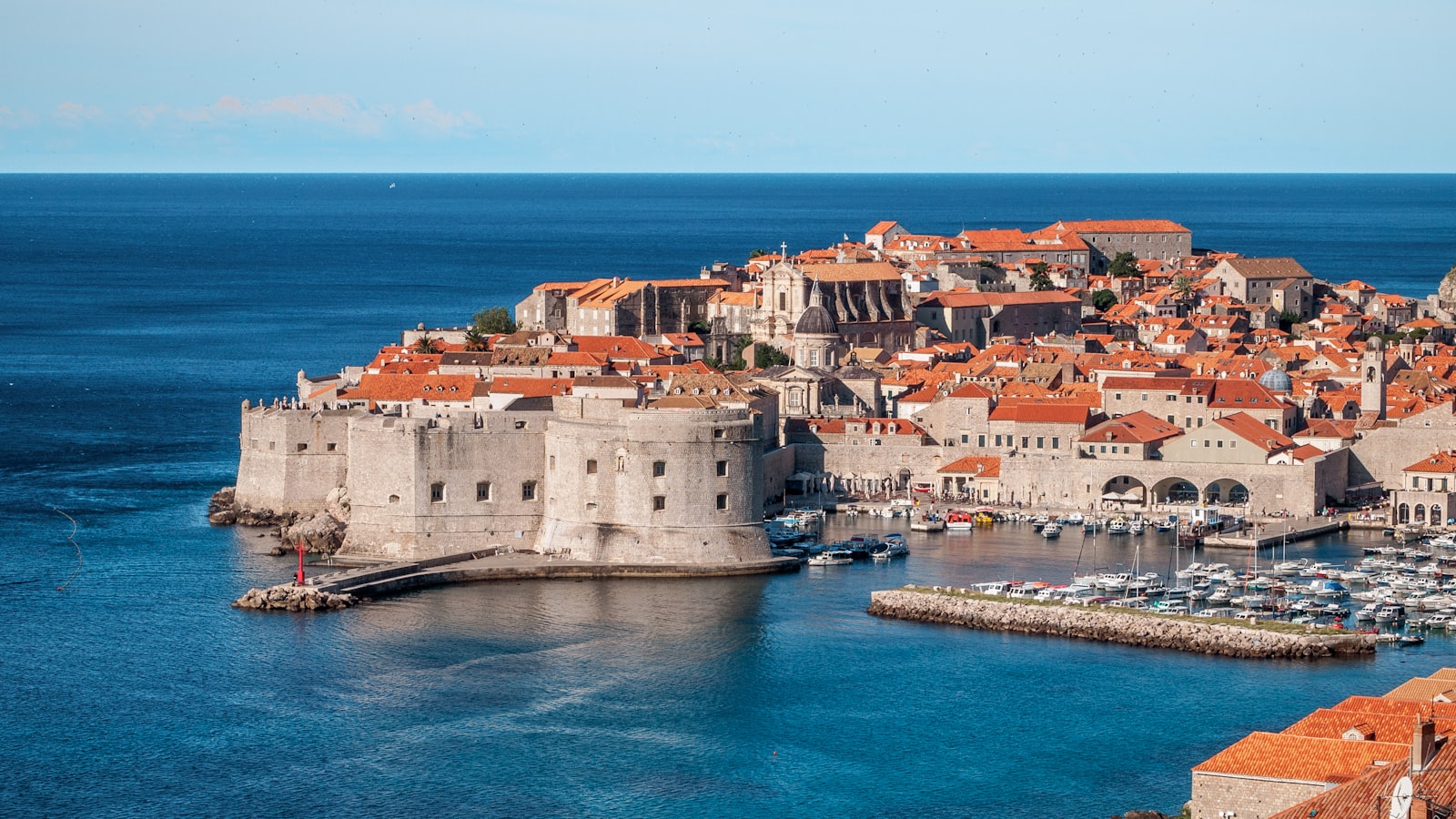
Moving from United States to Croatia
A transatlantic move into a small, now euro using EU member. Your goods cross the ocean while the paperwork starts with one number, the OIB.
This move is settled by your residence paperwork, not by the tariff.
The United States to Croatia is a full transatlantic household move into a country that joined the euro and the Schengen area at the start of 2023. Your goods leave a US home, load at an East Coast port such as New York or Norfolk, or sail from the West Coast through the Mediterranean, and arrive at Rijeka, Croatia's main container gateway on the northern Adriatic. Door to door, five to eight weeks is realistic once you add booking, packing, the ocean leg, and clearance.
What surprises Americans is not the customs duty. As someone moving your primary residence to Croatia, your used household goods are normally admitted free of duty and import VAT under the transfer of residence relief, so the tariff is rarely the problem. The real first task is administrative. Almost everything in Croatia, from a lease to a bank account to a utility contract, runs on the OIB, the personal identification number. You register your residence with the police, the OIB follows, and only then does ordinary life become possible. The mover who wins this lane is the one who lands your goods cleanly while you sort the OIB.
What a United States to Croatia move really costs in 2026.
Ocean freight is sold by volume, so the size of your home is the main lever. These are indicative ranges in US dollars for 2026, not quotes. Only a binding survey produces a real figure.
Ranges are indicative for 2026 and exclude marine insurance, US origin handling, Croatian port and delivery charges, and any storage. The summer peak pushes prices up, so book early if you can.
- +Best value for a studio or a partial home, you pay only for the cubic feet you use
- +Consolidated loads leave US ports for the Mediterranean on a regular schedule
- −Slower, because your share waits for the box to fill and to be split out at Rijeka
- +Best for a full two to three bedroom home or larger, your goods travel sealed and alone
- +Fewer handling points means lower damage risk on a long ocean leg
- +Simplest for a clean transfer of residence clearance because the load is yours end to end
- +For the box of essentials you need before the sea shipment lands
- −Priced by weight, so it is far too expensive for a whole household
Get moving quotes for United States to Croatia.
Tell us your home size and your timing and we put your move in front of vetted movers who run the United States to Croatia lane. Free, no obligation.
A realistic schedule for this route.
A transatlantic move rewards an early booking. This is a conservative schedule for the United States to Croatia in 2026.
Survey and book
Have movers run a video or in home survey of your volume, then book. Confirm the US load port, whether you share a container or take a sole use one, and Rijeka as the likely destination port.
Documents and sorting
Gather your passport, proof you are transferring residence, and a detailed inventory. Sort what travels. Every cubic foot you drop lowers the price on a route sold by volume.
Export pack and load
Movers export wrap and inventory every item, then load the container. You sign the inventory and the transfer of residence paperwork that supports duty free entry.
Trucking and sailing
Your container is drayed to the US port and loaded onto a vessel bound for the Mediterranean. Track the sailing and keep your document copies ready.
Ocean transit
Three to five weeks at sea from the East Coast, longer from the West Coast. While the box sails, register your address in Croatia and start the OIB process so you are ready on arrival.
Clearance and delivery
Croatian customs assess the shipment for transfer of residence relief. Once released at Rijeka, your goods are trucked to your address and unpacked.
Bringing used household goods into Croatia.
Croatia is part of the European Union customs territory, so a move from the United States is an import from outside the EU and clears through the Croatian Customs Administration, the Carinska uprava. The good news for someone relocating is the transfer of residence relief. If you are moving your normal place of residence to Croatia, your used personal and household effects are generally admitted free of customs duty and import VAT, provided you have owned and used them for a qualifying period and import them within the time window around your move. Your mover prepares the inventory and the supporting paperwork that the relief depends on.
New goods, items bought shortly before the move, alcohol and tobacco beyond personal limits, and vehicles sit outside the simple relief and can attract duty and VAT, so declare them honestly. Running alongside customs is the residence administration. You report your address to the local police, the Ministry of the Interior, and the OIB, the personal identification number issued through the Tax Administration, is assigned. The OIB is the key that unlocks banking, leases, and utilities, so treat it as the first job on arrival, not an afterthought.
The routes in for this corridor.
As a United States national you are entering Croatia from outside the EU, so you will need a basis to stay beyond the short visa free period. These are the routes movers on this lane use most. Confirm the current rules before you commit.
Croatia offers a temporary stay for non EU remote workers who earn from foreign clients or employers, valid for up to eighteen months and exempt from Croatian income tax. You show a qualifying monthly income and arrange an OIB and address.
A Croatian employer can support a residence and work permit for a specific role. This is the standard route for Americans moving for a job rather than working remotely.
If you are the spouse or close family member of a Croatian or EU resident, family reunification leads to temporary stay and, in time, longer term residence.
For graduate level professionals with a qualifying salary and job offer, the EU Blue Card is a route into Croatia aimed at skilled workers, with a path to longer residence.
How to pick a mover for this route, without the guesswork.
We do not rank or recommend individual companies. We teach you the criteria that separate a safe international move from an expensive mistake, then put your request in front of vetted movers who run this lane.
Check the trade affiliation. Membership of FIDI or IAM is the clearest signal a mover is financially screened and bound to industry standards for international household goods. For a transatlantic move, FIDI or IAM membership matters more, because the mover must coordinate a US origin agent, an ocean carrier, and a Croatian destination agent who clears the transfer of residence at Rijeka.
Insist on a binding pre move survey. A real video or in home survey of your volume is the only honest basis for a price. A quote given without one is a guess that tends to grow on moving day.
Compare like for like. Read what each quote includes: packing, materials, customs clearance, destination delivery, stair or long carry charges, and insurance. The cheapest headline number is rarely the cheapest move.
Understand the insurance terms. Ask whether cover is full replacement value or depreciated, what the excess is, and how claims are handled. Read the valuation clause before you sign.
Read recent reviews for this corridor. A mover can be excellent locally and weak on international shipments. Look for verified reviews that mention the actual route and customs experience.
Questions people ask about this move.
How much does it cost to move from the United States to Croatia?
For a two to three bedroom household by sea, plan on roughly 6,000 to 15,000 US dollars door to door in 2026, depending on volume, whether you share a container or take a sole use one, your US load port, and the Croatian delivery city. A studio on a shared load sits below that, and a large home in its own container above it. These are indicative ranges, not quotes.
How long does shipping take from the United States to Croatia?
Three to five weeks at sea from the East Coast is typical, longer from the West Coast, and five to eight weeks door to door once booking, export packing, drayage to the US port, and Croatian clearance at Rijeka are included. The summer peak runs slower, so build in a buffer.
Do I pay duty on my furniture moving to Croatia?
Used household goods you have owned and used are generally admitted free of duty and import VAT under the transfer of residence relief when you move your residence to Croatia. New or recently bought items, alcohol and tobacco beyond limits, and vehicles can be taxed and must be declared.
What is the OIB and when do I need it?
The OIB is the Croatian personal identification number, assigned through the Tax Administration when you register your residence with the police. You need it for almost everything, including a lease, a bank account, and utilities, so make it the first task on arrival.
Can I bring my car from the United States to Croatia?
It is possible but involves homologation, emissions and safety conformity, and potential duty and VAT, since a US car sits outside the simple household relief. Many movers find the cost and effort outweigh the value of an ordinary car. Treat it as a separate project and verify the current rules first.
Last reviewed: 14 April 2026. We refresh this guide as costs, customs, and visa rules change.