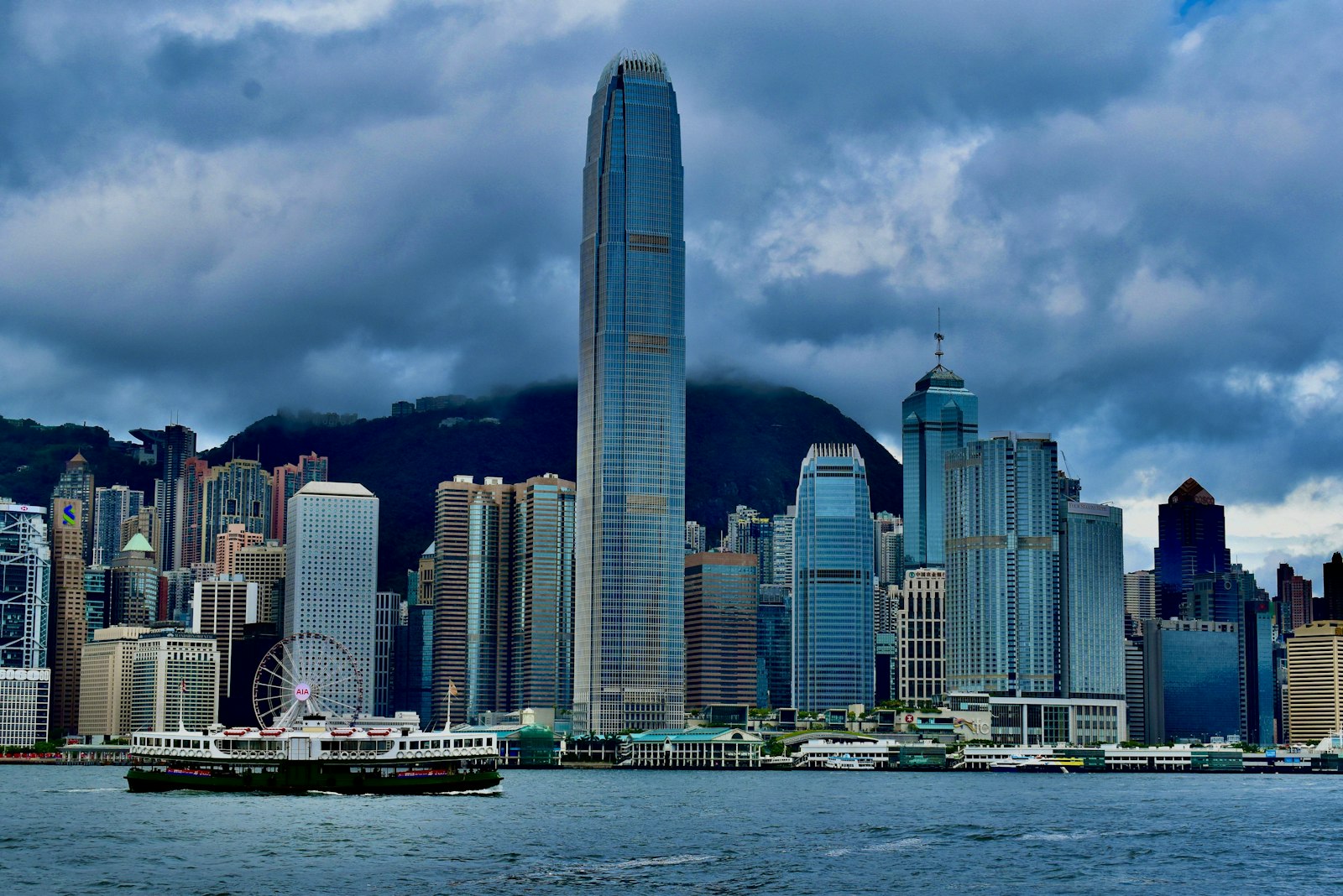
Moving from Germany to Hong Kong
A long haul sea move from Central Europe to one of the world's great ports. Here is what a Germany to Hong Kong relocation really costs in 2026, how long the container takes to reach the Kwai Tsing terminals, why this free port charges no duty on your goods, and the visa routes Germans actually use.
Moving from Germany to Hong Kong is a long haul sea move from Central Europe to the South China coast. Your belongings are packed at home, trucked to a northern port such as Hamburg or Bremerhaven, loaded into a container and shipped through the Suez Canal to Hong Kong, clearing at the Kwai Tsing container terminals, one of the busiest port complexes in the world. Air freight suits a small priority shipment, but for a full household the economics point firmly to a container by sea. Plan the schedule in weeks rather than days.
The pleasant surprise on this route is customs. Hong Kong is a free port, so there is no general import duty on your household goods. Duties apply only to a short list of goods such as liquor, tobacco, hydrocarbon oil and methyl alcohol, none of which affect a normal household move. That removes the single biggest source of cost and uncertainty you would face moving to most other destinations. The work that remains is mainly about logistics in a dense, vertical city and about your visa, since the right to live in Hong Kong is what you must arrange in advance.
What it costs to move from Germany to Hong Kong.
These are indicative ranges for 2026 in euros, for a door to door sea move from Germany to Hong Kong. Your real quote depends on volume, building access in a high rise city, the season, and access at both ends.
Indicative ranges for 2026 in euros. A shared container means your goods travel in part of a container with other shipments, which is cheaper but slower because it waits for consolidation and a full clearance queue.
Volume drives the price, because sea freight is sold by the space your goods fill. A shared container is the budget choice for a small flat but it is slower, since it waits to consolidate and then sits in a shared clearance queue. A sole use twenty foot or forty foot container is faster. On the Germany to Hong Kong route the Suez sailing is the biggest fixed cost, and with no import duty to worry about the destination side is mostly port handling and final delivery. The twist in Hong Kong is the delivery itself: high rise buildings, lift bookings, narrow access and porterage can add real cost, so flag your building type when you get quotes. The summer peak pushes rates up, so always confirm whether the quote is door to door or only port to port.
A realistic schedule, working back from the sailing.
Work back from the sailing date, because the ocean leg is long and fixed. Booking, the survey, your visa and your building access in Hong Kong all need to be settled before the container leaves Germany.
Book the mover and the survey
Get binding quotes from movers with real Germany to Hong Kong experience. Insist on a video or in home survey so the volume is measured, not guessed. Decide between a shared container and a sole use container.
Settle your visa and building access
Confirm your Hong Kong visa, since it is your right to live there. Check delivery access at your new building, including lift bookings and any management approvals, because high rise logistics shape the delivery.
Pack and load in Germany
The crew packs your home over one to two days, builds the inventory and loads the container, which is then trucked to a northern port for export. Keep documents you will need on arrival out of the shipment.
The voyage through Suez
The container sails through the Suez Canal to Hong Kong, often via a transshipment hub. This is the long, fixed part of the schedule, so track the vessel and stay in contact with your destination agent.
Clearance at Kwai Tsing
Your agent clears the shipment at the Kwai Tsing terminals. With no general import duty the clearance is straightforward, so the main variable is port handling and scheduling the delivery into the city.
Delivery and settling in
The goods are delivered and unpacked, with lift bookings and porterage arranged for your building. Confirm your Hong Kong Identity Card with the Immigration Department and set up banking and services.
Clearing your goods into Hong Kong.
Customs clearance into Hong Kong is refreshingly simple for a household move, because Hong Kong is a free port. There is no general import duty and no value added tax on your used household goods, so the duty calculations that dominate most other destinations simply do not apply here. Hong Kong Customs and Excise levies duty only on a short list of dutiable commodities, namely liquor, tobacco, hydrocarbon oil and methyl alcohol, which do not feature in a normal household shipment beyond personal quantities you should declare.
You will still need a passport, your visa or Hong Kong Identity Card, a detailed inventory and the bill of lading for clearance and delivery. Firearms, certain medicines, plant and animal products and a handful of controlled items carry licensing rules, and a vehicle is handled under its own registration and first registration tax regime, which is significant. For a standard household, though, the absence of import duty is the headline, and clearance is mainly a matter of paperwork and scheduling rather than assessment.
How Germans actually move to Hong Kong.
Hong Kong runs its own immigration system separate from mainland China, so German citizens need the right visa to live and work there beyond a short visit. The route depends on whether you are employed, highly skilled, joining family or investing. These are the routes that matter in practice. Rules change, so confirm the current detail.
Granted under the General Employment Policy to a German with a confirmed job that local candidates cannot readily fill. The employer sponsors the application and the visa is tied to the role. It is the standard route for professionals moving for work.
- For
- Sponsored employees
- Policy
- General Employment Policy
A route for high earning professionals and graduates of leading universities to come to Hong Kong to explore work, without needing a job offer first. It suits experienced movers who want flexibility on arrival.
- For
- High earners and top graduates
- Job offer
- Not required upfront
A points based route for skilled people who want to settle in Hong Kong on the strength of their qualifications and experience, again without a prior job offer. It is competitive and quota based.
- Type
- Points based
- Job offer
- Not required
The spouse and dependent children of a visa holder or resident can join under a dependant visa, which generally allows the holder to live and, in many cases, work in Hong Kong.
- For
- Spouse and children
- Pairs with
- A sponsor's visa
How to choose a mover for this route, with no names attached.
This site never names, ranks, or recommends a moving company. Instead, here is the neutral checklist that separates a safe international mover from a risky one. Apply it to every quote you receive.
Get Moving Quotes for Germany to Hong Kong.
One short form reaches vetted international movers who run this exact route. No obligation, and no moving company is shown or ranked on this page. You receive quotes to compare on your own terms.
Plan the move with a clear head.
Subscribe to The Relocation Brief for practical, country specific relocation guidance, sent when it is genuinely useful. No spam, and you can leave any time.
Questions people ask about this move.
How much does it cost to move from Germany to Hong Kong?
As an indicative range for 2026, a one bedroom move runs about 1,900 to 5,000 euros depending on whether you take a shared or a sole use container, while a larger three bedroom home is roughly 5,000 to 9,800 euros. The Suez sailing and high rise delivery access are the main drivers, since there is no import duty.
How long does shipping take from Germany to Hong Kong?
Plan on roughly five to eight weeks door to door. The voyage through the Suez Canal is the long, fixed part of the schedule, and a shared container adds time because it waits to consolidate and then sits in a shared clearance queue at the Kwai Tsing terminals.
Do I pay duty on my furniture when moving to Hong Kong?
No. Hong Kong is a free port with no general import duty and no value added tax on household goods. Duty applies only to a short list of items such as liquor, tobacco and certain fuels, which do not affect a normal household shipment.
Do I need a visa to move from Germany to Hong Kong?
Yes. Hong Kong runs its own immigration system, so Germans need a visa such as an employment visa under the General Employment Policy, the Top Talent Pass Scheme, the Quality Migrant Admission Scheme, or a dependant visa for family.
What is the Hong Kong Identity Card?
The Hong Kong Identity Card is the compulsory identity document issued by the Immigration Department to residents. Most people who move to live in Hong Kong must register for one soon after arrival, and it is used for almost every official process.