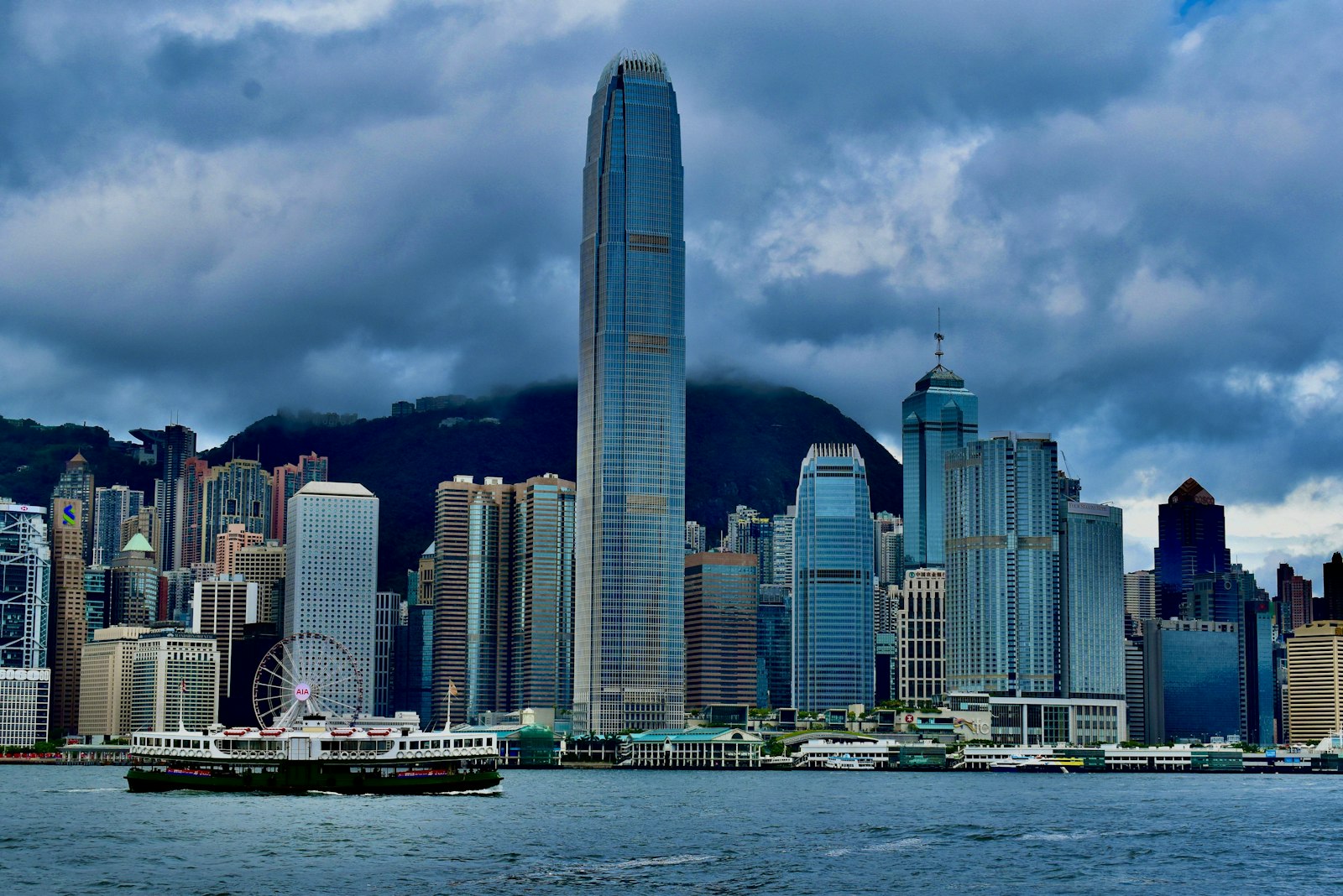
Moving to Hong Kong: the complete guide
A move to one of the world's great financial cities, dense, fast, and astonishingly efficient, where a free port keeps customs simple but rents do not. Here is the honest brief on what it costs to ship your life to Hong Kong, the residence steps that come first, and the customs rules for your furniture.
Costs are indicative ranges for 2026.
A fast, efficient global city where business gets done.
People move to Hong Kong for career opportunity in finance and trade, low and simple taxes, superb public transport, and a location at the heart of Asia. It is a move about work, efficiency, and connection rather than space or a slow pace of life.
Hong Kong runs with a precision few cities match. The transport network is fast, clean, and reaches almost everywhere, the airport connects you to the whole region in a few hours, and the city pairs dense, dramatic urban living with green hills and beaches that are surprisingly close. For many newcomers the efficiency alone is a daily pleasure after life elsewhere.
The tax and business environment is a major draw. Salaries tax is low and simple, there is no tax on most investment income, and English remains widely used in business, law, and government alongside Cantonese. The financial and professional services sectors are deep, which is why the city attracts people building international careers and companies posting staff across Asia.
The honest trade off is cost and space. Housing is among the most expensive on earth and apartments are small, so your money buys far less room than almost anywhere, and the pace and density are intense. Air quality can be poor and summers are hot and humid. People who come for the career and the energy thrive. Those who need space and calm find it hard.
Who it suits, honestly
Hong Kong suits ambitious professionals in finance, law, trade, and technology, people who value efficiency and connectivity, and those comfortable with small homes and a fast pace. It works very well for career focused movers and posted staff. It is harder for those who need space, quiet, or low housing costs, since the city's rewards come with the highest rents and the smallest apartments of almost any destination.
The routes most movers actually use.
Hong Kong runs clear, comparatively quick immigration schemes for skilled workers, talent, and dependants. Most movers arrive through an employer or a talent route. These are summaries, not advice.
Granted under the General Employment Policy to people with a confirmed job offer that cannot easily be filled locally. It is the most common route for professionals relocating for a role, and the employer drives the application.
The Top Talent Pass Scheme lets high earning individuals and graduates of leading universities come to live and look for work without a prior job offer, a fast route that has drawn many recent arrivals.
The Quality Migrant Admission Scheme admits highly skilled people on a points basis assessing age, qualifications, experience, and language, allowing entry to settle and seek work without sponsorship.
For the spouse and children of someone holding a work or talent visa or settled in Hong Kong, generally allowing the dependant to live and, in most cases, work or study freely.
Bringing your household goods into Hong Kong.
Hong Kong is a free port, which makes importing household goods unusually simple. There is no general customs duty and no import value added tax on personal and household effects, so a normal move clears with little fuss, though a handful of categories remain controlled.
For the vast majority of movers there is no duty and no import tax to pay on used or even new household goods, because Hong Kong levies excise on only a short list of items. This is one of the easiest customs environments in the world for a household shipment, and clearance through the Kwai Tsing container terminals is generally quick when your paperwork is in order.
You will still need clean documents. Customs and your shipper will want your passport and visa or HKID, the bill of lading, and an inventory, and the goods should be genuine personal effects. Because there is no duty to assess, the focus is on confirming the shipment is yours and contains nothing controlled, rather than on valuing it for tax.
The controlled categories are where care is needed. Excise duty applies to liquor above a certain strength, tobacco, hydrocarbon oil, and methyl alcohol, and there are licensing rules for items such as certain medicines, weapons, and protected species. Left hand drive cars are generally not permitted on the roads, and importing any vehicle involves first registration tax, so most movers do not ship a car.
Verify before you move. The excise list, licensing requirements, and vehicle rules change. Confirm the current position with the Hong Kong Customs and Excise Department or a licensed shipping agent before your goods ship, especially if you plan to bring alcohol, a vehicle, or anything unusual.The cost and texture of daily life.
Hong Kong is expensive, and housing is the reason. Rent dominates a budget here more than in almost any city, while transport, eating out, and everyday services can be very reasonable, which softens the blow.
Indicative monthly figures in US dollars for 2026. Rents for family sized flats rise steeply. Treat these as planning ranges, not quotes.
Healthcare
Hong Kong runs a highly regarded public hospital system that is heavily subsidised and open to residents holding an HKID, alongside a large private sector. Public care is excellent value but can mean waits for non urgent treatment, so many expatriates carry private or employer provided health insurance for faster access to private hospitals and English speaking specialists. Standards in both sectors are high.
Banking and money
Opening a bank account is straightforward for residents with an HKID, a local address, and proof of employment or means, and the city's banking is fast and digital. The Octopus card, a stored value card, is woven into daily life for transport and small payments. Note that account opening for some newcomers has tightened, so bring thorough documentation and, where possible, start the process with an employer's support.
Your first month checklist
In your first month, secure housing, which is the hardest and most expensive step, then register for your HKID at the Immigration Department, which you must do within 30 days of arrival. Open a bank account, get an Octopus card and a local SIM, and arrange health insurance. Posted staff often have relocation support that smooths the housing search and the account opening.
What the move itself costs.
Hong Kong is a major shipping hub, so sailings are frequent and customs is simple, but small apartments mean many movers ship less than they expect. Price is driven by origin, volume, and container choice. The ranges below are indicative for 2026.
Indicative ranges for 2026 in US dollars. Volume, season, port access, and destination delivery distance move the final number. A binding pre move survey is the only way to get a real figure.
How to choose a mover for Hong Kong
We never name, rank, or recommend a moving company. Instead, here is the neutral checklist we would use ourselves. Apply it to any quote you receive, then request comparable quotes through the form below.
FIDI or IAM affiliation
Membership of the FIDI Global Alliance or the International Association of Movers signals audited financial stability and a complaints process you can lean on if something goes wrong.
Real corridor experience
Ask how many households the company has shipped on your exact route in the past year. A mover that runs the lane weekly knows the ports, the customs broker, and the paperwork by heart.
A binding pre move survey
Insist on a video or in home survey and a binding or not to exceed quote. A price built from a real volume estimate is the only quote you can compare like for like.
Clear insurance terms
Read how marine transit cover is calculated, what the deductible is, and whether valuation is by replacement value. Vague cover is the most common regret on an international move.
Verifiable reviews
Look for recent, specific reviews that name the destination, not just star ratings. Patterns in how a company handles claims tell you more than any single glowing note.
Written scope and timeline
Everything that matters belongs in writing: packing, customs clearance, delivery, unpacking, and debris removal, with who pays destination charges spelled out.
Get moving quotes for your move to Hong Kong.
One short form, shared with vetted international movers who run the lanes into the Kwai Tsing terminals. Compare real quotes built on a proper survey, and ask about storage given small flats.
One useful email a month for people moving countries.
Real cost movements, customs rule changes, and corridor notes. No spam, and you can leave whenever you like.
Questions people ask about this move.
How much does it cost to move to Hong Kong?
For a 2 to 3 bedroom home, a shared container typically runs from about 4,000 to 10,000 US dollars in 2026, depending on your origin, your volume, and the season. Many movers ship less than planned because apartments are small. A binding pre move survey is the only way to get a firm figure.
How long does shipping to Hong Kong take?
Door to door sea transit is usually 2 to 7 weeks depending on origin and sailing schedules, plus customs clearance, which is quick because Hong Kong is a free port. Sailings through the Kwai Tsing terminals are frequent.
Do I pay customs duty on household goods in Hong Kong?
No, in almost all cases. Hong Kong is a free port with no general customs duty and no import value added tax on household goods. Excise applies only to a short list including liquor, tobacco, and certain fuels, so a normal household shipment clears without duty.
Do I need a visa to live in Hong Kong?
Yes for work or settlement. Common routes are an employer sponsored Employment visa, the Top Talent Pass Scheme, the Quality Migrant Admission Scheme, and the Dependant visa for family. Confirm current rules with the Hong Kong Immigration Department.
What is the HKID and when do I get it?
The HKID is the Hong Kong identity card, which residents staying more than 180 days must register for at the Immigration Department within 30 days of arrival. It is the key document for banking, healthcare, and daily life, so it is a top first month task.
Should I ship my car to Hong Kong?
Usually no. Left hand drive cars are generally not allowed on the roads, importing any vehicle triggers first registration tax, and parking is scarce and costly. The excellent public transport means most residents do not own a car at all.
Moving to Hong Kong from your country.
Pick your origin for a corridor guide built specifically for that pair, with the costs, customs notes, and timeline for that exact route into Hong Kong.