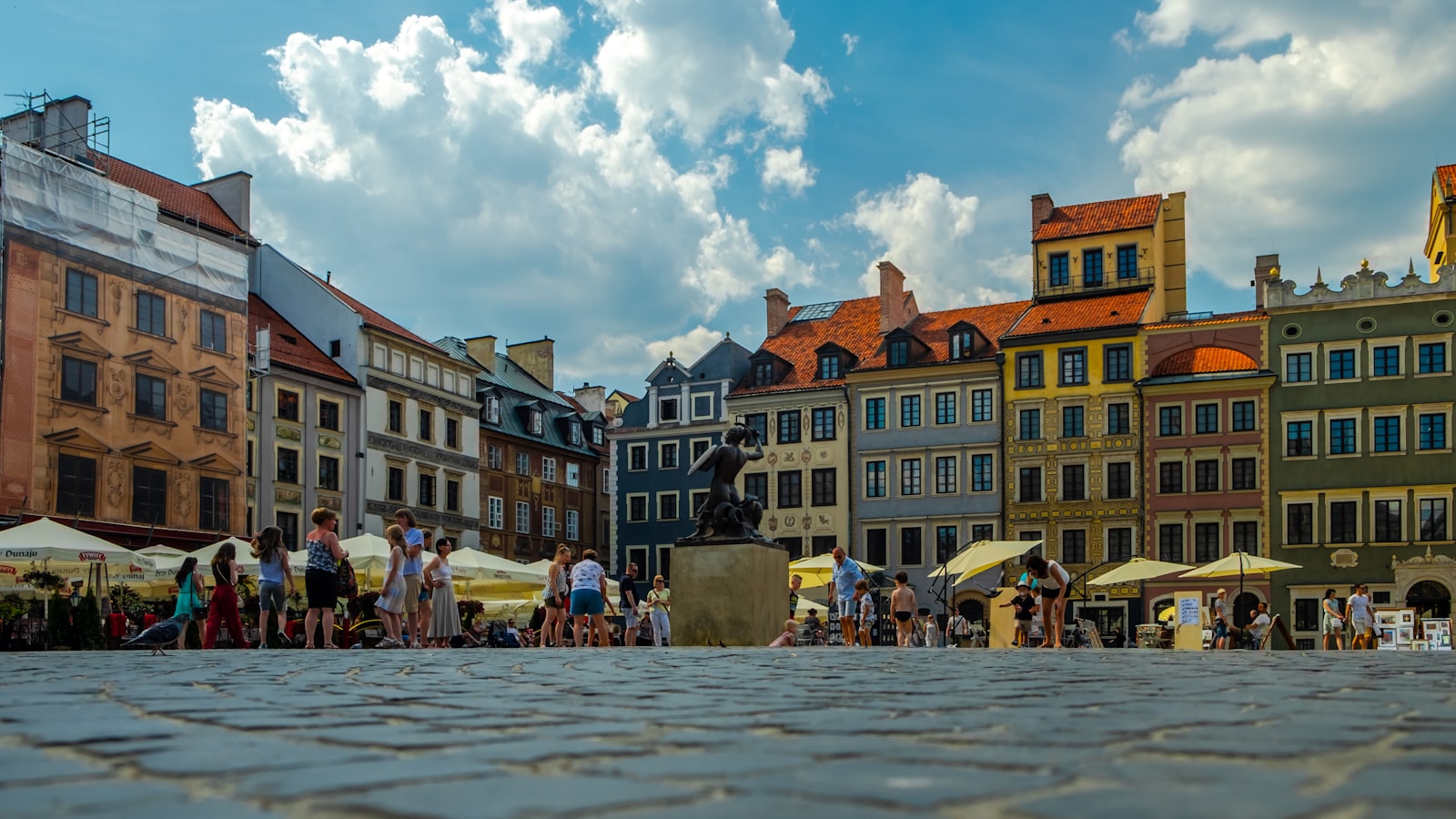
Moving from Singapore to Poland
A move from the centre of Asia to the Baltic, as Poland grows into one of Europe's most dynamic places to work and live. Your goods travel by sea on an efficient Asia to Europe lane, usually through the Suez Canal to the deepwater port at Gdansk. As an import into the European Union from outside, this move can use transfer of residence relief. You also switch sides of the road. Here is the honest brief for this corridor.
Logistically this is a long but efficient deep sea move on one of the world's busiest lanes. Your goods are collected in Singapore, a major transshipment hub, loaded onto an Asia to Europe service, and carried through the Suez Canal to the deepwater container terminal at Gdansk, with Gdynia an alternative, then delivered by road to your address. Because this is a well served corridor with direct calls, door to door commonly runs five to eight weeks, a touch quicker than more remote routes, with a sole use container the practical choice for a full household.
Because Poland is in the European Union and Singapore is not, this is an import that can qualify for transfer of residence relief. To bring your used household goods in free of duty and value added tax, you generally need to have lived outside the European Union for a continuous twelve months, to have owned and used the goods for at least six months, and to apply through Polish customs with the right evidence. The residence card you are working toward is the karta pobytu, alongside the PESEL number. One change to plan for, Poland drives on the right while Singapore drives on the left.
What it costs to move from Singapore to Poland.
What it really costs to move a household from Singapore to Poland in 2026, shown as indicative ranges by home size and shipping method. This is a long deep sea move on an efficient lane, so volume and your choice of shared versus sole use freight drive the number most.
Indicative ranges for 2026 in Singapore dollars, before full packing, premium insurance, storage, and Polish customs handling. A shared load splits the container space and the cost with other shipments, while a sole use twenty or forty foot container carries only your goods. These are not binding figures, so get a survey.
Four levers move the number. Volume dominates over this distance, so a serious declutter before the survey pays off most. Shared versus sole use trades cost against timing, with a shared load cheaper but slower, though this lane has frequent sailings so shared loads move more reliably than on remote routes. Routing and any transshipment feed the price. And destination handling, the customs clearance under transfer of residence relief and the road leg from Gdansk, adds fees a domestic move never has.
A realistic schedule, working back from the sailing.
Work back from the sailing, and start early, because transfer of residence relief and your Polish residence permit both need lead time on this route.
Book the move and plan the route
Have movers survey your home and quote shared and sole use options, then confirm the Asia to Europe routing to the deepwater terminal at Gdansk. Begin your Polish residence application, since a third country national needs a permit to settle.
Build the case for relief
Gather proof that you have lived outside the European Union for twelve months and that you have owned and used your goods for at least six months. This evidence underpins your transfer of residence relief claim to Polish customs.
Sort the Singapore exit
Close or transfer your Singapore tenancy and utilities, settle matters with the tax authority, and prepare a detailed inventory. Singapore movers are experienced on Europe lanes, but a clean exit still helps.
Load and ship
The crew packs and loads in Singapore, your container is shipped through the Suez Canal to Gdansk. Keep your passport, residence documents, and inventory with you, since you and your goods will be apart for several weeks.
Clear customs and settle in
Your agent presents the transfer of residence relief application and your residence documents to Polish customs. Then apply for a PESEL, register your residence, collect your karta pobytu from the Voivodeship Office, open a bank account, and arrange healthcare.
Clearing your goods into Poland.
This corridor has a real customs step, because moving from Singapore to Poland is an import into the European Union. Polish customs, under the national tax and customs administration, the Krajowa Administracja Skarbowa, can admit your used household goods free of duty and value added tax under transfer of residence relief. To qualify, you generally need to have had your normal residence outside the European Union for a continuous period of twelve months, and the goods must have been owned and used for at least six months before the move and be intended for your home in Poland.
The relief comes with conditions and paperwork. You apply with proof of your residence abroad and of ownership, and relief is not granted for goods such as alcohol and tobacco beyond limits or for items intended for resale. A car can sometimes be included under the relief if conditions are met, but there is a practical catch, Poland drives on the right while Singapore drives on the left, so a Singapore car is the wrong hand for the roads and most movers do not ship one. Keep your inventory and evidence in order for the clearance at Gdansk.
So the practical task on this route is building a clean transfer of residence claim and timing your arrival, not just shipping. Keep evidence of where you lived and what you owned, keep a detailed inventory, and have your agent confirm the current relief process before the container sails. The freight is the predictable part of a Singapore to Poland move.
How people leaving Singapore actually move to Poland.
Singaporean citizens are third country nationals for Poland, so you need a residence route rather than free movement, usually leading to a karta pobytu. These notes cover the common options.
A Polish employer secures a work permit, and you enter on a national long stay visa, the type D, then convert to a temporary residence permit. It is the standard route for those relocating for a role.
- Type
- Work
- Basis
- Job offer
- Entry
- National visa D
- Then
- Karta pobytu
Highly qualified workers with a suitable salary can apply for the EU Blue Card, which combines work and residence rights and offers a clearer path for skilled professionals.
- Type
- Skilled work
- Basis
- Salary and qualifications
- Result
- Blue Card
- Note
- Higher threshold
The karta pobytu, the temporary residence card, is applied for at the Voivodeship Office once you are in Poland on a suitable basis such as work, study, or family.
- Type
- Residence
- Where
- Voivodeship Office
- Result
- Karta pobytu
- Note
- Apply in time
Family members of someone lawfully resident in Poland can apply to join them, with documentation of the relationship and the sponsor's status.
- Type
- Family route
- Basis
- Sponsor in Poland
- Result
- Residence card
- Note
- Document checks
How to choose a mover for this route, with no names attached.
This site never names, ranks, or recommends a moving company. Instead, here is the neutral checklist that separates a safe international mover from a risky one. Apply it to every quote you receive for Singapore to Poland.
Get Moving Quotes for Singapore to Poland.
One short form reaches vetted international movers who run this exact route. No obligation, and no moving company is shown or ranked on this page. You receive quotes to compare on your own terms.
Plan the move with a clear head.
Subscribe to The Relocation Brief for practical, country specific relocation guidance, sent when it is genuinely useful. No spam, and you can leave any time.
Questions people ask about this move.
How much does it cost to move from Singapore to Poland?
As indicative ranges for 2026, a 2 to 3 bedroom move runs roughly 7,800 to 11,500 Singapore dollars as a shared load and up to about 14,800 dollars for a sole use container, before packing, insurance, and Polish customs handling. This is a long deep sea move via the Suez Canal to Gdansk, so volume and whether you share the space drive the figure. Get a binding quote from a survey.
How long does it take to move from Singapore to Poland?
Expect five to eight weeks door to door. Goods are shipped from Singapore through the Suez Canal to the deepwater terminal at Gdansk, then cleared and delivered by road. Because this is a busy, well served Asia to Europe lane, it is a touch quicker than more remote routes, and a sole use container is the practical choice for a full household.
Do I pay customs duty moving from Singapore to Poland?
You can avoid duty and value added tax through transfer of residence relief, since this is an import into the European Union. You generally need to have lived outside the European Union for twelve months and to have owned and used your goods for at least six months. You apply through Polish customs, the Krajowa Administracja Skarbowa, so confirm the current conditions and keep your evidence.
What is transfer of residence relief for Poland?
It is the customs relief that lets someone moving their normal residence into the European Union bring used household goods free of duty and value added tax. For Poland you generally need twelve months of residence outside the Union and six months of ownership and use of the goods, applied for through Polish customs with supporting evidence. Keep proof of where you lived and what you owned.
Do I need a PESEL and a karta pobytu in Poland?
Yes, in practice. The karta pobytu is your residence card, applied for at the Voivodeship Office, and the PESEL is the national identification number used for healthcare, banking, and contracts. Apply for both promptly after arrival, since daily life in Poland runs on them.
Can I bring my car from Singapore to Poland?
You can sometimes include a car under transfer of residence relief if the conditions are met, but there is a practical catch, Poland drives on the right while Singapore drives on the left, so a Singapore car is the wrong hand for the roads. Most movers sell up in Singapore and buy a vehicle locally, which is usually simpler and cheaper.