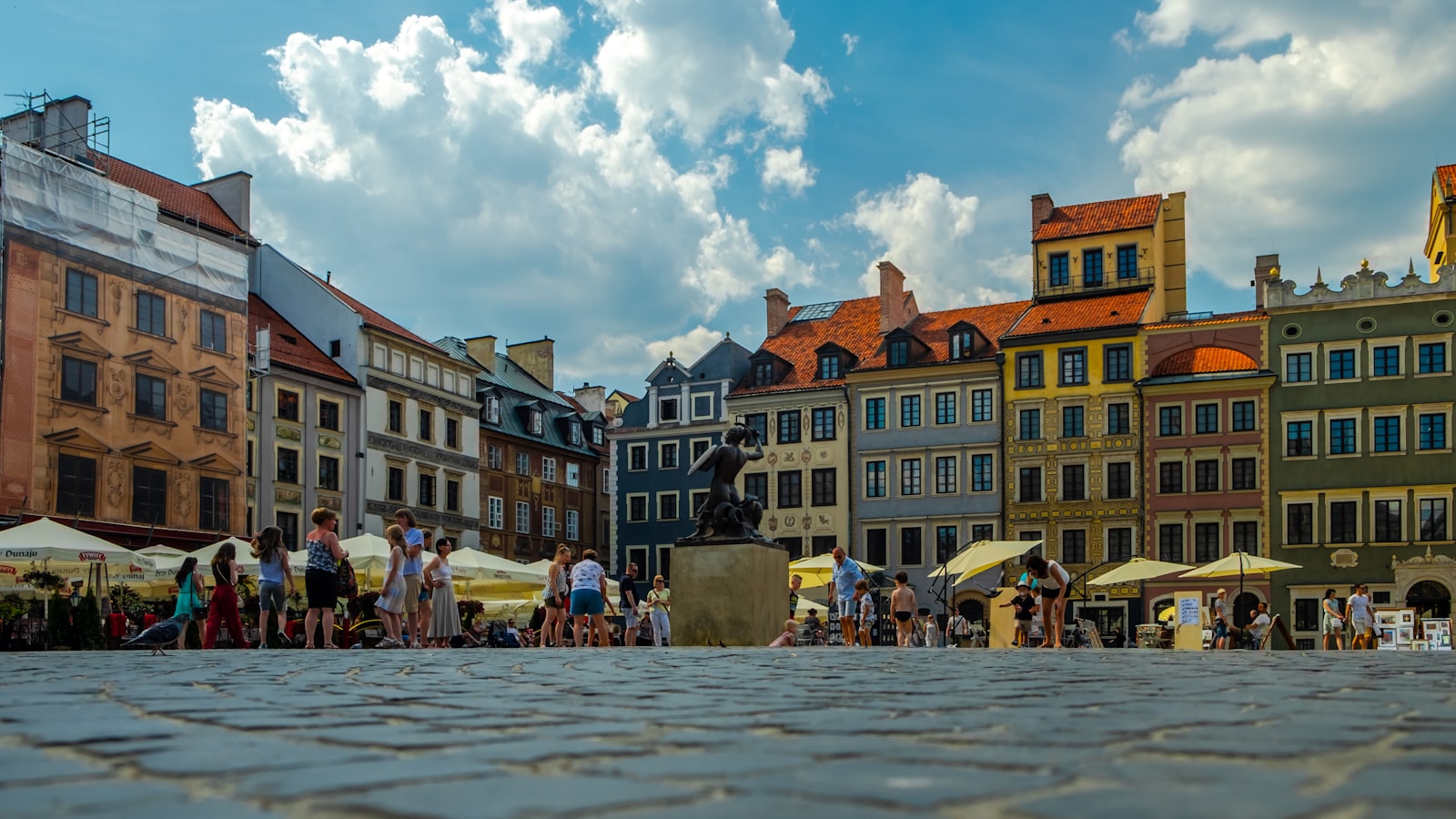
Moving from Spain to Poland
A move from sunny southern Europe to the dynamic heart of central Europe, both inside the European Union. The journey is a long road haul north across France and Germany rather than a sea shipment. There is no customs to clear, because both countries share the single market. What catches Spanish movers out is how much Polish life waits on one number, the PESEL, and that Poland keeps its own currency. Here is the honest brief for this corridor.
Logistically this is a long European road move rather than an ocean shipment. Your goods are loaded in Spain and driven north through France and Germany into Poland, then on to your address in Warsaw, Krakow, Wroclaw, or wherever you are settling. A dedicated truck usually takes one to two weeks door to door, while a shared load that drops other consignments along the way takes longer. There is no sea leg and no port, just road across the continent.
The reassuring part is customs, because there is none to clear. Spain and Poland are both in the European Union and its customs union and single market, so your household goods move as a free internal transfer with no duty, no import value added tax on the move, and no declaration for your used belongings. The part that surprises Spanish movers is everything that follows arrival. Poland runs on the PESEL, the universal personal number, and on the meldunek, the address registration, and without them banking, work, and health cover are awkward. Poland also keeps the zloty rather than the euro, so budget for a currency change. Sorting the PESEL early is the real work of this move.
What it costs to move from Spain to Poland.
What it really costs to move a household from Spain to Poland in 2026, shown as indicative ranges by home size and shipping method. This is a European road move with no customs, so volume and whether you share the truck drive the number most.
Indicative ranges for 2026 in euros, before full packing, premium insurance, and any storage. A shared load splits a truck and the cost with other moves, while a dedicated van or truck carries only your goods on your own schedule. These are not binding figures, so get a survey.
Four levers move the number. Volume dominates, because a shared load is priced by the space you fill, so a real declutter before the survey pays off most. Shared versus dedicated trades cost against timing, with a shared load cheaper but tied to other people's schedules and a dedicated truck pricier but direct. Distance and routing matter, since this is a long haul across France and Germany and fuel and tolls feed the price. And access at both ends matters, from a Spanish flat with a fixed moving day to a Polish apartment block that needs a lift booking and a delivery slot.
A realistic schedule, working back from the sailing.
Work back from your move date. The road haul is predictable, so the real effort is lining up the Polish admin, above all the PESEL number and address registration that unlock daily life.
Book the move and plan the route
Have movers survey your home and quote shared and dedicated options, then confirm the road routing north through France and Germany into Poland. Decide your delivery window so the truck timing and your arrival line up.
Sort the Spanish exit
Deregister from the padron at your town hall, settle matters with the Spanish tax authority, and cancel or transfer utilities, insurance, and your tenancy. A clean exit on the Spanish side prevents tax and registration loose ends later.
Prepare your Polish arrival
Because this is an internal European Union move there is no customs paperwork for your used goods, so focus on Poland. Line up a home, gather proof of your move, and read up on registering your residence, the meldunek, and applying for the PESEL so you can act quickly.
Load and travel
The crew packs and loads in Spain and the truck heads north across the continent. Keep your own documents and a small essentials bag with you, since the goods and you may arrive a few days apart on a long road haul.
Register and settle
Register your address, the meldunek, at the local town or city office, and apply for the PESEL, the personal number that official life runs on. Register your residence as a European Union citizen at the Voivodeship Office if staying beyond three months, then open a bank account and sort health cover through the NFZ.
Clearing your goods into Poland.
This corridor has no customs step for your used household goods. Spain and Poland are both members of the European Union and its customs union and single market, so moving your home between them is an internal transfer of goods that already have Union status. There is no import duty, no value added tax charged on the move itself, and no transfer of residence relief to claim, because there is no import to clear in the first place.
A few categories still carry rules wherever you move inside the Union. Large quantities of alcohol and tobacco beyond personal use can attract questions, certain weapons, plants, and protected species items remain controlled, and bringing a car means re registering it in Poland and meeting the local steps for a vehicle taken into use there. Pets travel under European Union animal health rules with a pet passport and up to date vaccinations.
So the practical task on this route is not customs but registration. Keep an inventory for your own insurance and claims, keep proof of your move for the residence registration, and budget time for the Polish formalities rather than for a border. The freight is the easy part of a Spain to Poland move, and the admin in your first weeks, plus the change from the euro to the zloty, is where the effort really goes.
How people leaving Spain actually move to Poland.
Spain and Poland are both in the European Union, so Spanish citizens move to Poland under free movement, registering rather than applying for a visa. These notes cover the common situations.
As a Spanish citizen you have the right to live and work in Poland under European Union free movement. You move freely and then register your residence after arrival, with no visa required.
- Type
- Free movement
- Basis
- EU citizen
- Permit
- None needed
- Then
- Register residence
European Union citizens staying beyond three months register their residence at the Voivodeship Office and complete the meldunek address registration, which sits alongside the PESEL.
- Type
- Registration
- When
- Over three months
- Where
- Voivodeship Office
- Also
- Meldunek
The PESEL is the universal personal number used across Polish administration. With it, and a tax number where needed, you can bank, work, and access services normally.
- Type
- Personal number
- Name
- PESEL
- For
- Most services
- Note
- Apply early
A non European Union spouse or family member moving with you applies for a residence card as the family member of a Union citizen exercising free movement, a smoother route than a standard visa.
- Type
- Family route
- Basis
- Family member
- Result
- Residence card
- Note
- Document checks
How to choose a mover for this route, with no names attached.
This site never names, ranks, or recommends a moving company. Instead, here is the neutral checklist that separates a safe international mover from a risky one. Apply it to every quote you receive.
Get Moving Quotes for Spain to Poland.
One short form reaches vetted international movers who run this exact route. No obligation, and no moving company is shown or ranked on this page. You receive quotes to compare on your own terms.
Plan the move with a clear head.
Subscribe to The Relocation Brief for practical, country specific relocation guidance, sent when it is genuinely useful. No spam, and you can leave any time.
Questions people ask about this move.
How much does it cost to move from Spain to Poland?
As indicative ranges for 2026, a 2 to 3 bedroom move runs roughly 3,500 to 5,500 euros as a shared load and up to 7,500 euros for a dedicated truck, before packing, insurance, and any storage. This is a European road move with no customs, so volume and whether you share the truck drive the figure. Get a binding quote from a survey.
How long does it take to move from Spain to Poland?
A dedicated truck usually takes one to two weeks door to door, driving north across France and Germany into Poland and on to your address. A shared load that drops other consignments along the way takes longer, since it is timed around other people's moves rather than yours.
Do I pay customs duty moving from Spain to Poland?
No. Spain and Poland are both in the European Union customs union and single market, so moving your used household goods between them is an internal transfer with no duty, no value added tax on the move, and no import declaration. There is no transfer of residence relief to claim because there is no import to clear.
What is the PESEL and how do I get one?
The PESEL is Poland's universal personal number, used across banking, work, health, and administration. You obtain it through the local town or city office, usually alongside the meldunek address registration. It is the single most useful thing to arrange in your first days, so prioritise it on arrival.
Do Spanish citizens need a visa to move to Poland?
No. Under European Union free movement, Spanish nationals move to Poland without a visa, registering their residence at the Voivodeship Office if they stay beyond three months. This is not immigration advice, so confirm the current registration steps with the official Polish source before you rely on them.
Does Poland use the euro?
No. Poland keeps its own currency, the zloty, rather than the euro, so plan for a currency change when you move from Spain. Budget for exchange on your savings and for the early weeks before a Polish bank account and income are in place, and factor the rate into your moving costs.