Moving to Chile the complete guide
A long ribbon of a country down the Pacific coast of South America, from the Atacama desert to Patagonia, with a stable economy, the Andes on the doorstep and a growing pull for remote workers and retirees. Here is the honest brief.
Costs are indicative 2026 ranges. Verify customs, visa and tax rules before you move.
Stability, the Andes and a long Pacific coast
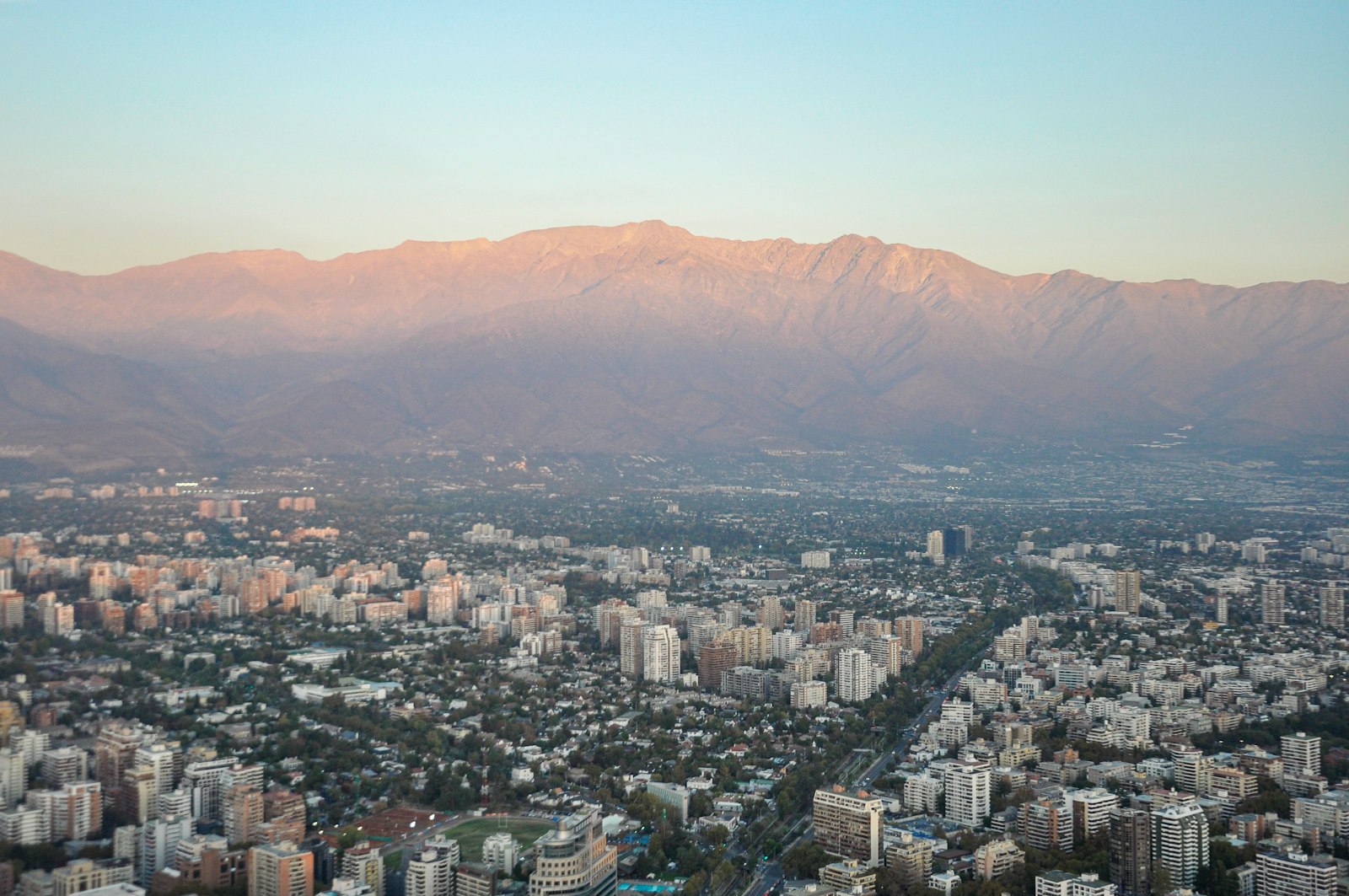
Chile is one of the most stable and developed economies in South America, with Santiago as its business heart, the port cities of Valparaiso and Vina del Mar nearby, and a landscape that runs from the driest desert on Earth in the north to glaciers and fjords in the south. The Andes rise directly behind the capital, so skiing and hiking are close, and the central valley produces the wine the country is known for.
The cost of living is moderate, higher than much of the region but well below North America and western Europe, and Santiago offers a comfortable, modern city life. Spanish is essential for daily life and bureaucracy, spoken quickly in the local accent, and while English appears in international business and tourism, learning Spanish transforms the experience. Most international movers arrive for work, investment, retirement or to join family.
Chile sits a long way from most origins, so international shipments are a Pacific sea haul that arrives at San Antonio, the largest and busiest port in the country, or at Valparaiso nearby, then travels by road to Santiago and beyond. Iquique serves the far north. Air freight into Santiago handles smaller, time sensitive loads.
Skilled workers and professionals
Santiago concentrates mining, finance and technology roles. A temporary residence permit through work or a job offer is the usual route for professionals.
Retirees and people with income
The Rentista and retirement categories suit people with a steady pension or passive income who want the climate, the coast and a lower cost base.
Investors and founders
Chile actively courts investment and entrepreneurs, and dedicated temporary residence categories exist for qualifying investors and business builders.
Residence routes, in plain language
Chile reshaped its system under the Servicio Nacional de Migraciones, known as SERMIG. Most movers apply from abroad for a Residencia Temporal, a temporary residence permit, in one of several subcategories, then convert to permanent residence later.
Granted to people with a job offer or an employment relationship in Chile. It allows you to live and work while you build toward permanent residence.
For people who can show a steady pension or regular passive income from abroad. A popular path for retirees and location independent earners.
For qualifying investors and founders putting capital into a Chilean business or project, subject to the thresholds and documents SERMIG sets.
Routes exist for spouses, children and parents of residents and citizens, and for students enrolled at Chilean institutions, each with its own conditions.
Used household goods and Chilean customs, the menaje de casa
Chile allows people moving to live there to import used household goods, the menaje de casa, with relief from full duties, but the rules are specific and the allowance is capped. Non citizens holding a temporary residence visa are generally allowed to import used household goods and personal effects up to a value of around 5,000 US dollars on a free on board basis, paying only a small nominal charge rather than full duty. The goods must be used, owned before the move, and for your personal use, not commercial quantities.
You prepare a detailed valued inventory, usually in Spanish, with your passport, your visa or residence stamp, and proof that you are taking up residence. Your mover or a customs agent handles the declaration with Chilean customs, the Servicio Nacional de Aduanas, at San Antonio or Valparaiso. Inventories that look new or commercial invite questions and duty, so honest, used valuations matter.
Vehicles are tightly controlled and generally cannot be imported as part of the household relief, so most movers sell before leaving and buy locally. Firearms, certain foods, plants and animal products are restricted or prohibited, and Chile takes its agricultural border controls seriously, so declare everything.
What life costs and how to get set up
Chile is moderately priced. Santiago rents and groceries cost less than North America but more than most neighbouring countries, and imported goods carry a premium because of the distance and the peso. Public transport in Santiago is good, private health and schooling are widely used by the middle class, and the further you live from the capital the cheaper life tends to be.
Settling in centres on two numbers. Within thirty days of arriving you register with the Policia de Investigaciones, the PDI, then apply for your Cedula de Identidad, the identity card, and your RUT, the Rol Unico Tributario tax number, at the Servicio de Registro Civil e Identificacion, the civil registry. The RUT is the key to opening a bank account, signing a lease, buying a phone plan and paying taxes through the Servicio de Impuestos Internos.
Healthcare is a two tier system. The public scheme, FONASA, covers residents who contribute, while many people choose a private ISAPRE plan for faster access and private hospitals. Both require a RUT and proof of residence to enrol. Santiago has excellent private clinics, and the standard of care in the main cities is high.
Your first month checklist
- Register with the Policia de Investigaciones, the PDI, within thirty days of arrival
- Apply for your Cedula de Identidad and RUT at the civil registry
- Choose a health scheme, FONASA or a private ISAPRE plan, and enrol
- Open a Chilean bank account once you have your RUT
- Set up utilities, home insurance and a local mobile number
- Convert your foreign driving licence within the allowed period
- Enrol children at a local or international school
How to choose a mover for Chile
No mover is named or ranked anywhere on this site. Here is how to judge any company quoting a move to Chile, then request quotes from vetted firms that genuinely run your origin to Chile.
Check FIDI or IAM affiliation
Membership of FIDI through the FAIM quality standard, or of IAM, signals audited financial and operational standards. It is the single fastest filter for an international move.
Insist on a binding pre move survey
A mover who quotes your volume from a video or home survey, in writing, is quoting the real job. A price given without seeing your goods is a guess that tends to climb later.
Confirm genuine experience on this lane
Ask how many moves they run on your exact corridor each year, which port and customs broker they use in Chile, and who clears the goods at the other end.
Read the insurance terms, not the headline
Compare marine all risk cover, the valuation basis, the excess, and what counts as an exclusion. The cheapest cover is rarely the one that pays out cleanly.
Weigh reviews and complaint history
Look for recent, specific reviews that mention customs delays, damage handling and final invoices. Pattern matters more than a single rating.
Then request quotes through one form
We never name, rank or recommend a single company. Send one brief and vetted movers who run this route reply to you. You choose.
Get moving quotes for your route to Chile
One short brief goes to vetted international movers who run your origin to Chile, including the customs leg. Compare on scope and service, not just price.
Subscribe to The Relocation Brief
One useful email when a new corridor goes live, plus the cost and customs changes worth knowing before you move. No noise.
Moving to Chile, answered
How much does it cost to move to Chile?
As an indicative 2026 range, a two bedroom household by shared container costs roughly $3,500 to $12,000 depending on origin, volume, season and delivery from San Antonio or Valparaiso into Santiago. The long Pacific haul keeps the floor higher than for a regional move. These are planning ranges, not quotes.
How long does shipping to Chile take?
Door to door transit is usually about 30 to 50 days by sea, including the Pacific sailing to San Antonio or Valparaiso, customs clearance and delivery to Santiago. Air freight cuts it to one to two weeks for a small shipment.
Do I pay duty on my furniture moving to Chile?
Non citizens with a temporary residence visa can usually import used household goods, the menaje de casa, up to a value of around 5,000 US dollars free on board, paying only a small nominal charge rather than full duty. The goods must be used and for personal use. Verify the current limits before shipping.
Do I need a visa to move to Chile?
Yes. Most movers apply through SERMIG for a Residencia Temporal in a work, income, investment, family or study subcategory, then convert to permanent residence later. Confirm your route and the current rules with SERMIG before you move.
What is the first thing to do when I arrive in Chile?
Register with the Policia de Investigaciones within thirty days, then apply for your Cedula de Identidad and your RUT tax number at the civil registry. The RUT is the key to a bank account, a lease and daily life.
Can I bring my car to Chile?
Generally no. Vehicles are tightly controlled and usually cannot be imported as part of the household relief, so most movers sell before leaving and buy locally. Confirm your situation before assuming you can import a car.
Plan your move to Chile by origin
Corridor guides into Chile, each with costs, customs and a timeline for that exact pair, are publishing progressively. Start from your origin country hub below, or browse the full corridor index.