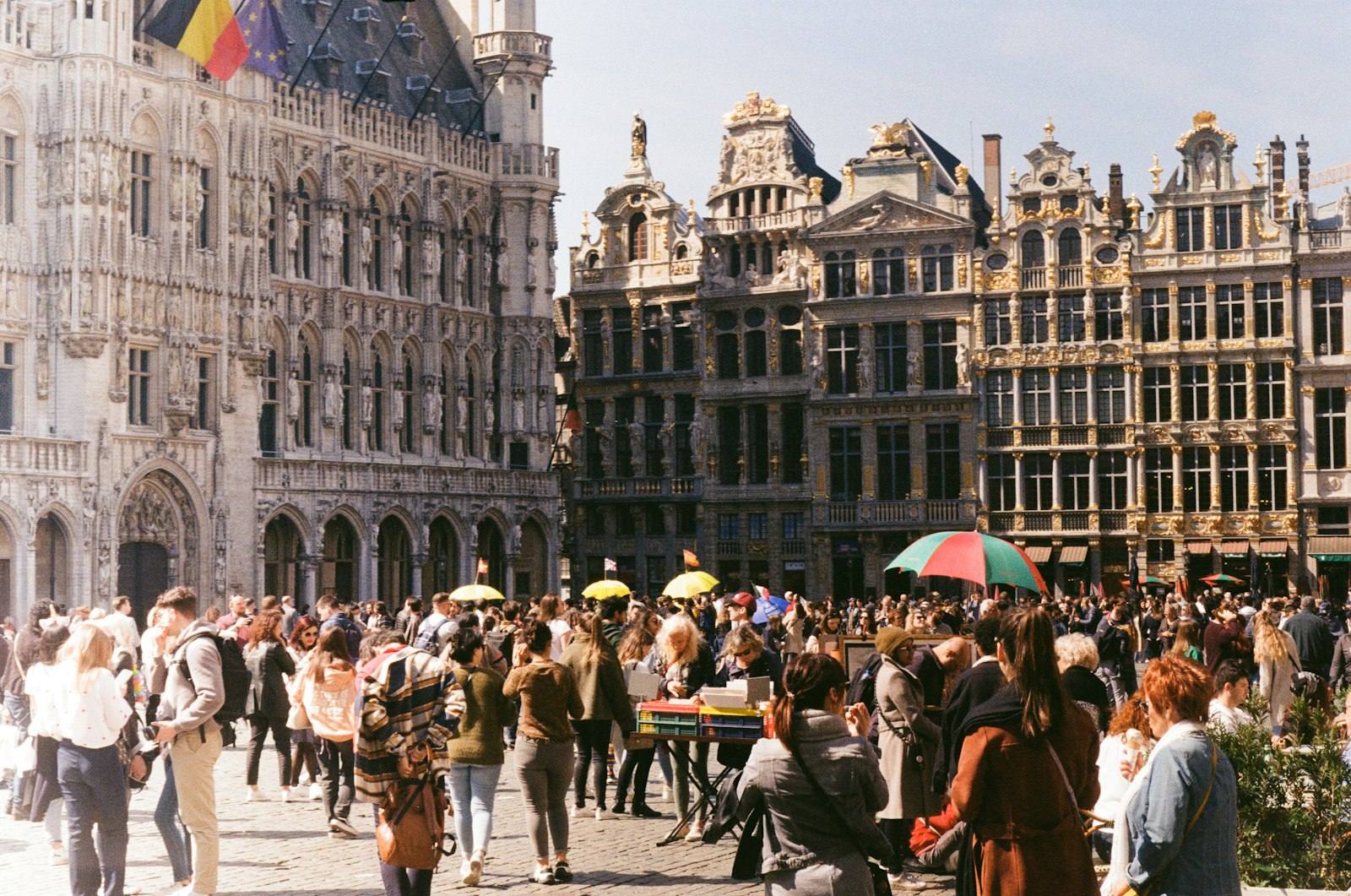
Moving from Spain to Belgium
A move between two members of the single market, so there is no customs barrier and no container at sea. It is a road removal across France, and the real work waits at the Belgian town hall.
This is a move inside the European single market, which changes everything about how it works. Spain and Belgium are both in the European Union and the customs union, so there is no border formality for your household goods, no container at sea, and no duty to worry about. A truck collects in Spain, drives north through France, and delivers in Belgium. It is a road removal, and the logistics are the simple part of this corridor.
The real work is administrative, and it starts the moment you arrive. Belgium expects new residents to register at their local commune, the town hall of the municipality where they live, within a short window, and from that registration flows the national register number that you need for almost everything else. Belgium is also a country of language regions, so whether your commune works in Dutch, French or German shapes the paperwork in front of you. Everything below gives you the numbers, the route, and the Belgian offices and documents you will actually deal with.
What it costs to move from Spain to Belgium.
The numbers below are indicative ranges for Spain to Belgium in 2026, quoted in euros because that is what movers price on this lane and what you will spend at both ends. With no sea freight, the levers are volume, distance and whether you share the truck.
Indicative ranges for 2026 in euros, the currency movers quote on this corridor. The drivers are volume in cubic metres, the road distance from your Spanish region to your Belgian address, the season, and access at both ends. A pickup in inland Spain and delivery into a tight Brussels street costs more than a Costa to a Flemish suburb with parking.
- + Lowest cost, since you share the truck
- + Ideal for a one or two bedroom move
- × Delivery date is a window, not a fixed day
- × Your goods travel with other consignments
- + Fastest and most controllable
- + Best for a full home or fixed dates
- × You pay for the whole vehicle
- + Faster than standard groupage
- + Good middle ground on price and speed
- × Costs more than a patient shared load
Four levers move the number. Volume in cubic metres is the biggest, so a declutter before the survey pays for itself. Distance matters on a road move, and a pickup in Andalusia is a longer haul than one in Catalonia or the Basque Country. Service level comes next, with a shared load cheaper but slower than a dedicated truck. Access at both ends can add cost, since narrow medieval streets in a Belgian city or a high floor with no lift need more labour or a hoist. A binding pre move survey ties the quote to your real volume.
A realistic schedule for this move.
Without a sailing to plan around, this timeline is short. The work is booking the right kind of move and lining up your Belgian address so you can register quickly.
Declutter and get surveyed
Have movers run a video or in home survey for an accurate volume, then compare a shared road load against a dedicated truck for your dates.
Book and confirm access
Confirm the collection and delivery dates, check parking and access at both ends, and arrange any permit for a moving vehicle on a narrow Belgian street.
Pack and load
The crew packs and loads in Spain. With no customs inside the single market, the truck departs straight for Belgium via France.
Road transit and delivery
The truck drives north through France to your Belgian address. A dedicated load is quickest, a shared load arrives within a delivery window.
Register at the commune
Report to your local commune to register your residence. After a check the municipality records you in the national register and issues the documents you need.
Moving goods inside the single market.
This is the easy part of the corridor. Spain and Belgium are both in the European Union customs union and single market, so personal household goods that move with you cross the border without customs declarations, duty or value added tax. You do not need an inventory for customs, though a good mover will still produce one for insurance and for their own records. There is no container, no port and no clearance agent in this move.
A few practical points still apply. If you bring a car, you will need to reregister it in Belgium and meet the Belgian roadworthiness and tax requirements within the deadline, and certain controlled goods such as firearms or large quantities of alcohol and tobacco have their own rules even inside the European Union. Once you are living in Belgium the administrative clock starts. Spain and Belgium share the same 230 volt, 50 hertz electricity supply, so all of your appliances will work without any adaptation beyond the plug shape, which is one less thing to think about on this corridor.
How people from Spain actually settle in Belgium.
As a Spanish citizen you have freedom of movement, so there is no visa to apply for. The work on this corridor is registration, and on arrival the commune is where it happens.
Spanish citizens may live and work in Belgium without a visa or work permit. You arrive, find an address, and register at the commune, which records you in the national register and issues a residence document for European Union citizens.
- Best for
- Spanish citizens
- Permit
- None required
- Action
- Register at the commune
Registration at your local commune is the heart of moving to Belgium. After you report your address a local officer checks you live there, then you are entered in the national register and receive your national number and residence card.
- Office
- Your local commune
- Produces
- National register number
- Note
- A residence check follows
A non European spouse or family member of a Spanish or other European Union citizen can join under the family freedom of movement rules, applying at the commune with proof of the relationship.
- Best for
- Family of EU citizens
- Basis
- Documented relationship
- Where
- At the commune
If you live in Spain on a Spanish permit but are not a European Union citizen, moving to Belgium is a separate immigration matter and usually needs a Belgian residence route rather than free movement.
- Best for
- Non EU nationals
- Note
- Free movement does not apply
- Action
- Seek a Belgian permit
How to choose a mover for this route, with no names attached.
This site never names, ranks, or recommends a moving company. Instead, here is the neutral checklist that separates a safe international mover from a risky one. Apply it to every quote you receive.
Get Moving Quotes for Spain to Belgium.
One short form reaches vetted international movers who run this exact route. No obligation, and no moving company is shown or ranked on this page. You receive quotes to compare on your own terms.
Plan the move with a clear head.
Subscribe to The Relocation Brief for practical, country specific relocation guidance, sent when it is genuinely useful. No spam, and you can leave any time.
Questions people ask about this move.
How much does it cost to move from Spain to Belgium?
As indicative ranges for 2026, a 2 to 3 bedroom move runs roughly 2,400 to 5,200 euros as a shared road load, and 3,800 to 6,800 euros for a dedicated truck. Volume, the distance from your Spanish region, the season and access at both ends set the final price.
How long does it take to move from Spain to Belgium?
A dedicated truck makes the run in about 2 to 4 days. A shared road load is cheaper but arrives within a delivery window of roughly 4 to 10 days because it travels with other consignments.
Do I pay customs duty moving from Spain to Belgium?
No. Spain and Belgium are both in the European Union single market and customs union, so personal household goods moving with you cross the border with no customs declaration, no duty and no value added tax.
How quickly must I register in Belgium?
Soon after you arrive. Belgium expects new residents to report to their local commune within a short window, often about eight days, after which a residence check leads to your entry in the national register and your national number. Confirm the exact deadline with your commune.
Will my appliances work in Belgium?
Yes. Spain and Belgium both use a 230 volt, 50 hertz supply, so every appliance will work without adaptation beyond matching the plug shape.