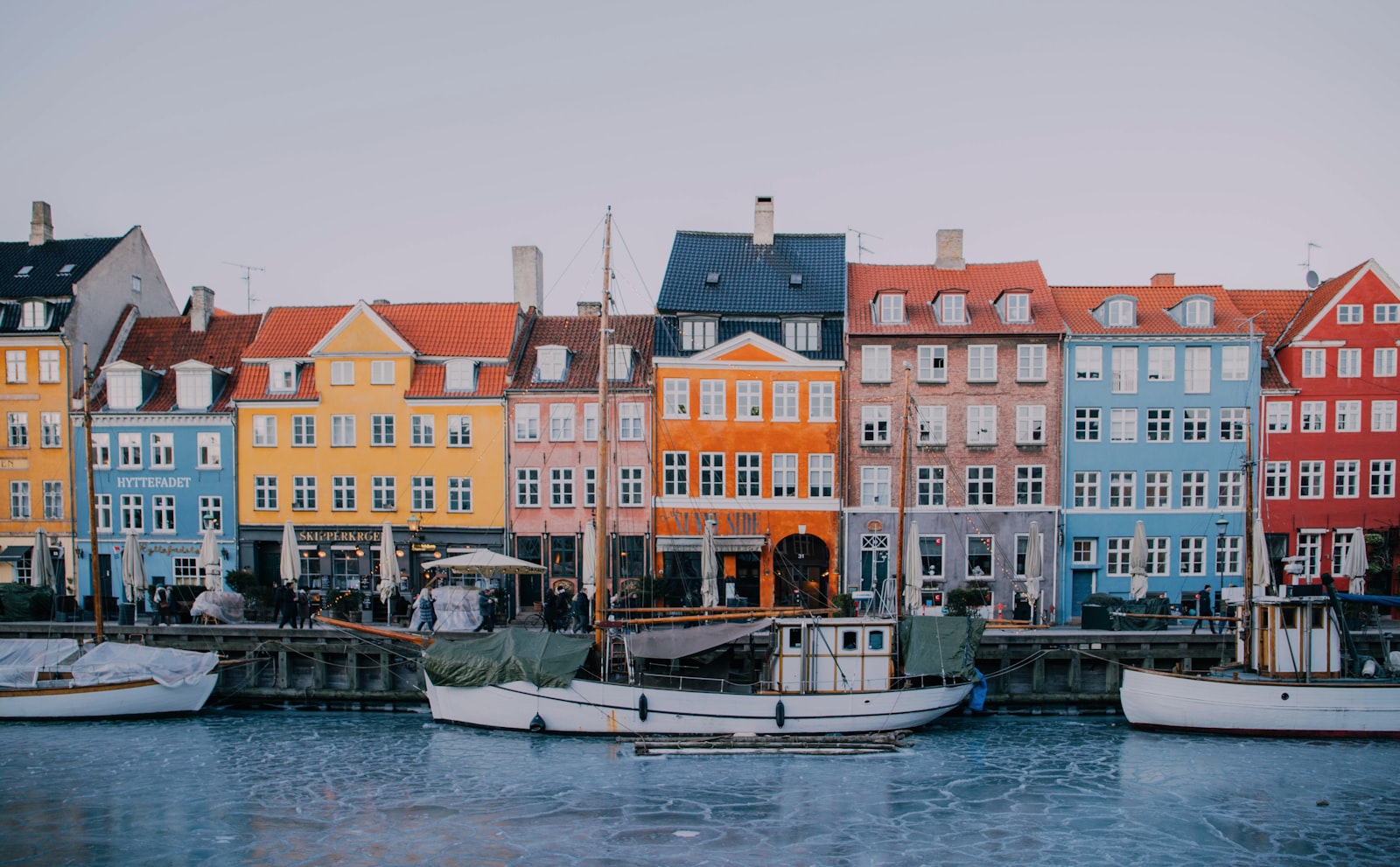
Moving to Denmark
The practical guide to moving to Denmark: what shipping costs, how customs treats your belongings, the CPR number and residence routes, healthcare, banking and a first month plan.
Why people move to Denmark, and who it really suits
Denmark consistently ranks at or near the top of global surveys for quality of life, trust and work life balance, and people who move there tend to stay. The appeal is a calm, well organised society: short working hours, generous parental leave, near universal English, safe cities built around bicycles, and public services that genuinely work.
It suits skilled professionals recruited into Danish companies, researchers and students, and families who prize safety, childcare and the outdoors. It suits you less well if you are chasing low costs or low taxes, because Denmark is expensive and income tax is high, or if you need a fast, informal bureaucracy, because almost nothing happens until you have your CPR number and your digital identity, MitID.
Be clear eyed about money. Headline salaries are high but so are prices and taxes, and the real benefit shows up indirectly through healthcare, education and childcare you do not pay for at the point of use. Housing in central Copenhagen is tight and competitive, while Aarhus, Odense and Aalborg are easier and cheaper.
The routes to live in Denmark, in plain language
Your route depends on your nationality. Nordic citizens move freely. EU and EEA citizens register for an EU residence document. Everyone else needs a residence and work permit before starting life in Denmark, handled by SIRI.
Pay Limit and Positive List
Denmark recruits foreign talent through schemes for well paid jobs and for occupations on its shortage lists. Your employer usually drives the application through SIRI before you arrive.
EU residence document
Citizens of the EU, EEA and Switzerland may live and work in Denmark and apply to SIRI for an EU residence document. Nordic citizens need nothing at all.
Study and researcher permits
Dedicated routes exist for enrolled students and for researchers and PhD candidates, often with the right to bring family.
Family reunification
Spouses and children of residents can apply to join, subject to housing, support and other conditions that Denmark applies strictly.
Bringing your household goods into Denmark
Denmark is in the European Union, so goods arriving from another EU country move with no customs formality. If you are moving from outside the EU, the standard transfer of residence relief applies: used household goods you have owned and used for at least six months can enter free of duty and VAT if you were resident outside the EU for at least twelve months and you import within twelve months of moving. You declare to the Danish customs agency, Toldstyrelsen.
You will need a dated and valued inventory, your passport, proof of your Danish address and, ideally, your residence permit or registration, plus the transport documents from your mover. Because so much of Danish life is gated behind the CPR number, line up your registration quickly so customs and delivery do not stall.
Sea freight typically arrives through Aarhus, Copenhagen or Fredericia, though many European moves come overland or by short sea ferry. Alcohol, tobacco, weapons and certain foods are restricted. Cars can be imported but Danish vehicle registration tax is among the highest in Europe, which usually makes selling at origin the sensible choice. Pets follow EU rules with a microchip, rabies vaccination and pet passport or health certificate.
Documents customs commonly asks for
Settling in: money, healthcare and the first month
Indicative 2026 figures from public cost panels. Copenhagen runs above the national average. Subsidised childcare and free healthcare offset some headline costs.
Healthcare is universal and tax funded. Once you have your CPR number you are assigned to a general practitioner and receive the yellow health card, the sundhedskort, which is your key to the system. Most care is free at the point of use.
Daily life is almost entirely digital and runs on MitID, the national digital identity, and NemKonto, your designated bank account for public payments. You cannot function without them, and both depend on your CPR number, so the registration sequence matters more than anything else in your first weeks. Get an appointment at the International Citizen Service or your local Borgerservice early.
Your first month checklist
Get quotes for your move to Denmark
Tell us your origin city, your destination in Denmark and your move size. We share your request only with vetted international movers who run this route, and you compare their quotes side by side.
How to choose an international mover for Denmark
Since we never name or rank movers, here is how to assess them. Begin with FIDI or IAM membership, which signals audited financial and operational standards. Then look for real experience moving into Denmark, where short sea and overland routes from Europe and clearance through Aarhus or Copenhagen are routine for an experienced firm.
Insist on a binding pre move survey so the volume, and therefore the price, is accurate and comparable. Read the insurance terms with care: valuation basis, exclusions and claims handling. Trust independent reviews about claims, not just sales. When you request quotes through this page, ask each mover the same questions so the comparison is genuine.
Questions people ask before they move
How much does it cost to move to Denmark?
Indicative all in shipping for a two to three bedroom home runs from roughly 1,500 US dollars within Europe to about 12,500 US dollars from North America or Australia in 2026, depending on volume, season and access. A binding survey gives a firm number.
What is a CPR number and how do I get one?
The CPR number is your central personal registration number. You get it by registering your address at your local kommune once you have a residence permit and a place to live. Almost everything, from banking to healthcare, depends on it, so arrange it first.
Do I pay duty on my used belongings?
Usually no. Under the EU transfer of residence relief, used goods owned for at least six months enter free of duty and VAT if you lived outside the EU for twelve months and import within twelve months. Confirm current rules with Toldstyrelsen.
Should I ship my car to Denmark?
Often not. Danish vehicle registration tax is among the highest in Europe and can exceed the value of the car. Many movers sell at origin and buy locally. Get tax advice before deciding.
How long does shipping to Denmark take?
From within Europe, often a few days to two weeks by road or ferry. From North America by sea, typically three to seven weeks door to door including clearance. Air freight is faster but far more expensive by volume.
Compare every corridor into Denmark
Each guide below is written for that specific pair: the real costs, the customs treatment, the visa routes and the timeline. Pick your origin country to start.
North America
United Kingdom and Ireland
Western Europe
Southern Europe
Nordic countries
Central and Eastern Europe
Middle East
Asia and the Pacific
Africa
One honest email a month for people moving abroad.
Real cost data, corridor by corridor customs changes, and the bureaucratic gotchas worth knowing before you book. No spam, unsubscribe anytime.
We review this guide as customs, visa and cost conditions change.
Last reviewed: 12 April 2026. We refresh this guide as costs, customs, and visa rules change.